history of panerai
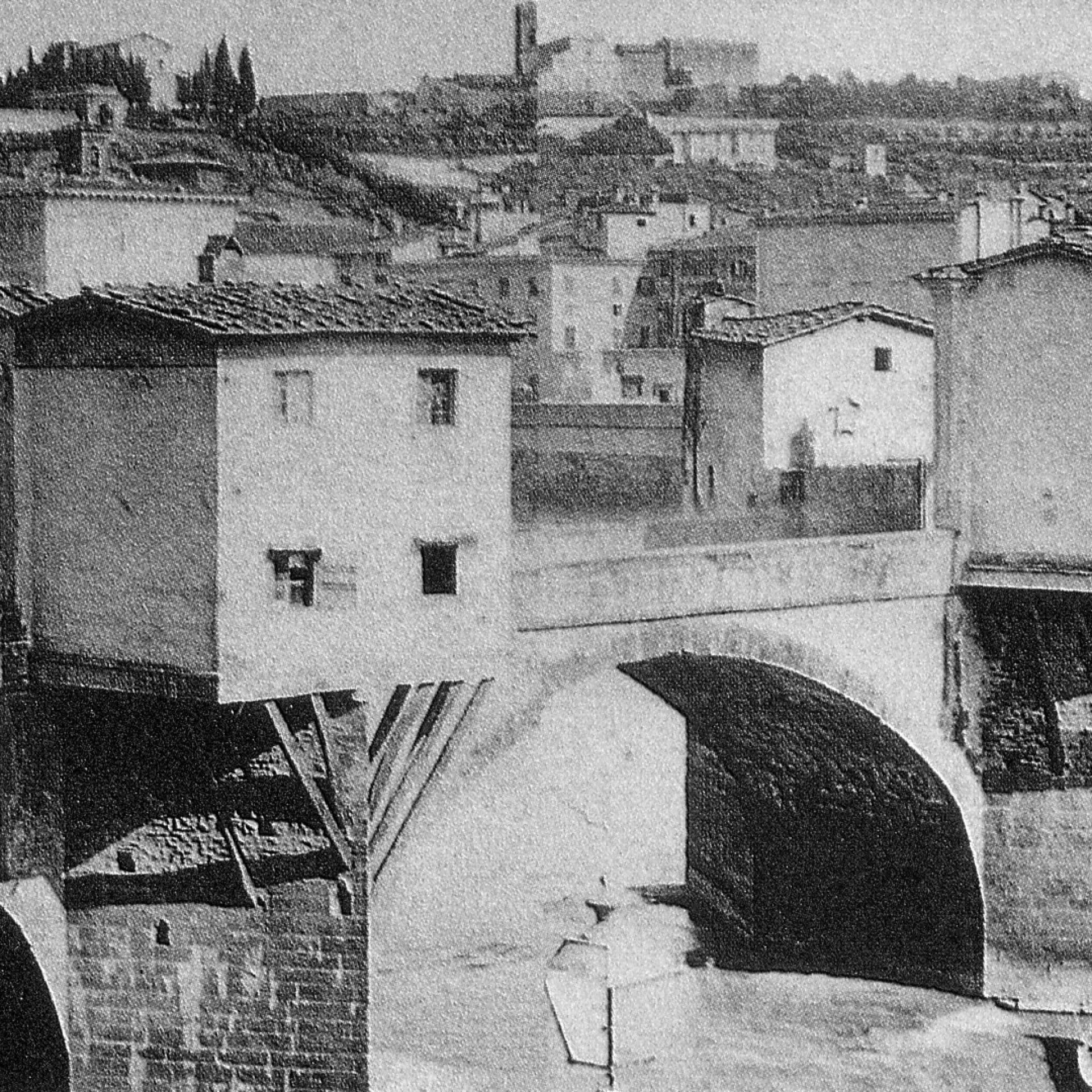
Since 1860, Giovanni Panerai opened his watchmaker’s shop on Ponte alle Grazie in Florence, as the city’s first watchmaking school.
Starting from the 1910s, Panerai supplied the Italian Navy with precision instruments to meet the most rigorous military standards. From these strict requirements then emerged legendary dive watches, distinguished by a functional design: every aesthetic element and function was meticulously developed to address specific needs of the Navy, ensuring they were resistant and reliable in extreme conditions.
After many decades alongside the Marina Militare, in 1993 Panerai opened its doors to the civilian market. Today, the very essence of the Maison remains the creation of remarkable tool watches at Panerai Manufacture in Neuchâtel, Switzerland.

THE ORIGINS
1860 - 1935
1860
Giovanni Panerai opens his first watch shop in Florence
Giovanni Panerai opens his first shop in 1860 at Ponte alle Grazie in Florence, serving not only as a watch shop and workshop, but also as the city's first watchmaking school: the history of Panerai begins here.
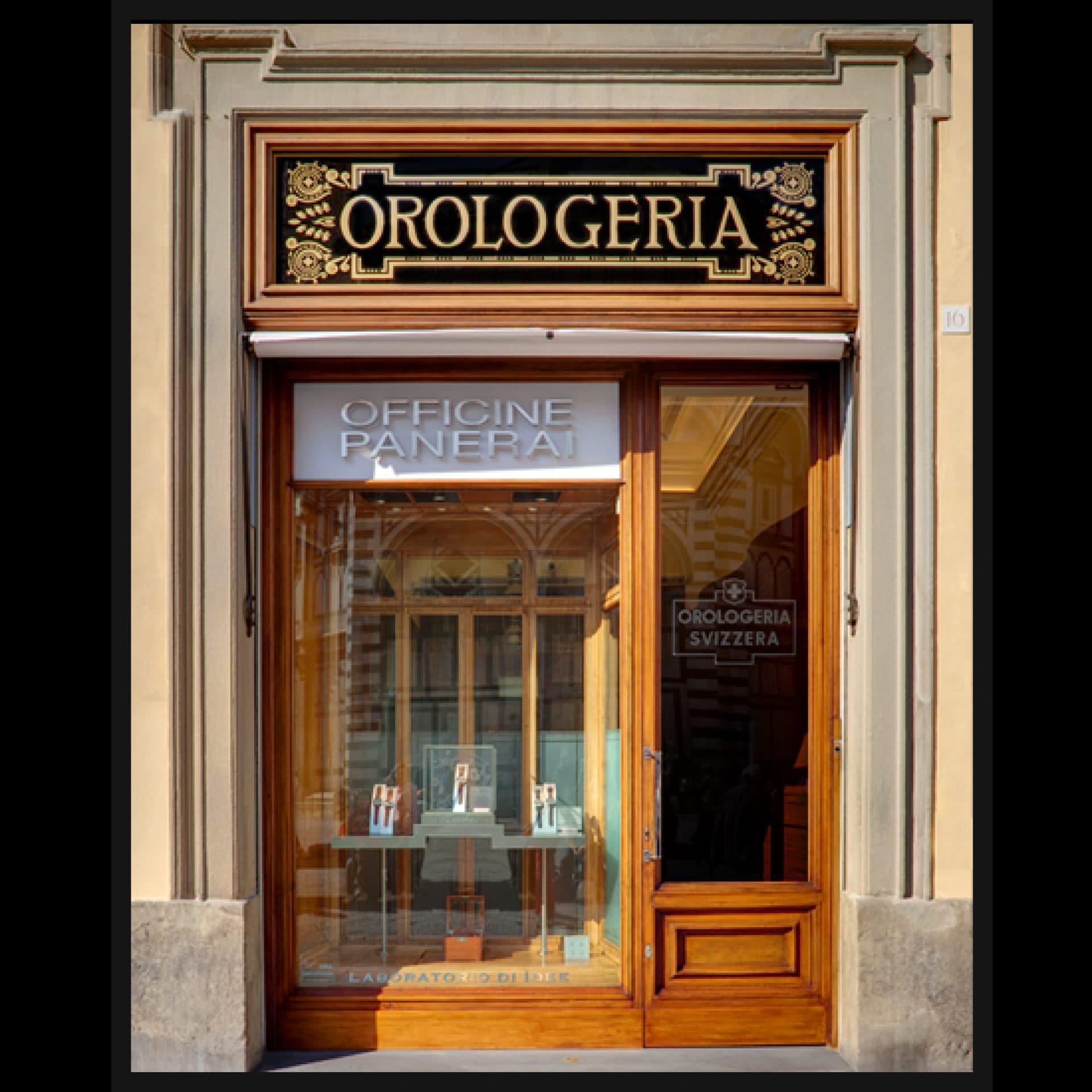
After having moved among various Florentine locations since 1876 for the reconstruction of the “Ponte alle Grazie”, in 1926 the shop opens in its current location inside the Archbishop's Palace, in front of the Florence Cathedral, under the name of Orologeria Svizzera.
1916
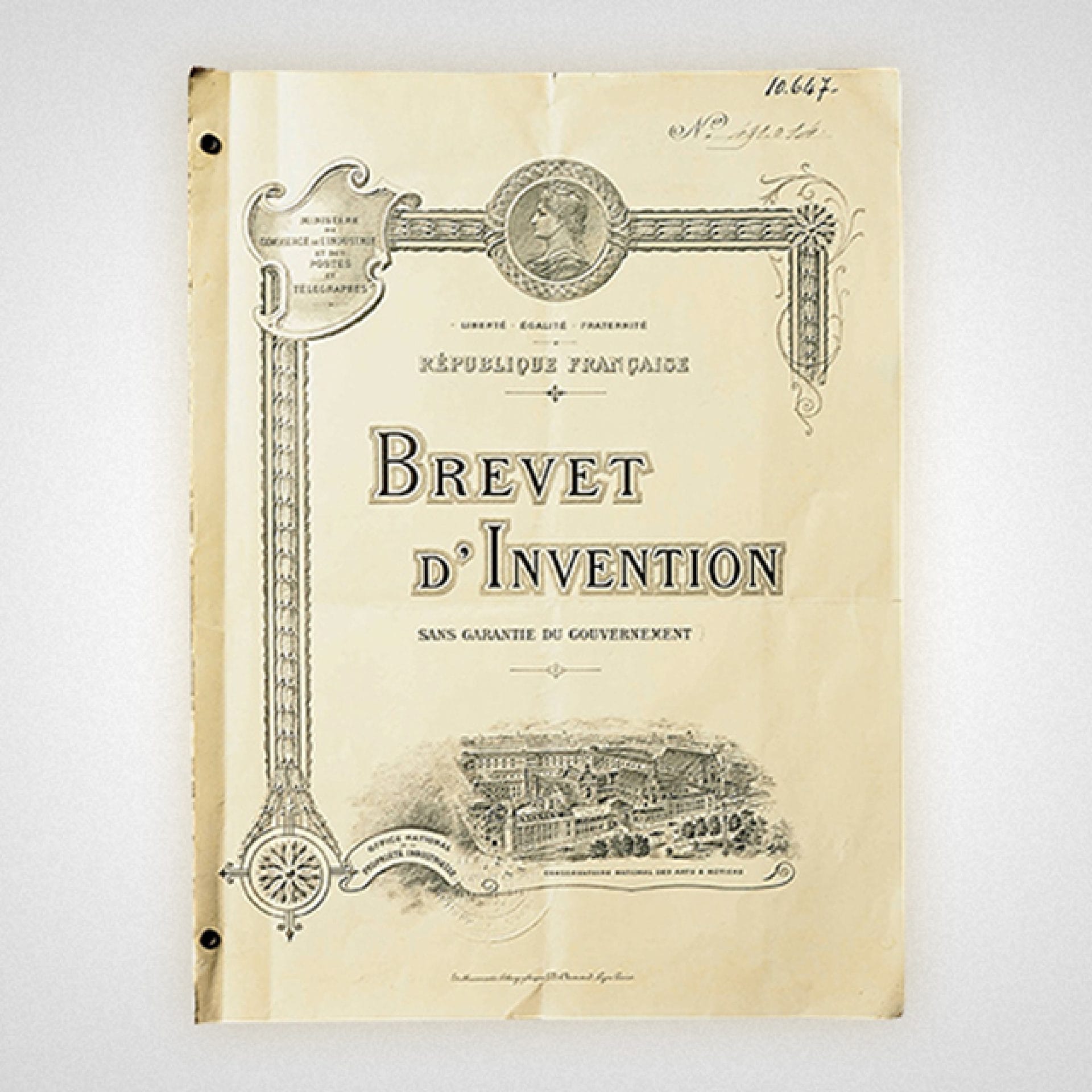
OFFICINE PANERAI REGISTERS THE RADIOMIR PATENT
Guido Panerai's family had been supplying precision instruments, such as naval combat sights, for the Italian Royal Navy. In order to meet these military requirements, a radium-based powder was developed to make the dials brighter, in collaboration with Lieutenant Commander Carlo Ronconi: this is how the Radiomir was born.
The reference to the name "Radiomir" was documented in the addendum of the patent filed in France on March 23, 1916. The high self-luminescence of the compound immediately makes radium paste a key element in Panerai's production. The Radiomir patent was the first of the many patents filed to celebrate Panerai's history of innovation.
1935
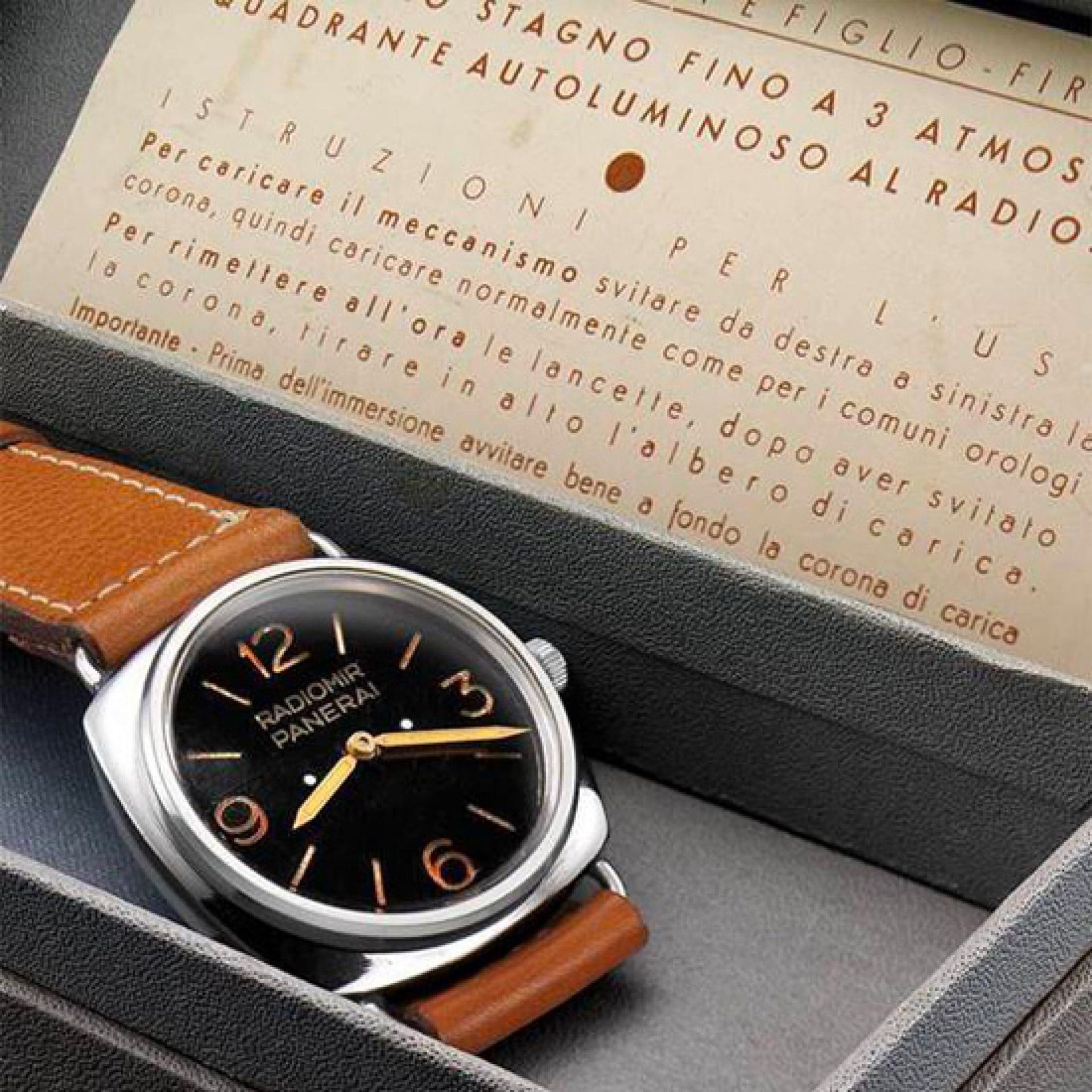
THE FIRST RADIOMIR PROTOTYPE
In 1935, the Italian Royal Navy sets up a secret program of new underwater assault vehicles and operators. Panerai takes parts in the development of useful technical tools for this new military activity.
To meet the parameters required by the Navy, several high-strength diving timepieces are tested.
The Navy's historical archives record that in 1935 Giuseppe Panerai commissions some properly elaborated prototypes to carry out technical tests: the best result is the Ref. 2533, made on a base supplied by Rolex-Geneva and modified by Panerai.
PANERAI FOR THE ROYAL ITALIAN NAVY
1936 - 1992
1940s
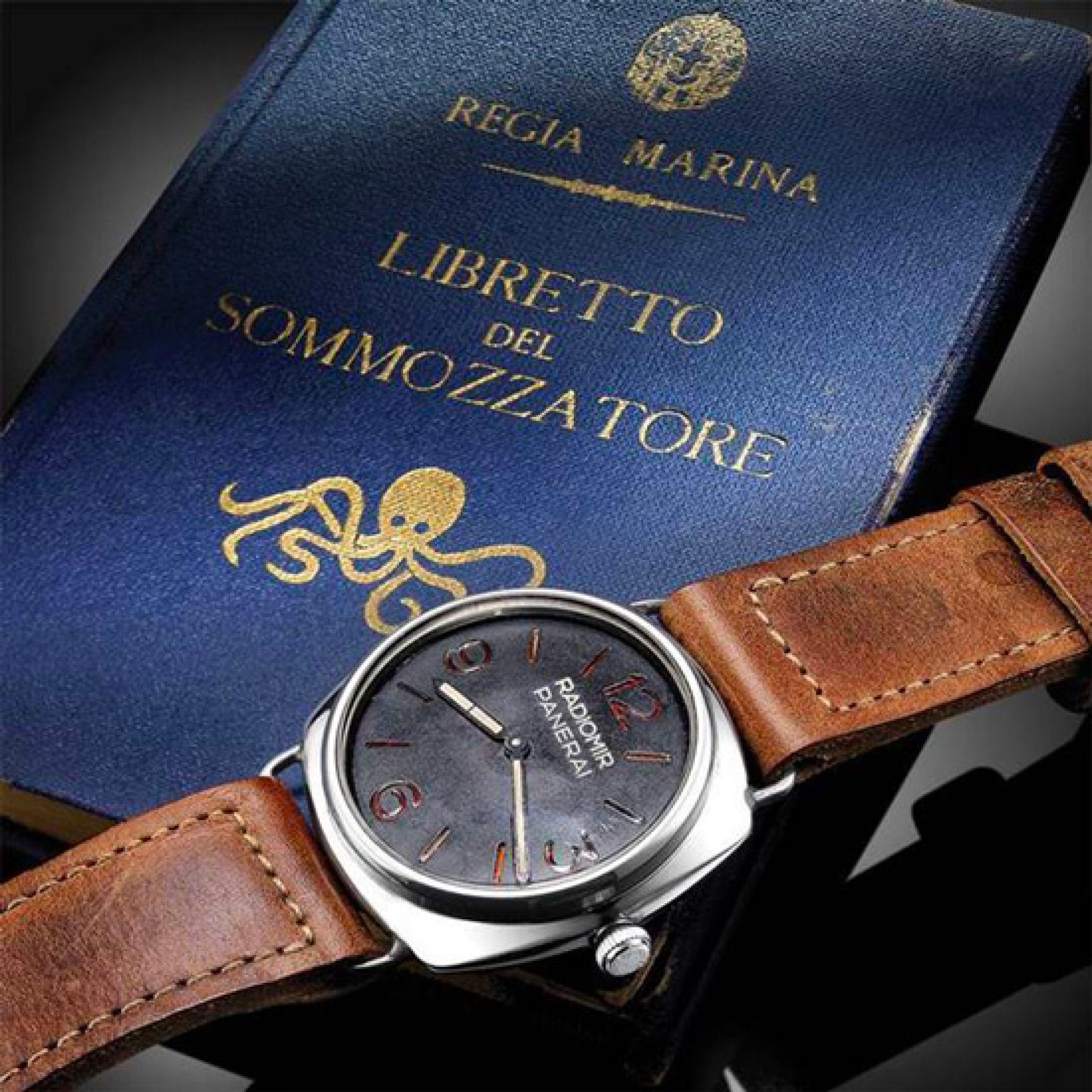
PANERAI FOR THE ROYAL NAVY, THE REF. 3646 IS BORN
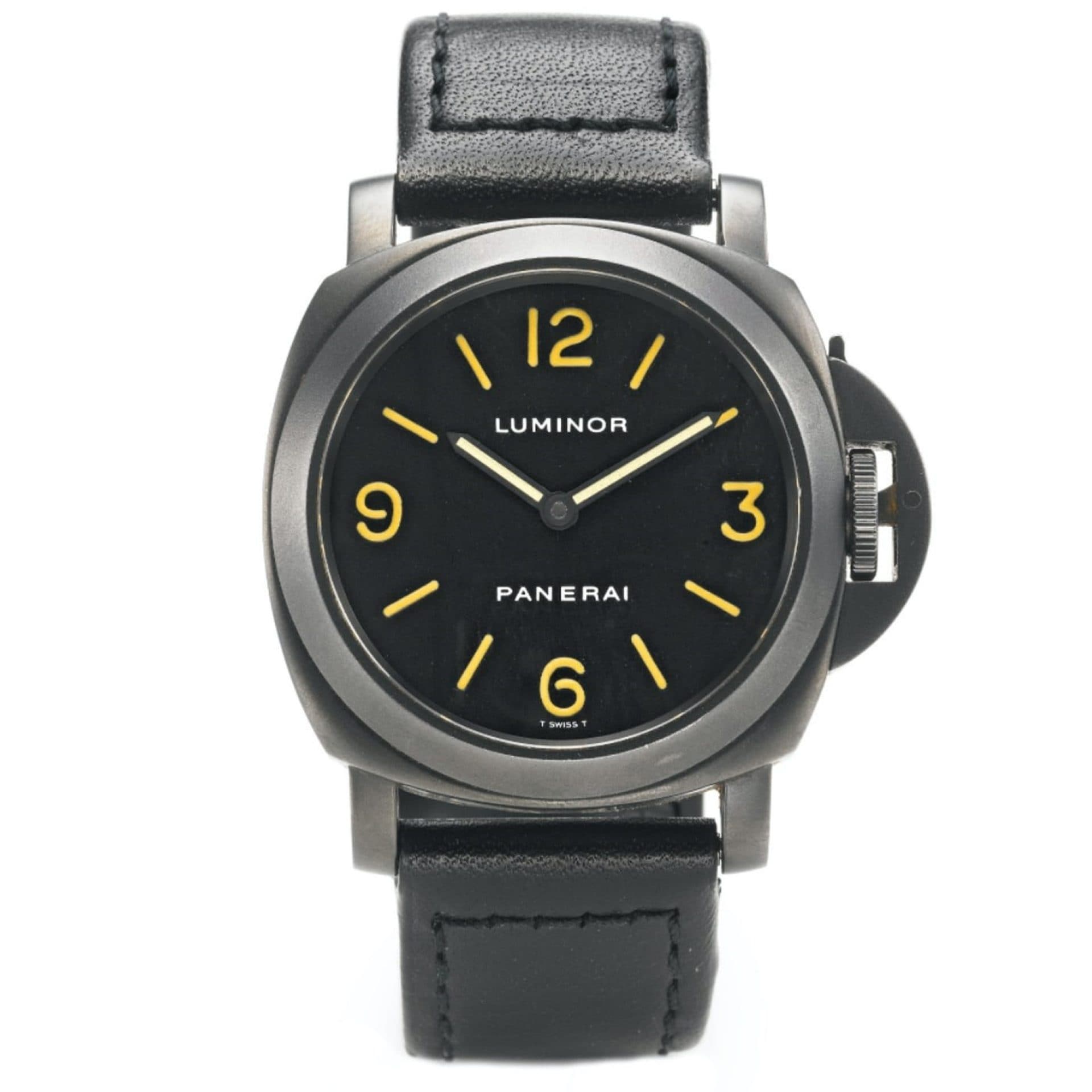
A relevant milestone in Panerai’s history is the creation of the Ref.3646, one of the tool watches that we know as "Radiomir". Today, this model retains many of the original features of the Ref.3646: a large cushion-shaped steel case with a diameter of 47 mm, luminescent numerals and indexes, wire lugs welded to the case and a high-quality manual mechanical movement (at the time, a Cortebert 618 calibre derived from a pocket watch was used) and a water-resistant leather strap (long enough to be worn over protective clothing). With this decision, regular supplies of Panerai watches to the Italian Royal Navy take place. To improve its function, Giuseppe Panerai modifies the structure of the dial with the use of overlapping discs, known as sandwich dials, and the upper part in anodized aluminium with perforated indexes and numbers, in order to make the radium paste more legible and luminescent. To improve the legibility of the dial, its layout is redesigned with just 4 large Arabic numerals in the cardinal points and 8 indexes at the hour markers.
1949
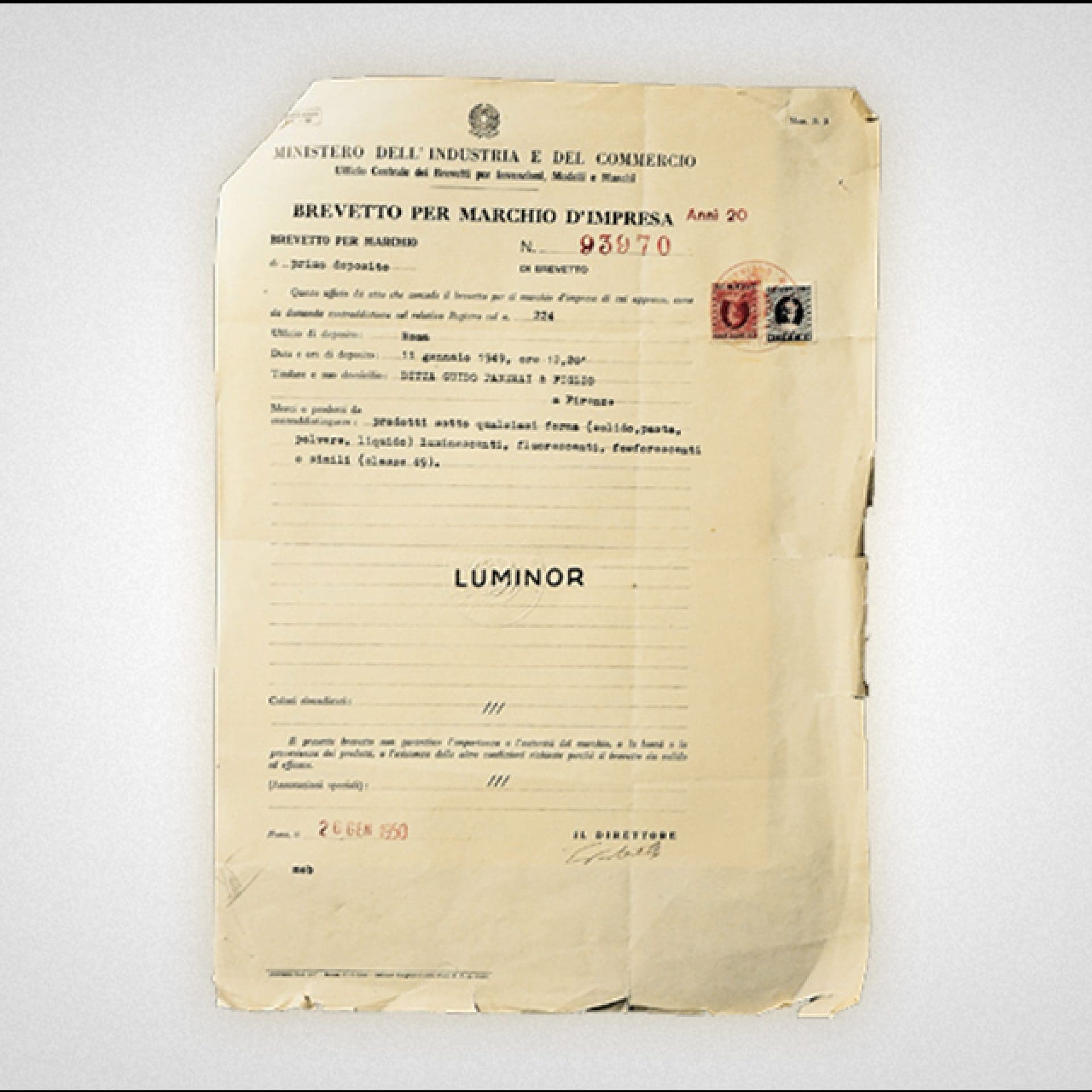
PANERAI REGISTERS THE NAME LUMINOR AS A TRADEMARK
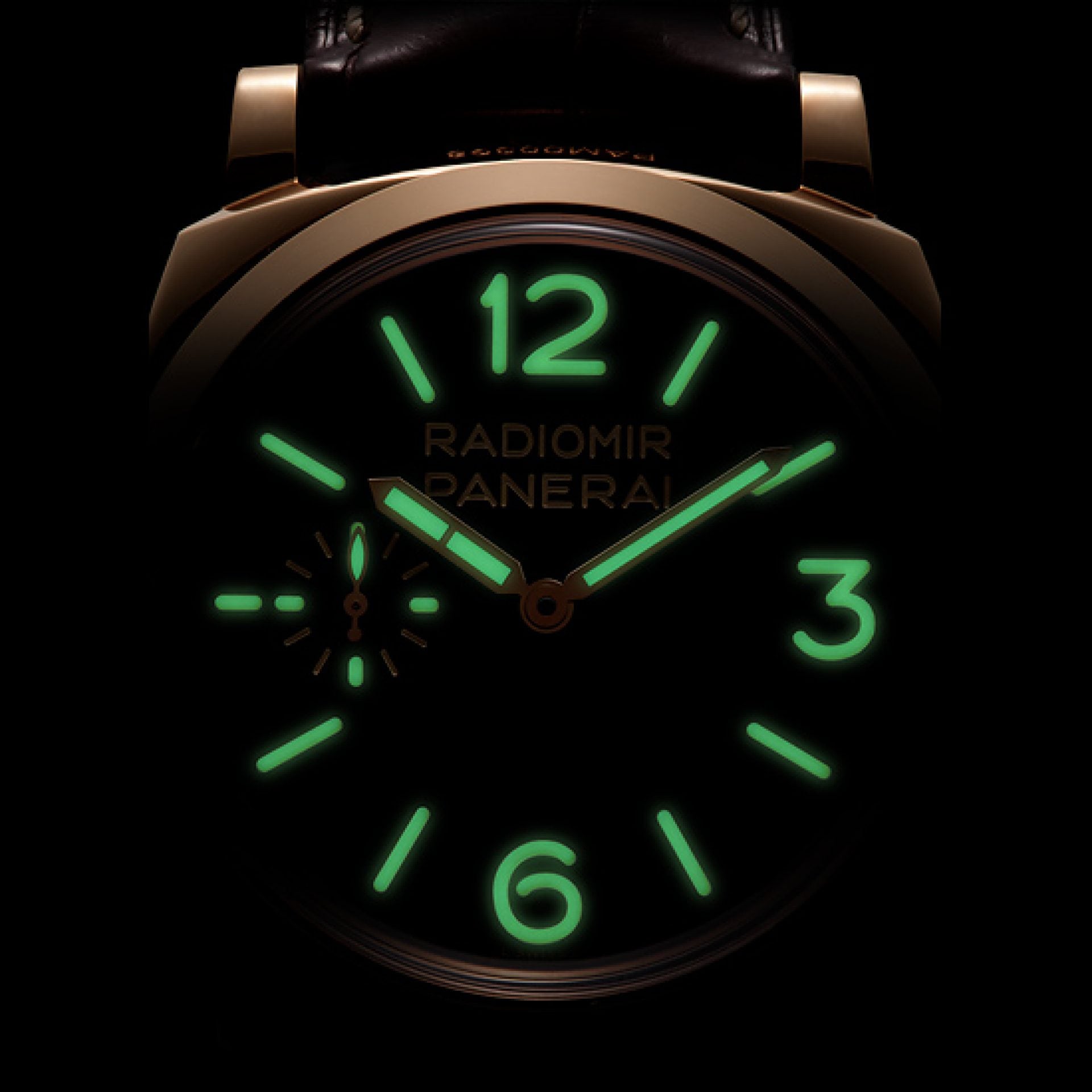
On 11 January 1949, Panerai registers the name Luminor as a trademark in respect of the luminescent and self-luminescent materials used in its watches. Giuseppe Panerai realises that the link with radioactivity has to be handled with caution, considering the new reality created by the expansion of impressive military and civil atomic technologies. He decides that the luminescent substances should be less radioactive than Radium, and have a more neutral name. After more than a decade, the Luminor is recognised with a new luminescent tritium-based substance (a hydrogen isotope), with very low and harmless emissions. This is the result of many studies and experiments, and Luminor gradually became, by convention of use, the name identifying Panerai’s diving timepiece, characterized by the crown-protection bridge.
1950s
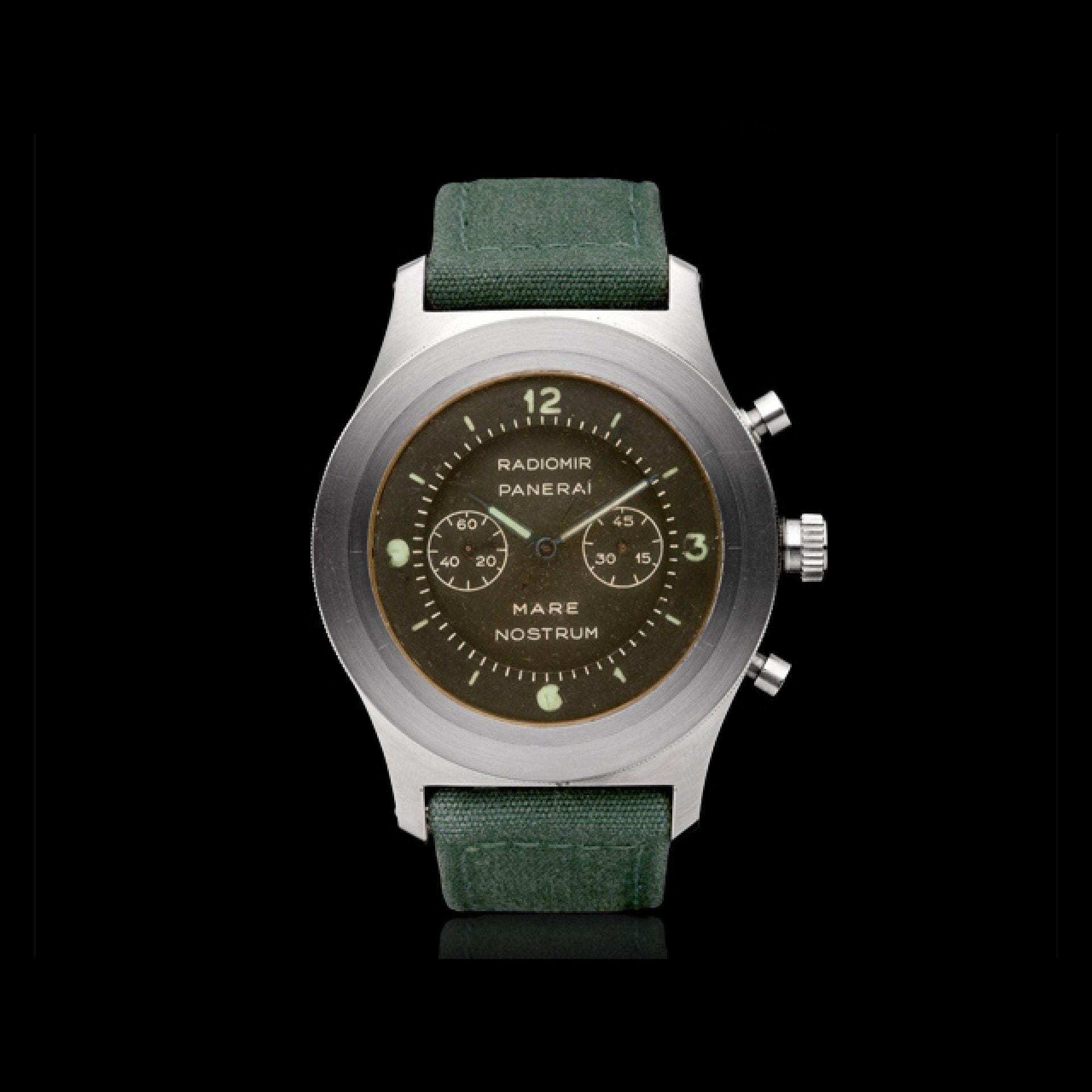
THE “MARE NOSTRUM” CHRONOGRAPH PROTOTYPE
Panerai draws up plans for a project, likely already sketched out in the 1940s, of a model specifically designed for Deck Officers: the two-counter chronograph called Mare Nostrum. It is thought that only two or three of these watches were ever made, probably in the 1950s, and all that remains of them are some photographic plates and a single prototype, purchased by Officine Panerai’s own museum, at an international auction in 2005.
1954
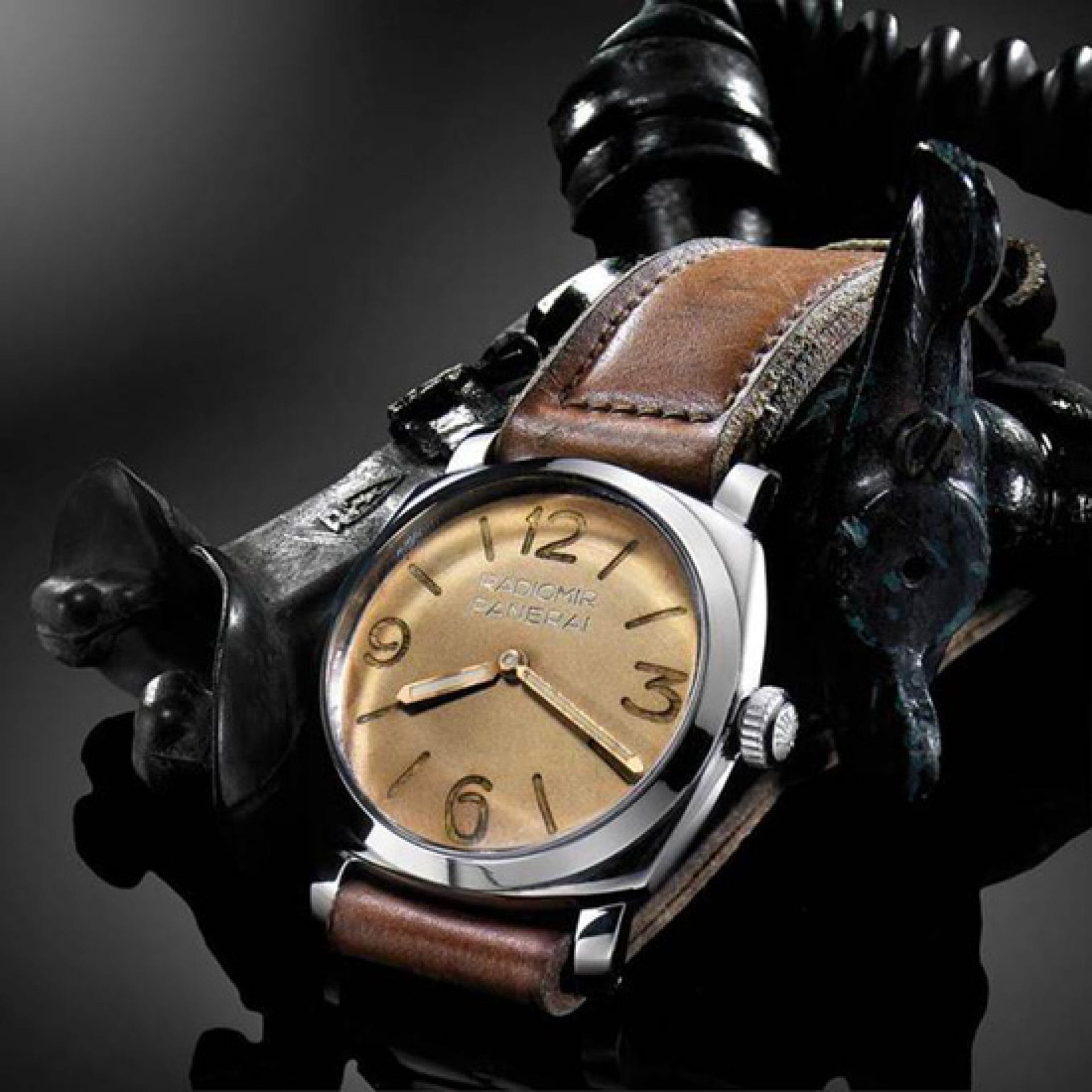
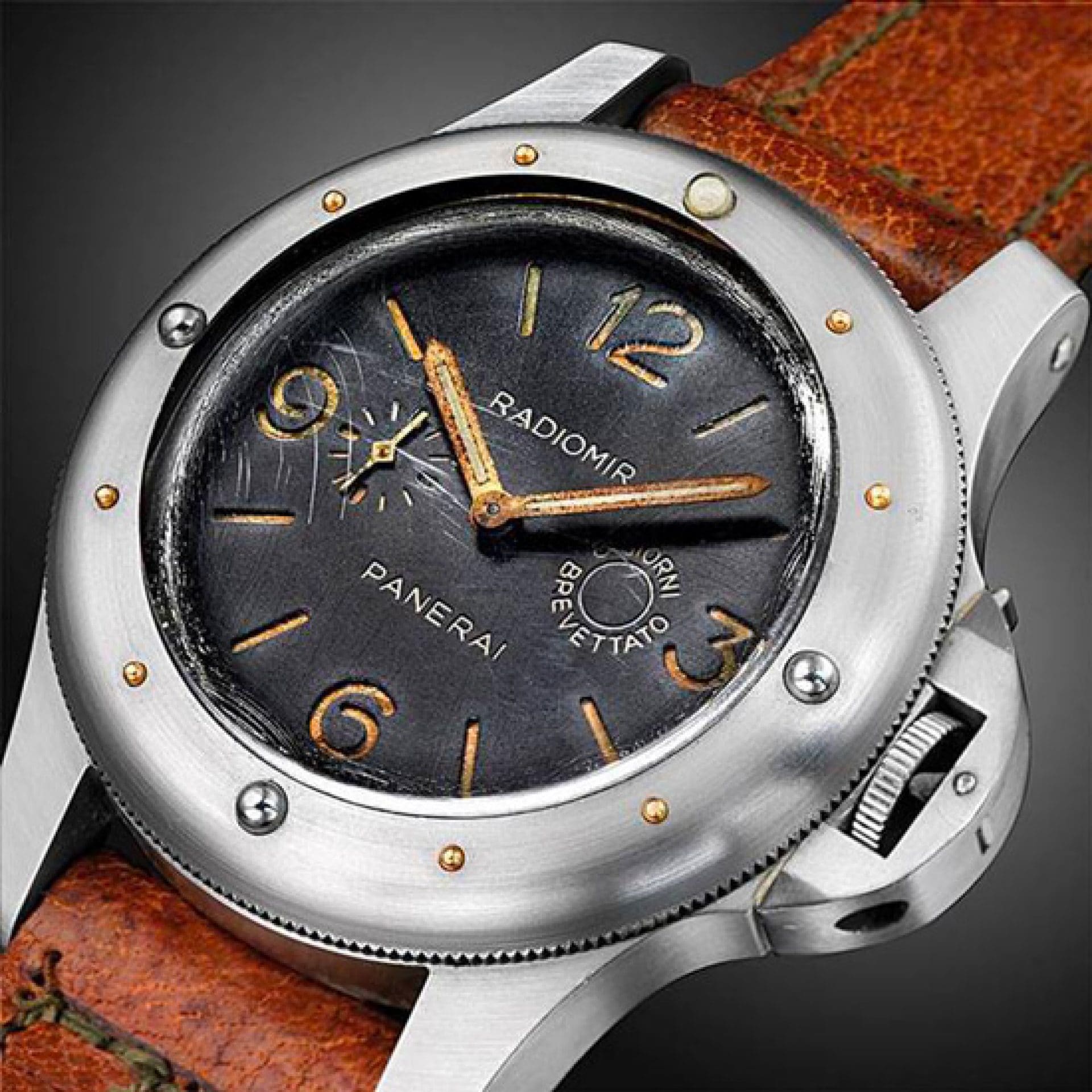
REF.6152 AND REF. 6154
With the increasing involvement in underwater operations, the Navy's requirements become even more specific after the Second World War: military watches have to remain underwater in extreme conditions for long periods of time. In 1954, two new references, the Ref.6152 and the Ref. 6154, are tested.
Some of today's models are inspired by them, as they incorporate some innovations designed to make the construction even more solid and resistant: the case is made from a single block with fixed handles, retaining the cushion shape, with more pronounced edges on the sides. They receive a general aesthetic revision of the individual parts and adopt a screw-down winding crown, tubular cylindrical replacing the conical cylindrical of the historic Radiomir.
After careful analysis of the tests, some modifications are made and the definitive reference 6152/1 is born, also with reinforced lugs and made from solid steel from the same block as the case.
1956
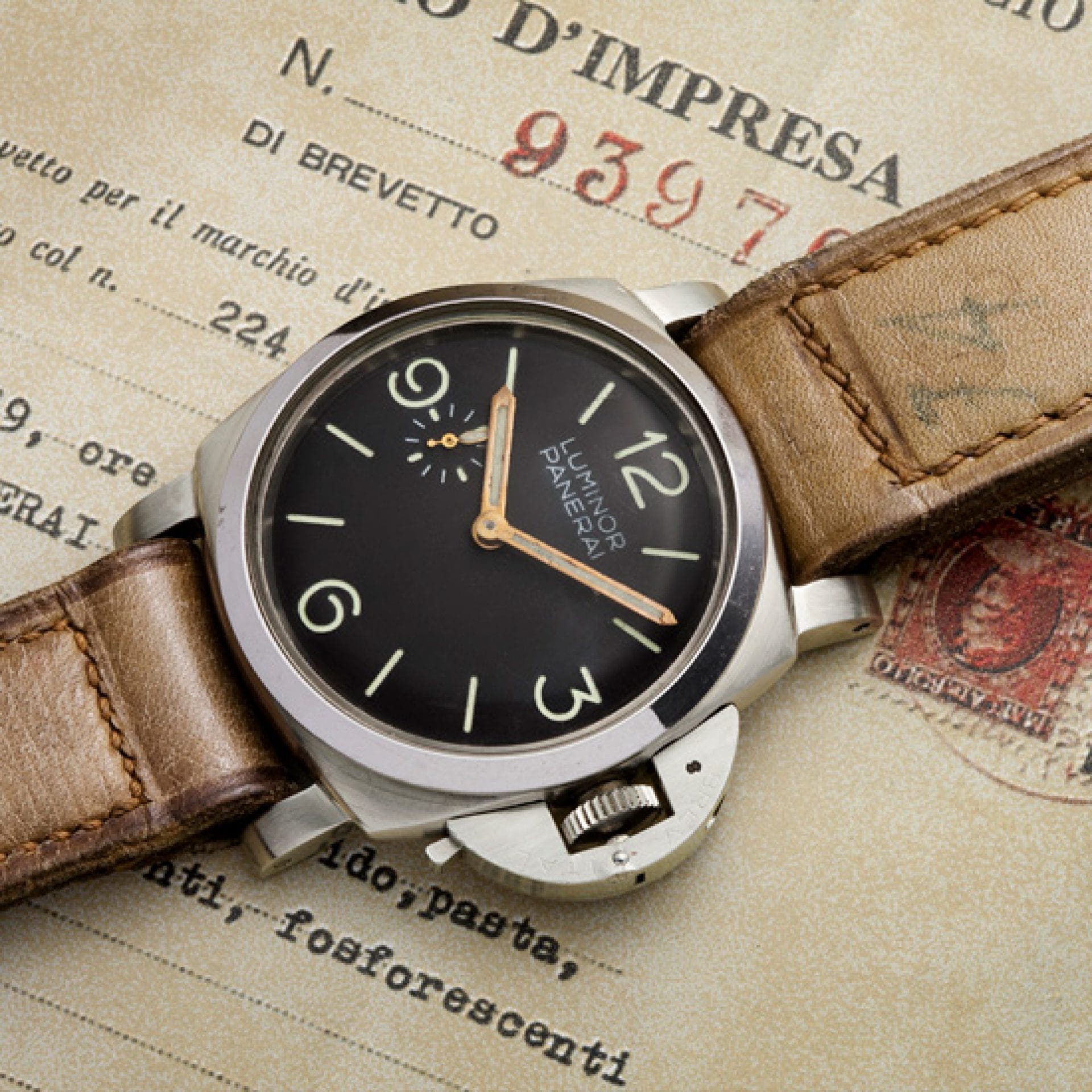
OFFICINE PANERAI DEVELOPS THE GPF 2/56 MODEL AND PATENTS THE CROWN-PROTECTING BRIDGE
Panerai develops a diving watch known as the GPF-2/56, which was later popularly known as the "Egiziano", as it was supplied to the Egyptian Navy with the consent of the Italian Navy. The innovations that characterize this model are remarkable: the imposing size of the case, with a diameter of 60 mm, a considerable level of water resistance, and the Swiss made Angelus SF 240 calibre, with an 8 Days power reserve as a movement. The “Egiziano” is the inspiration model for the modern Submersible watches, as it also fits with the rotating bezel to calculate the immersion time. This is the first time the element that most identifies a Panerai watch was introduced: the crown protecting bridge, which was internationally patented by Guido Panerai & Figlio in 1956.
1960s
THE EVOLUTION OF THE PANERAI LUMINOR WATCH
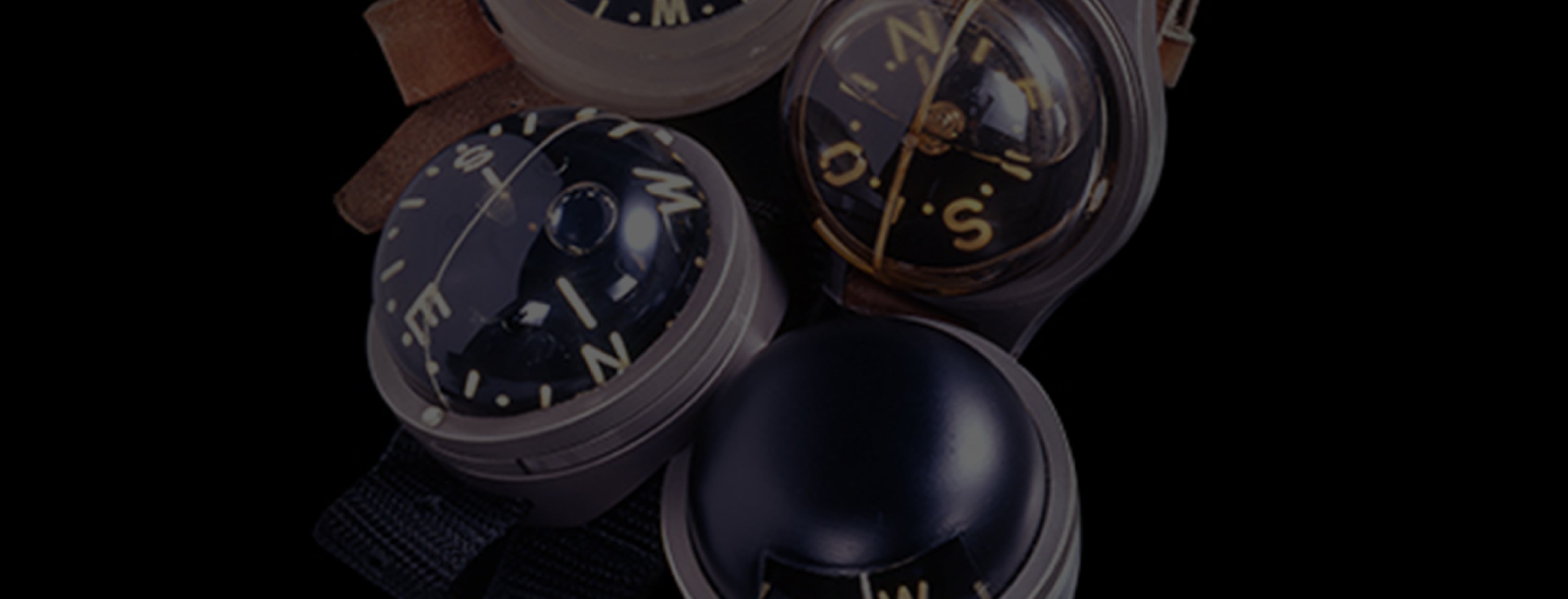
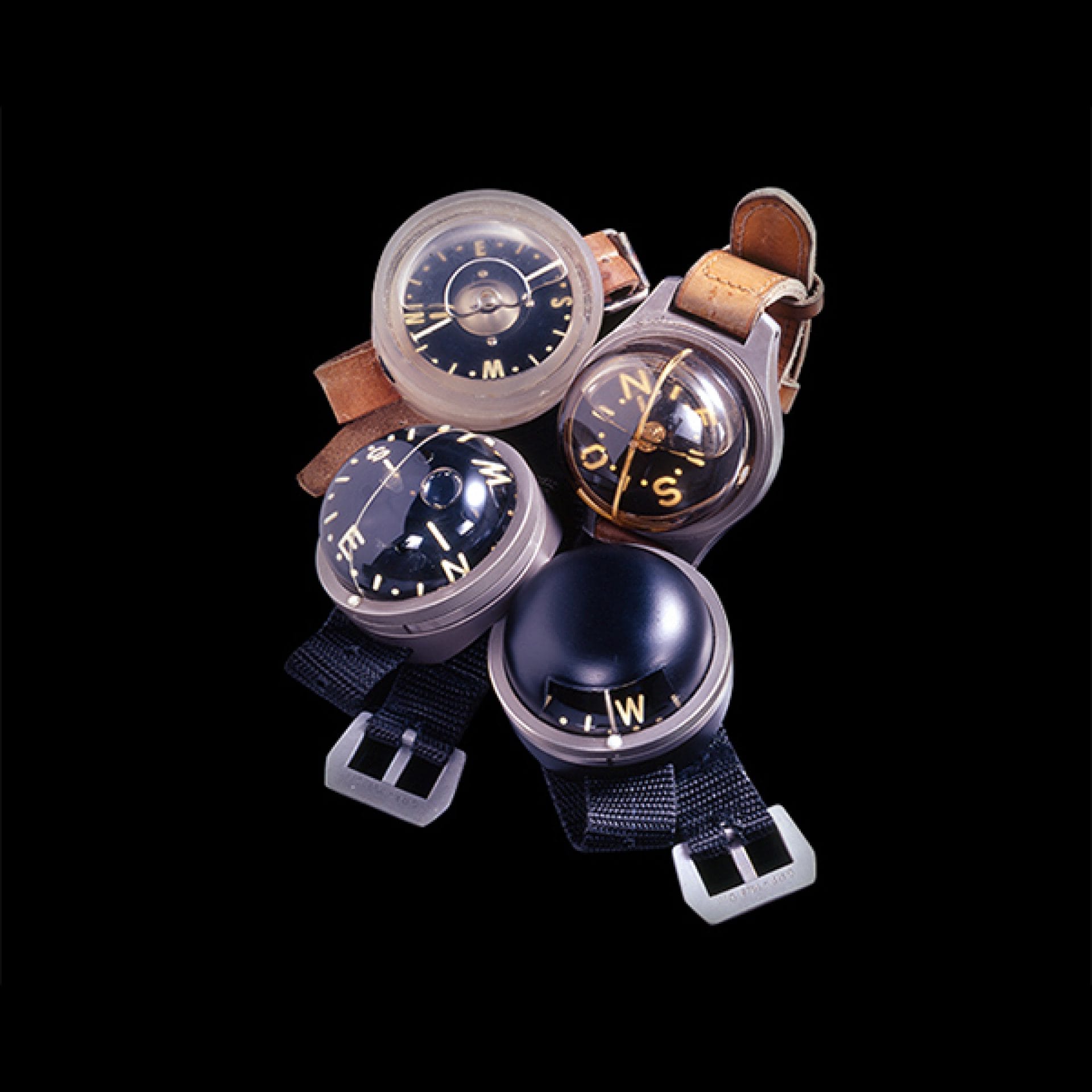
The evolution of the Panerai Ref. 6152/1 watch continues unabated in the 1960s. In the process of assembling the overlapping disc dials, known as sandwich dials, the use of radium-based paste disappears, and with it the name Radiomir. The luminescence now comes from a new low-radiation tritium-based compound which takes the name Luminor. The crown-protection bridge is inserted and adapted to the middle case of the Ref. 6152/1 case. In roughly 80 units, a Swiss-made Angelus SF 240 mechanical calibre is adopted for the first time, with an 8 Days power reserve. The power reserve thus becomes a fundamental element in the DNA of the brand. In some models the solid and closed case-back is replaced by one with a transparent center made of acrylic glass, allowing the mechanism to be seen. Panerai is therefore one of the pioneers in the production of watches with a visible case back. Another fundamental chapter in Panerai's production, which particularly develops in this period, concerns the precision instruments created and supplied at the Italian Navy's request: compasses, wrist-depth gauges with different calibrations, and underwater signal lights to compensate for the pressure, which provide greater resistance at great depths.
Also, in 1966 Panerai patented the Elux, an abbreviation of electroluminescence. Its name, derived from "Electro" and the Latin "Lux" for light, perfectly embodies Panerai's unique luminosity expertise.
1972
A YEAR OF TRANSITION FOR THE COMPANY “G. PANERAI &FIGLIO”
In 1972, Giuseppe Panerai, Guido's son dies. The exclusive supply contracts for the Italian Navy is taken over by engineer and former Italian Navy officer Mr. Dino Zei, who is nominated the new CEO of the company. The Company name changes from "G. Panerai &Figlio" to "Officine Panerai Srl". Officine Panerai becomes the official brand name.
1985
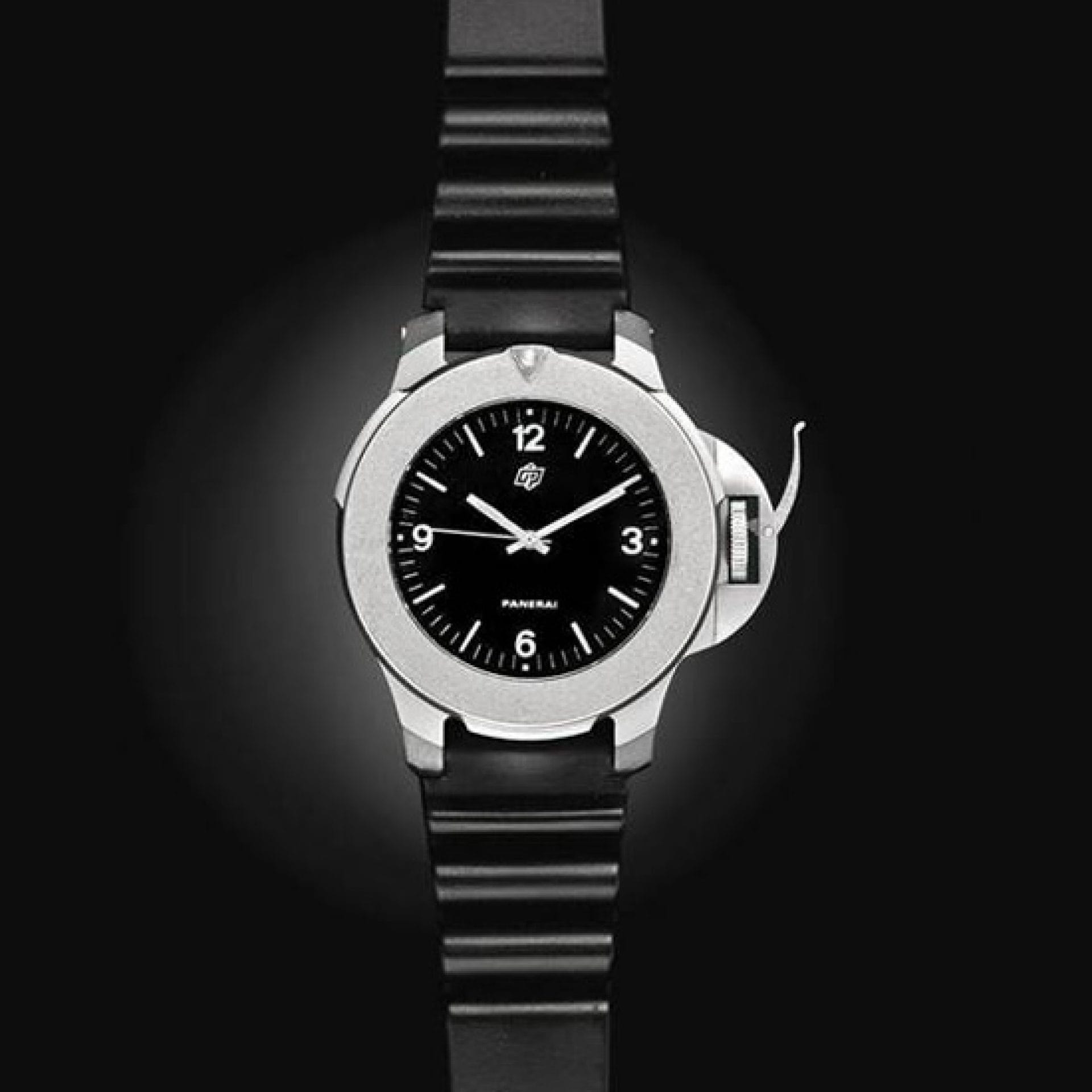
MILLEMETERS WATCH PROTOTYPE
The company's technical department designs a new diving watch, which incorporates all the technological developments in watchmaking and diving from the 1970s and 1980s, to be subjected to the severe tests used to specify the equipment of the Italian Navy. It is an innovative titanium timepiece with a diameter of 47 mm, still equipped with the typical lever crown protector, the rotating bezel, the dial of indexes as well as the hands formed by “Traser®” (microscopic cylindrical containers) containing the luminescent material. Tests confirm that this special Panerai watch can easily withstand more than 1000 metres, hence the name “Millemetri”.
THE OPENING TO THE CIVIL MARKET
1993 - 1997
1993
THE FIRST OFFICINE PANERAI COLLECTION
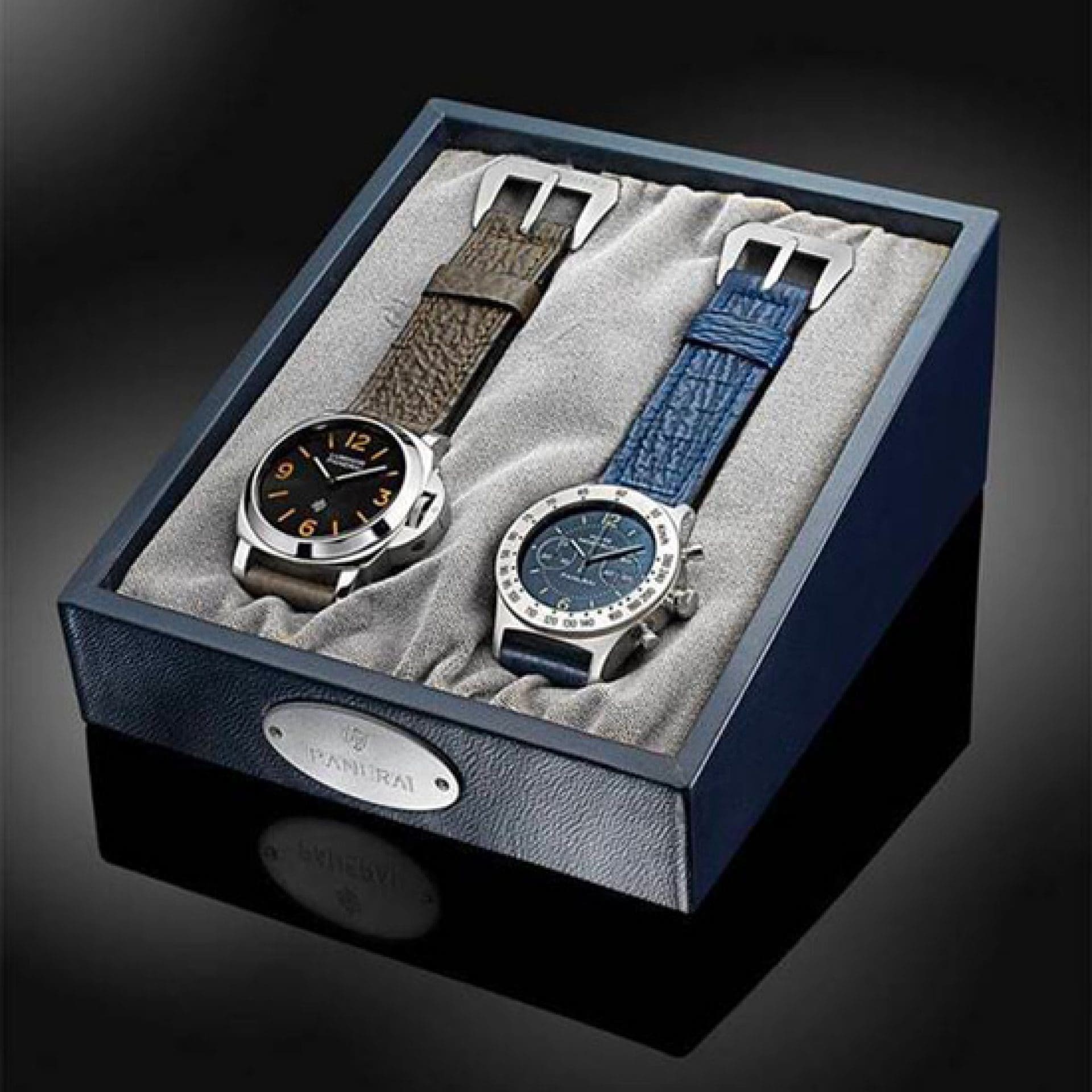
In order to tackle the serious economic and political crisis that started worldwide in the late 80s, Officine Panerai decides to go into to the civil watch market, launching three models, originating from ten total references in numbered and limited editions: the 44 mm Luminor and Luminor Marina watches, and the 42 mm Mare Nostrum chronograph, which draw inspiration from the historical models created for the Underwater Commandos division of the Italian Navy. This relieves Ing. Zei, CEO of Officine Panerai, from maintaining military secrecy on these Panerai products. They quickly become highly sought-after items for collectors and enthusiasts. The presentation of the collection takes place on 10 September, 1993 in the Military harbour of La Spezia, on the Italian navy cruiser "Durand De La Penne". The ceremony is attended by Duke Amedeo D'Aosta, son of Sir Aimone di Savoia, the supreme head of the Italian diving department at the time.
1997
OFFICINE PANERAI BECOMES A TOP LEVEL ACTOR IN THE HIGH WATCH MARKET
The Richemont Group (previously the Vendôme Group) acquires Officine Panerai S.p.A. on March 18, 1997, immediately opening a pilot-selective distribution network in Italy. The goal is fine-tuning the industrial and commercial strategy, making use of the synergies in the Group's structures.
THE INTERNATIONAL LAUNCH
1998-2002
1998
THE DEBUT ON THE INTERNATIONAL HAUTE HORLOGERIE MARKET
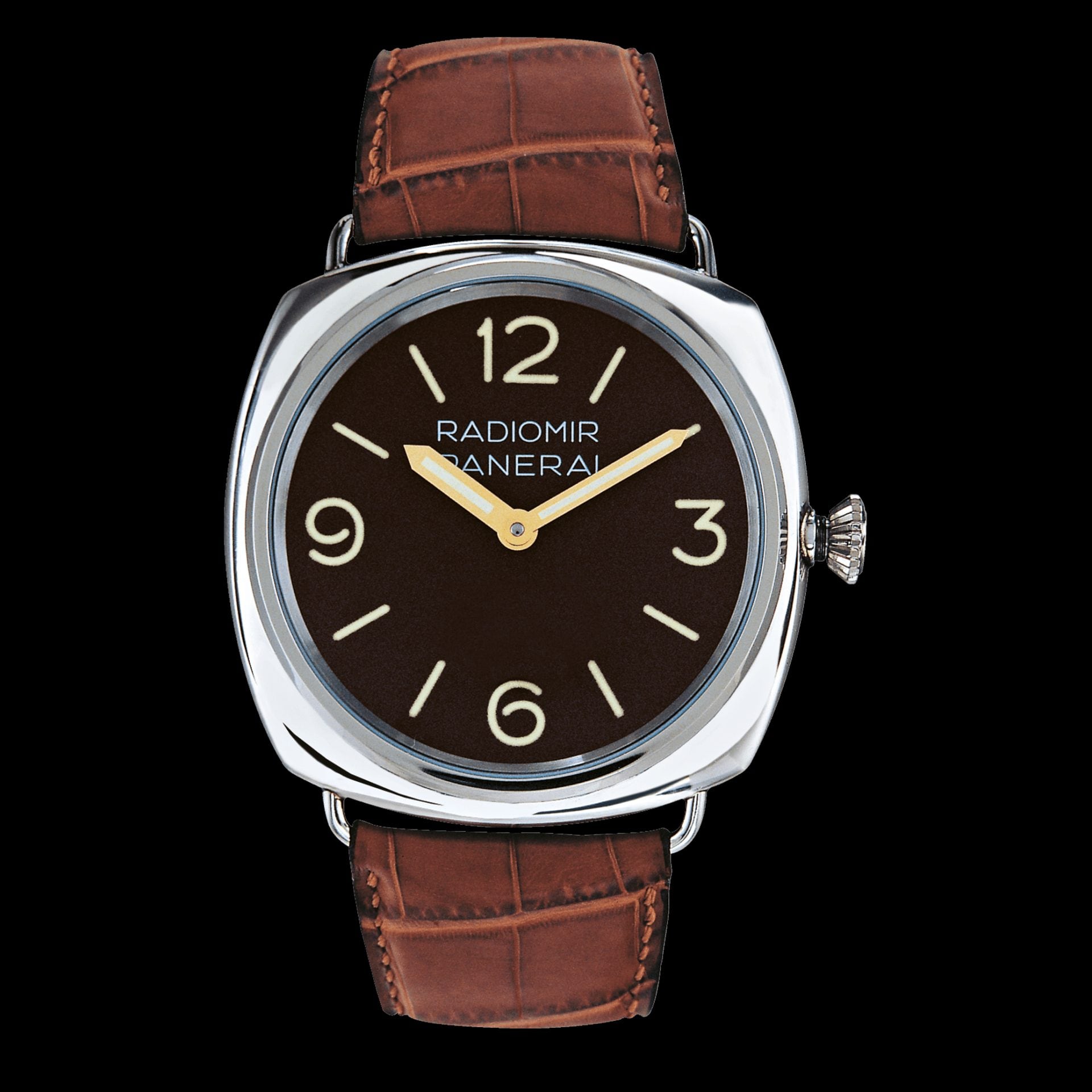
In April 1998, Panerai makes its debut on the International Haute Horlogerie market at the SIHH (Salon de la Haute Horlogerie of Geneva). The collection consists of three models: the Luminor and the Luminor Marina in three different versions, 44 mm in diameter, and the Mare Nostrum chronograph 42 mm, now with a narrower bezel and screw back. From this moment Panerai becomes internationally renowned in luxury sport watches, introducing worldwide the trend of large diameter watches. Also, in 1998 Panerai presents the commemorative re-edition of the Radiomir watch, limited to 60 pieces. The cushion case is made of platinum, and the watch has a screw-down winding crown and the original period Rolex movement.
2001
OFFICINE PANERAI: RETURN TO THE ORIGINS
After a meticulous refurbishment, Panerai's historic boutique is reopened. A restyling of the original Piazza San Giovanni premises in Florence, following the acquisition of the family shop by Officine Panerai. This boutique is a meeting point for brand collectors and enthusiasts, who can find not only pieces from the current collection, but also special edition watches and special productions that Panerai reserves exclusively for its boutiques.
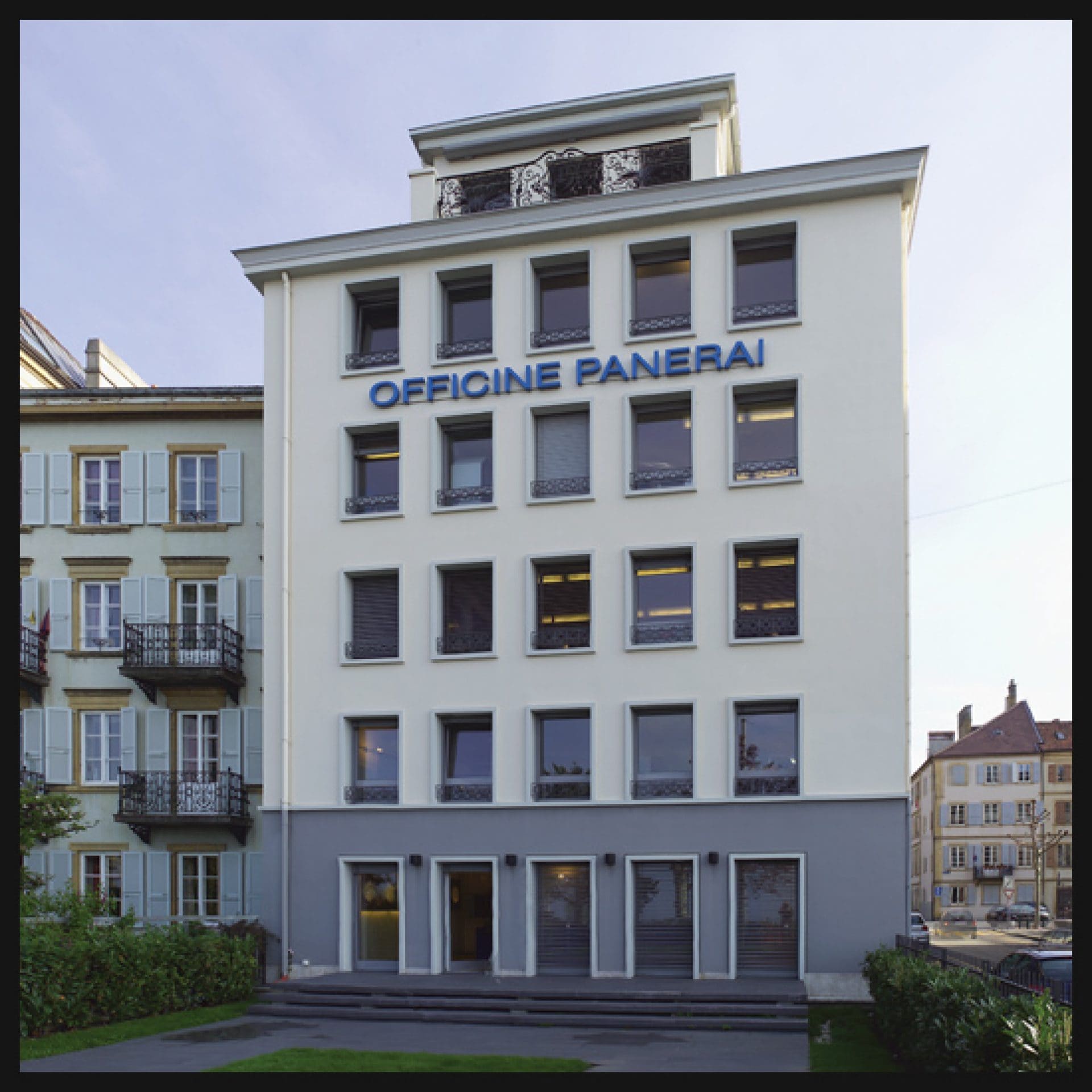
2002
OPENING OF THE PANERAI MANUFACTURE IN NEUCHÂTEL
This year is a milestone for Officine Panerai, with the opening of the Panerai Manufacture in Neuchâtel, Switzerland. Fine Swiss watchmaking, exclusive design and know-how come together in a single location where planning, development and continuous research offer new technical and functional perspectives. Officine Panerai also opens up to the Orient with its first Asian boutique, located in the prestigious Landmark Prince's Building in Hong Kong.
PANERAI MANUFACTURE
2005 - 2023
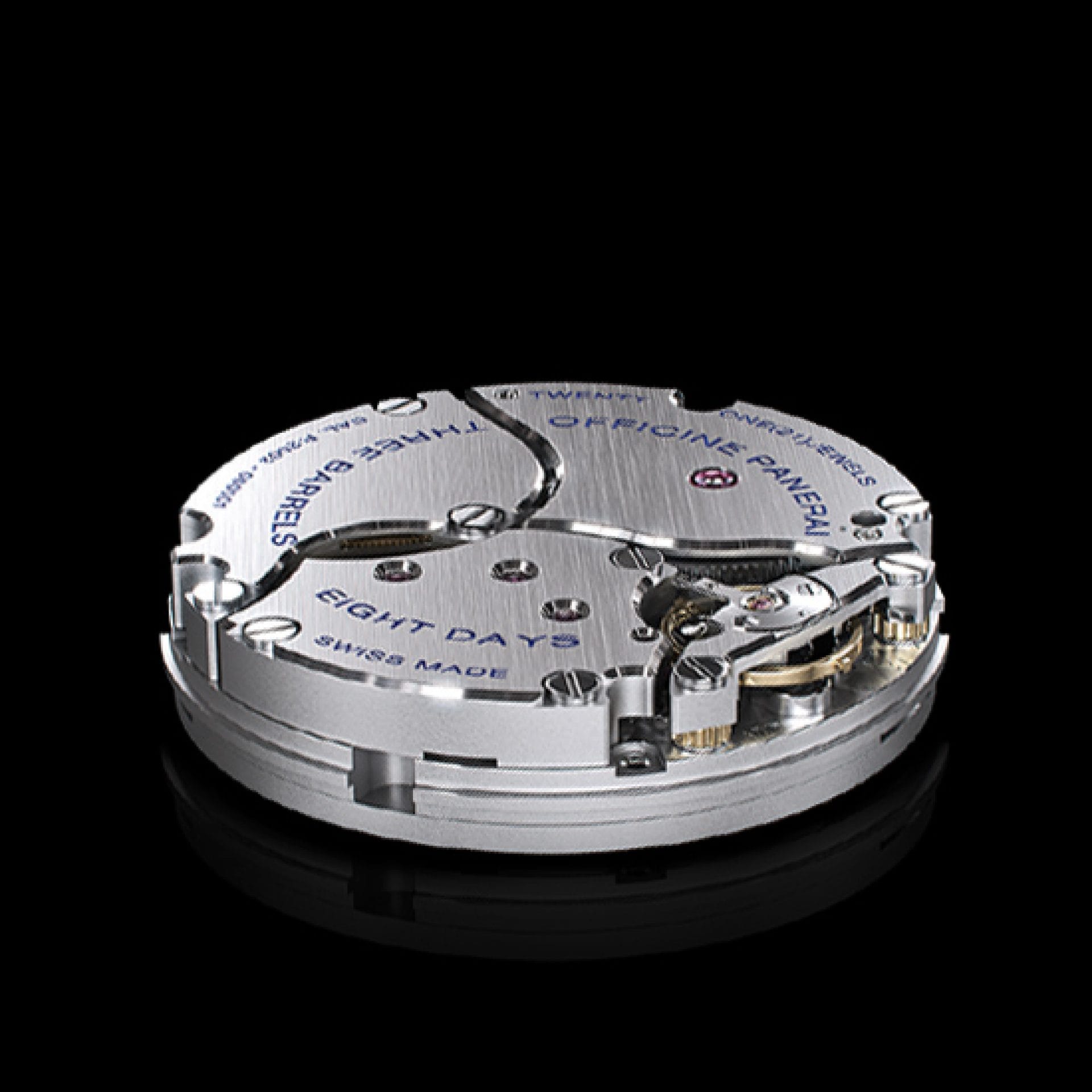
2005
OFFICINE PANERAI'S FIRST IN-HOUSE MOVEMENT
Officine Panerai launches its first in-house movement, the P.2002: a hand-wound calibre with GMT function and an 8 Days power reserve, as in the Angelus movements used in the mid 1950s.
The calibre takes its name from the year in which Officine Panerai inaugurated its production plant, a tribute to the watchmaking art of the Florentine brand.
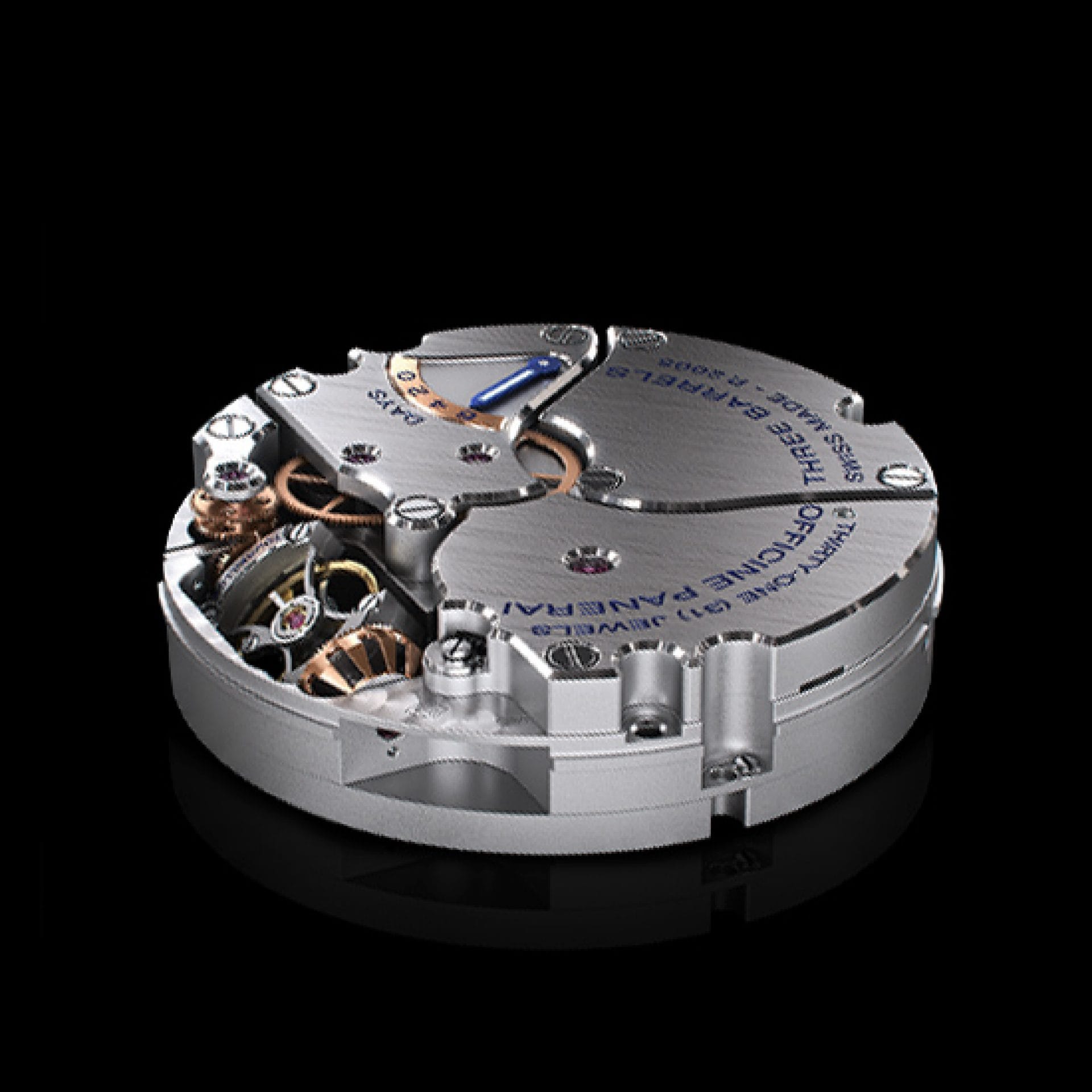
2007
OFFICINE PANERAI PRESENTS NEW IN-HOUSE CALIBRES
Three new calibres designed and developed in-house by Officine Panerai are presented: the P.2003, the P.2004 and the innovative P.2005. The P.2005 has an elegant tourbillon that has been tailored by the company, making the tradition of this fine watchmaking complication its own, and at the same time innovating the device. In fact, the cage housing the balance wheel and the escapement rotate on an axis that is not parallel to the balance wheel axis, but instead is perpendicular to it. Unlike traditional tourbillons in which the cage completes one rotation per minute, the cage of the Officine Panerai tourbillon completes one rotation in 30 seconds.
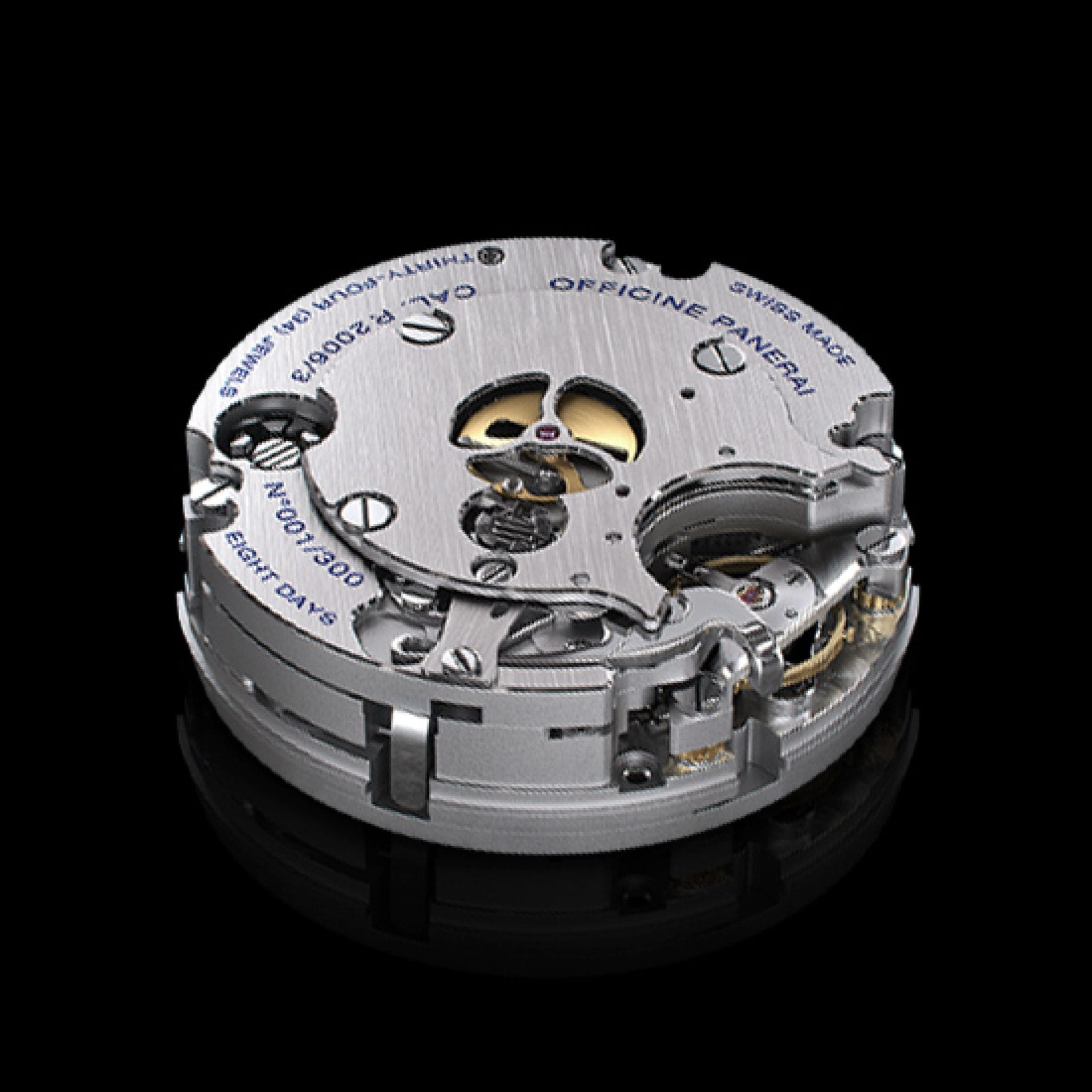
2008
OFFICINE PANERAI LAUNCHES THE P.9000 AND P.2006 IN-HOUSE CALIBRES
The P.9000 calibre, primarily characterized by a 3 Days power reserve, is mounted on a series of Luminor and Radiomir models, while the P.2006 is an evolution of the P.2004 single-button chronograph calibre, with the addition of a split-second function controlled by a second button at 10 o'clock.
2009
OFFICINE PANERAI AND THE PASSION FOR THE SEA
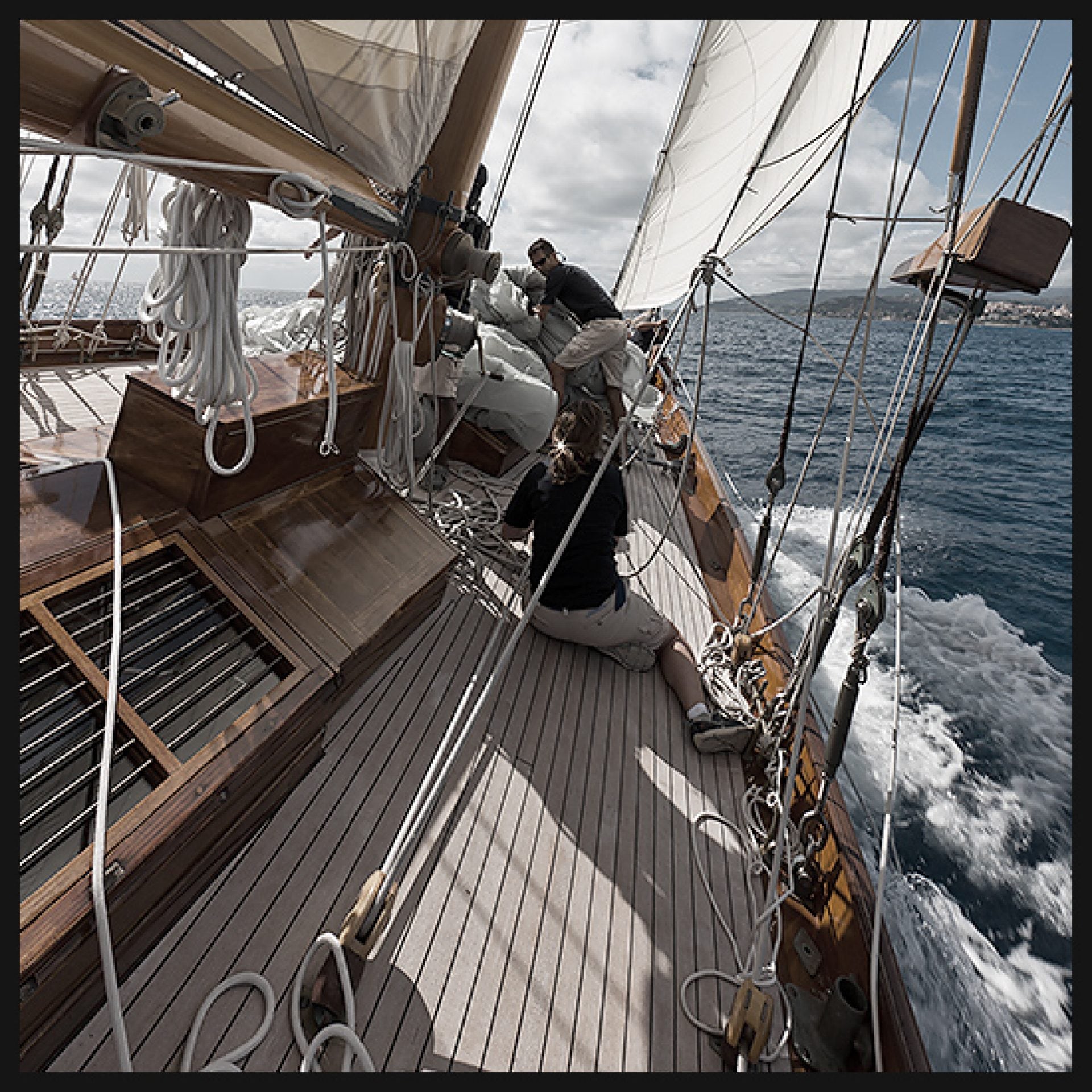
To celebrate passion for the sea, Officine Panerai acquires and restores Eilean, the 1936 Bermudian ketch built in Fife's legendary shipyard. It takes three whole years to bring Eilean back to the sea and to its original beauty, thanks to the expert restoration by the Francesco Del Carlo shipyard in Viareggio. After 40,000 hours of work, Eilean's launch ceremony is held at the Sailing Section of the Italian Navy in La Spezia, on 22 October. The attention of the brand's enthusiasts' is captured by the re-edition of the GPF 2/56, the model Panerai designed for the Egyptian Navy in 1956.
2010
A TRIBUTE TO GALILEO GALILEI
On the occasion of the 400th anniversary of his first celestial observations, Officine Panerai dedicates a triptych of exceptionally complex models to the Tuscan genius, Galileo Galilei: L’Astronomo, Lo Scienziato and the Jupiterium clock. Panerai's Jupiterium model is a planetary clock with perpetual calendar. It shows, from a geocentric perspective, the positions in the celestial sphere of the Sun, the Moon and Jupiter with the so-called Galilean Moons – i.e. its four main satellites, now known as Io, Europa, Ganymede and Callisto. These four satellites were observed for the first time by Galileo Galilei in 1610, thanks to the invention of the telescope. Officine Panerai launches the in-house P.999 movement and the first Panerai Composite watch at the Salon International de la Haute Horlogerie.
2011
OFFICINE PANERAI PRESENTS THE BRONZE WATCH
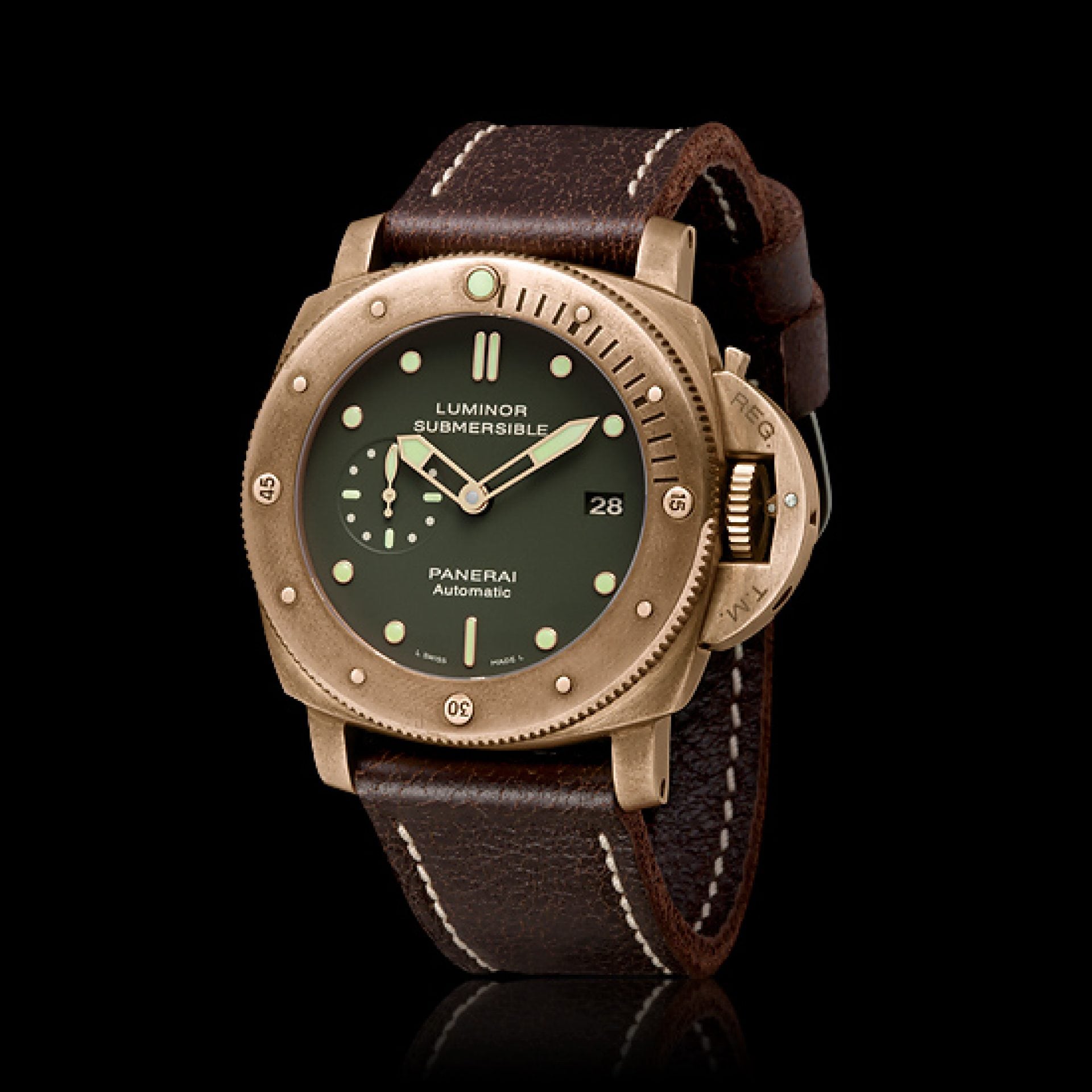
Officine Panerai presents the Luminor Submersible 3 Days Automatic Bronzo. For this model, the Maison uses for the first time a material which owes its charm to the aged look it develops over time, and that has always been evocative of the sea world to which Officine Panerai is historically linked. This year also sees the creation of the P.3000 in-house calibre, expression of the watchmaking art of the brand. Then, Officine Panerai opens its thirtieth boutique in Bal Harbour, Florida.
2012
A TRIBUTE TO THE PAST: PANERAI PRESENTS TWO RADIOMIR MODELS WITH THE HISTORIC CASE
Officine Panerai re-proposes the exclusive, historically inspired case with two special edition Radiomir models. Unlike the prototypes and the models in production at the end of the 1930s, some historical models (Ref.6152/1) produced in the 1950s had a case in which the lugs did not consist of a welded steel wire but were made from the same block as the case. Therefore, they were more solid and more resistant. The new Radiomir models re-propose this special case with a classic 47mm diameter, together with other elements inspired by historical models: acrylic glass to protect the dial, the circular, rounded bezel, and the cylindrical crown.
2013
THREE NEW IN-HOUSE MOVEMENTS MARK THE CONTINUING DEVELOPMENT OF OFFICINE PANERAI
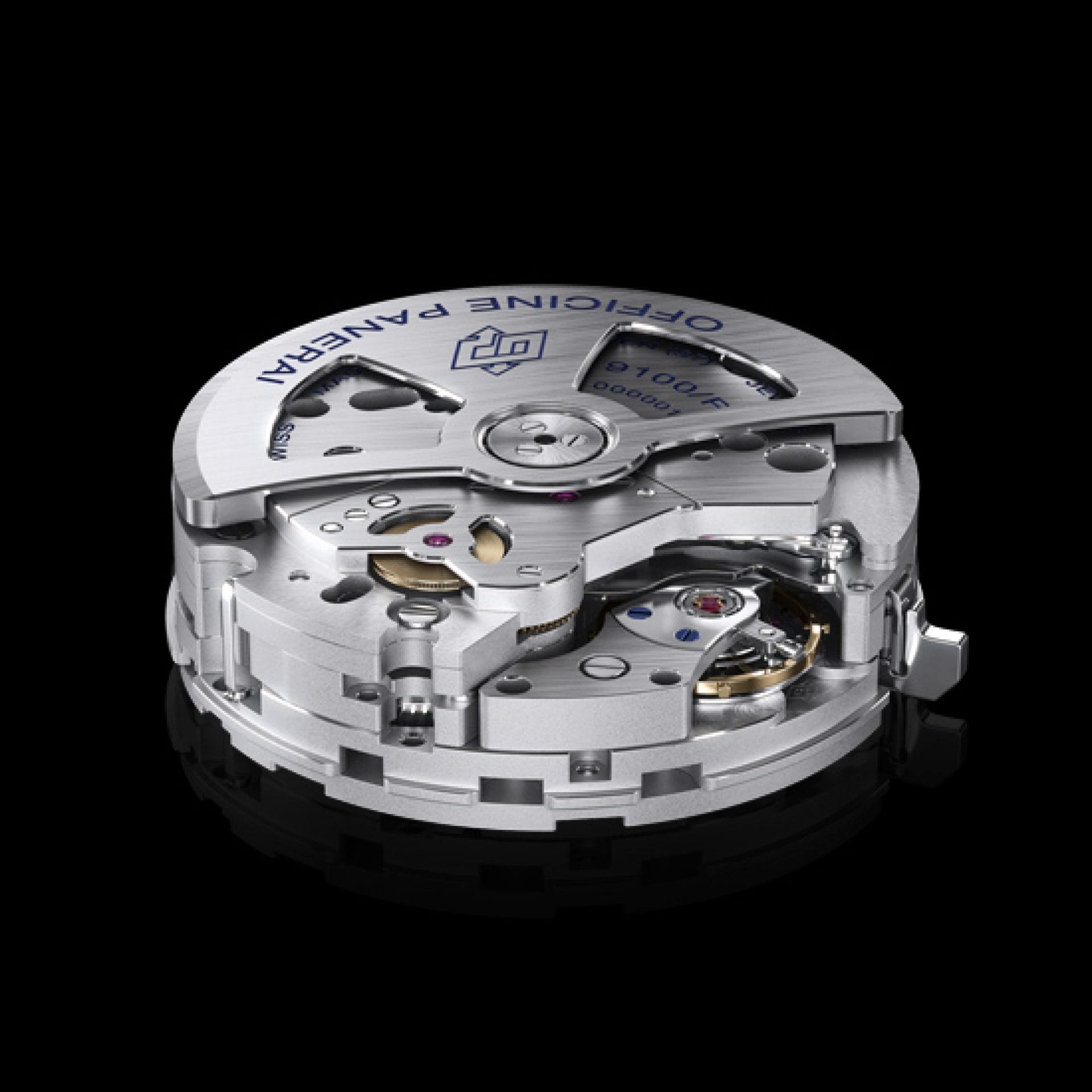
Officine Panerai launches three new in-house movements: the P.9100 calibre, the first Panerai automatic movement with chronograph flyback function, the sophisticated P.9100/R with regatta countdown and the P.5000, a new hand-wound calibre with 8 Days power reserve. The new collection also presents the historically fascinating Radiomir watches, with the lugs made from the same block as the case, and a new range of Submersible watches. At the Salon de la Haute Horlogerie in Geneva, Officine Panerai is also presenting the Pocket Watch Tourbillon GMT Ceramica, a remarkable pocket watch in ceramic.

2014
OFFICINE PANERAI NEW MANUFACTURE OPENING
Officine Panerai opens its new Manufacture on the hills of Neuchâtel in Switzerland. The new building houses in a single location all the highly specialized skills involved in fine watch-making, combining the excellence of Italian Design and the tradition of Swiss-made Technology. Since 2002 - when the first Panerai Manufacture was opened - Panerai has developed a full range of in-house movements with watch functions at the highest levels: from the GMT to a complete range of Chronographs, from the extended Power Reserve to the unmistakable Panerai Tourbillon. In 2014 Panerai introduces the P.4000 calibre, an in-house automatic movement distinguished by its off-centred oscillating weight; a perfect synthesis of design and highly sophisticated watchmaking technology.
2015
OFFICINE PANERAI REOPENS ITS BOUTIQUE IN HONG KONG CANTON ROAD
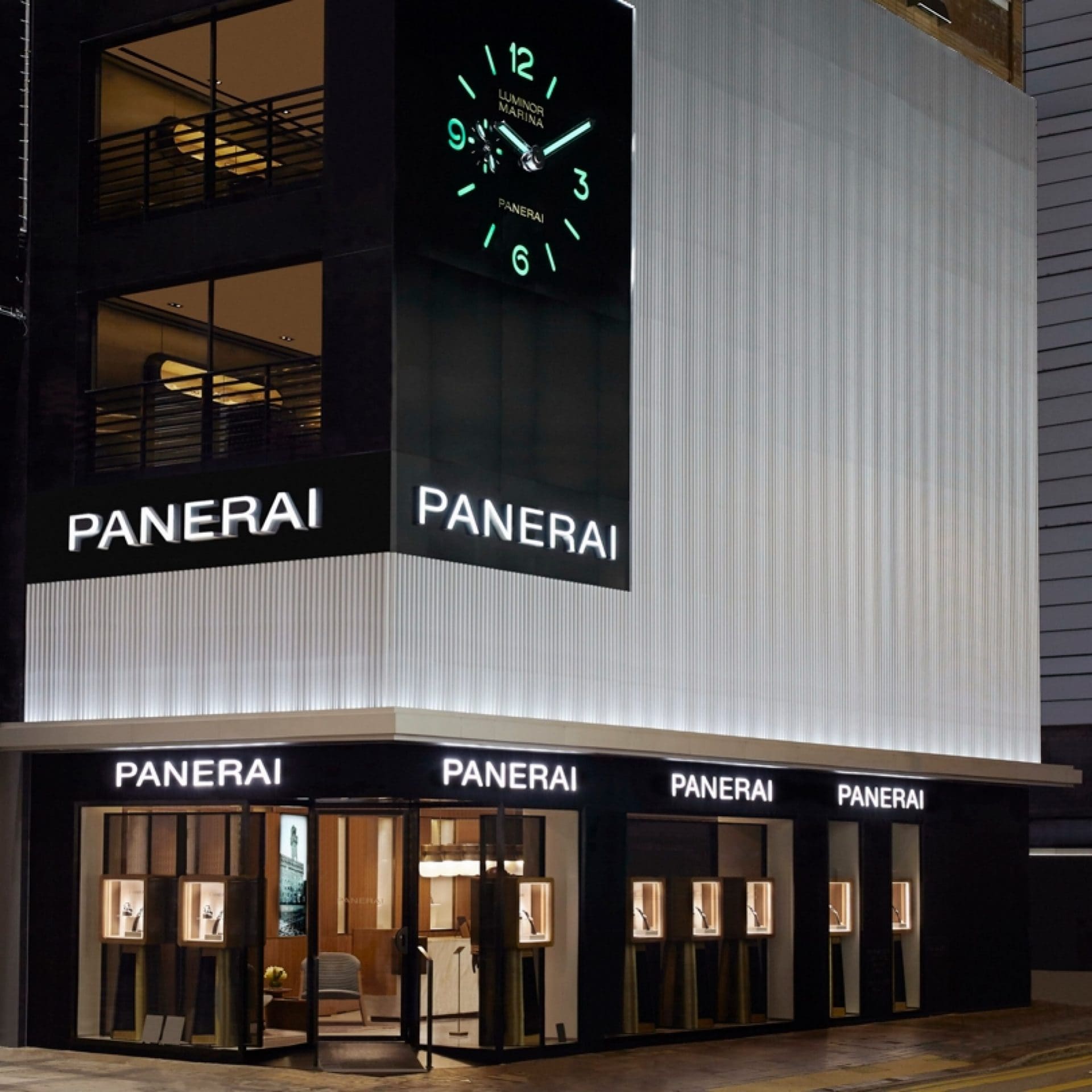
Panerai officially reopens its Boutique in Hong Kong Canton Road, now the largest boutique of the Brand in the world. Compared to all the other Panerai boutiques, the Hong Kong boutique is unique, with a distinctive external facade consisting of panels of undulating aluminium, fitted with a large wall clock with the characteristic Panerai dial. During the same year the P.1000 in-house movement is launched: a calibre immediately recognizable as a Panerai masterpiece from both the technical and aesthetic points of view. A demonstration of the extraordinary expertise required to develop such sophisticated mechanical movements created by Panerai, with an overall thickness of only 3.85 mm.

2016
PANERAI LAUNCHES THE RADIOMIR MINUTE REPEATER CARILLON TOURBILLON
Panerai launches the Radiomir Minute Repeater Carillon Tourbillon. Technically the most complicated watch ever made by the Panerai Manufacture in Neuchâtel, provided with the exclusive tourbillon regulator and the remarkable double minute repeater mechanism chiming either local time or a second time zone. It is able to sound every hour, every ten minutes, and every single minute with a sophisticated system of gongs and hammers.

2017
INNOVATIVE MATERIALS AND AMERICA’S CUP
Panerai presents the Luminor Lab-Id Carbotech™-49mm, an innovative watch that demonstrates the ability of Panerai’s Laboratorio di Idee to invent. Thanks to a brilliant development tapping into the infinite potential of carbon, the new creation is a case with high-tech characteristics, a completely new black dial, guaranteed for 50 years.
Still in 2017, Panerai launches the Submersible BMG-TECH™-47mm, featuring a harder material and lighter than steel. BMG-TECH™ is a bulk metallic glass with a disordered atomic structure, obtained through a high-pressure injection process at a high temperature.
Also, in 2017 Panerai is the official partner of the most famous sailing competition, the 35thAmerica's Cup, partnering with Team Oracle and Team Soft Bank.
2018
COMPLICATIONS & HIGH-END TECHNOLOGY
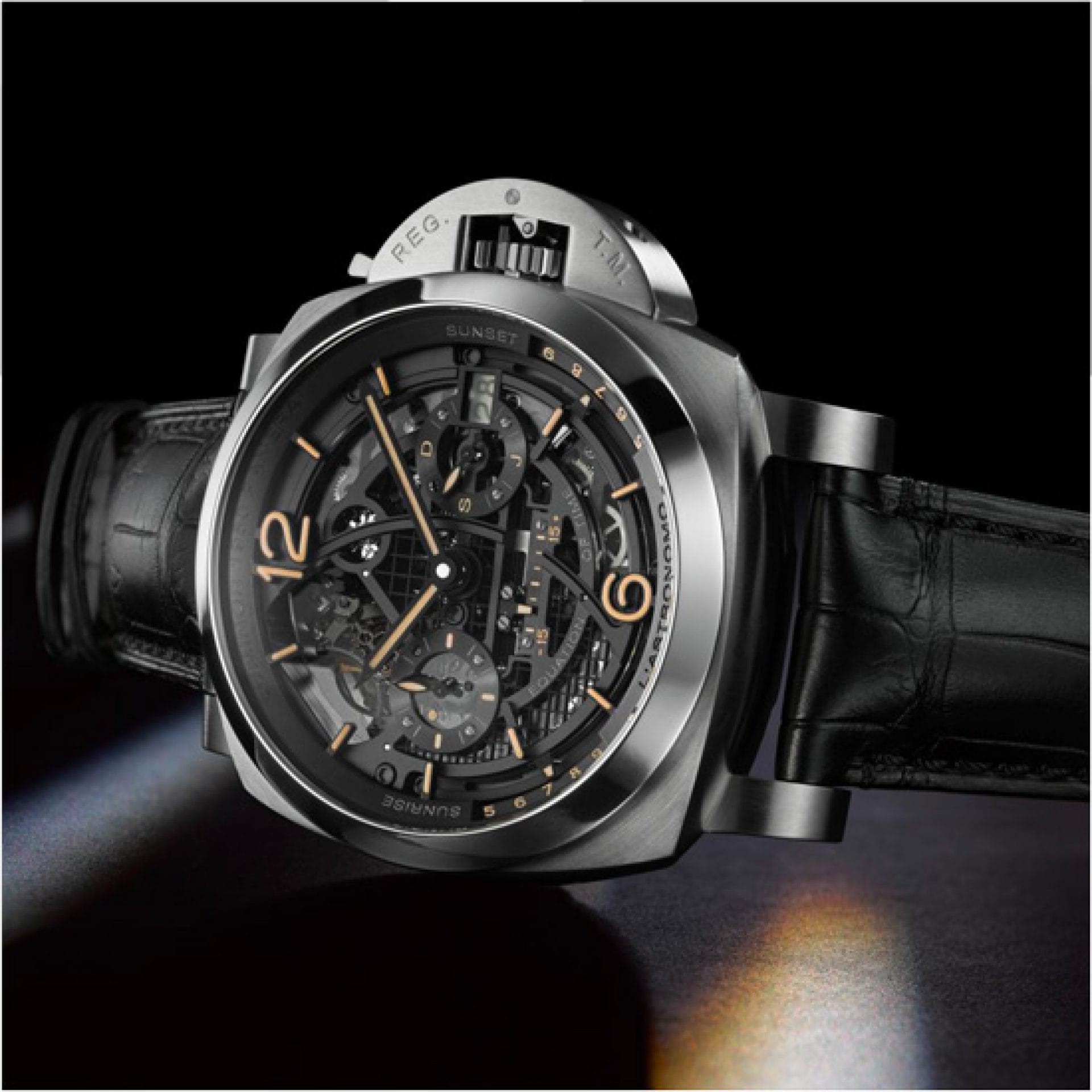
During SIHH 2018 Panerai presents two innovations, the first being Lo Scienziato-Luminor Tourbillon GMT with a 3D-printed Titanium case and the P.2005/T Skeletonized movement, with Tourbillon regulator. The Luminor Tourbillon GMT is one of the most technical and surprising creations of the Panerai Manufacture in Neuchâtel.
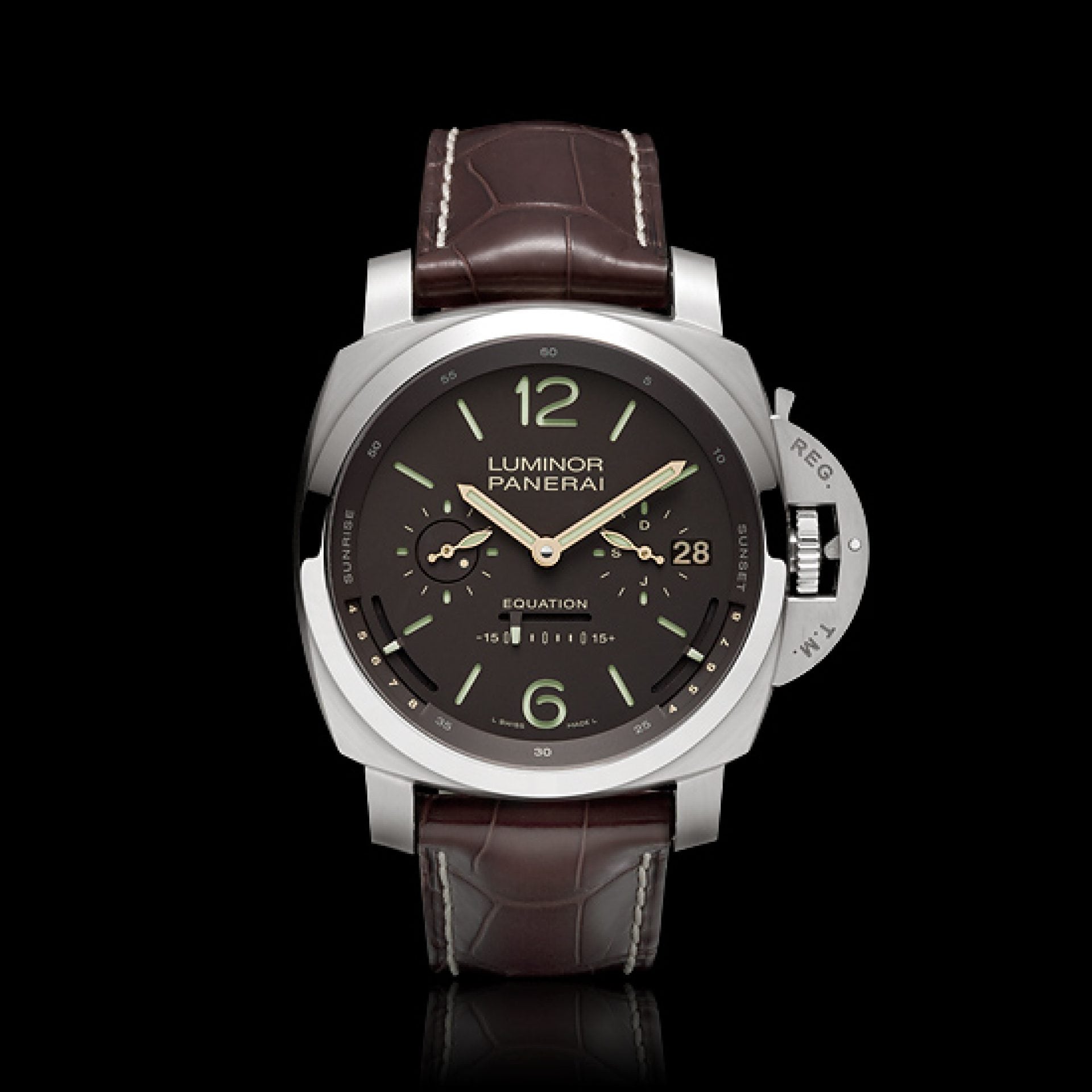
The second complication of the year is L'Astronomo-Luminor 1950 Tourbillon Moon Phases Equation of Time GMT. The first of Officine Panerai’s creations to have a moon phase indication and an innovative system using polarized crystal to indicate the date. A classic complication of high-end watchmaking which Panerai interprets in its own way.
2019
THE BEGINNING OF A NEW ERA: ADRENALINE EXPERIENCES AND INSPIRING PARTNERSHIPS
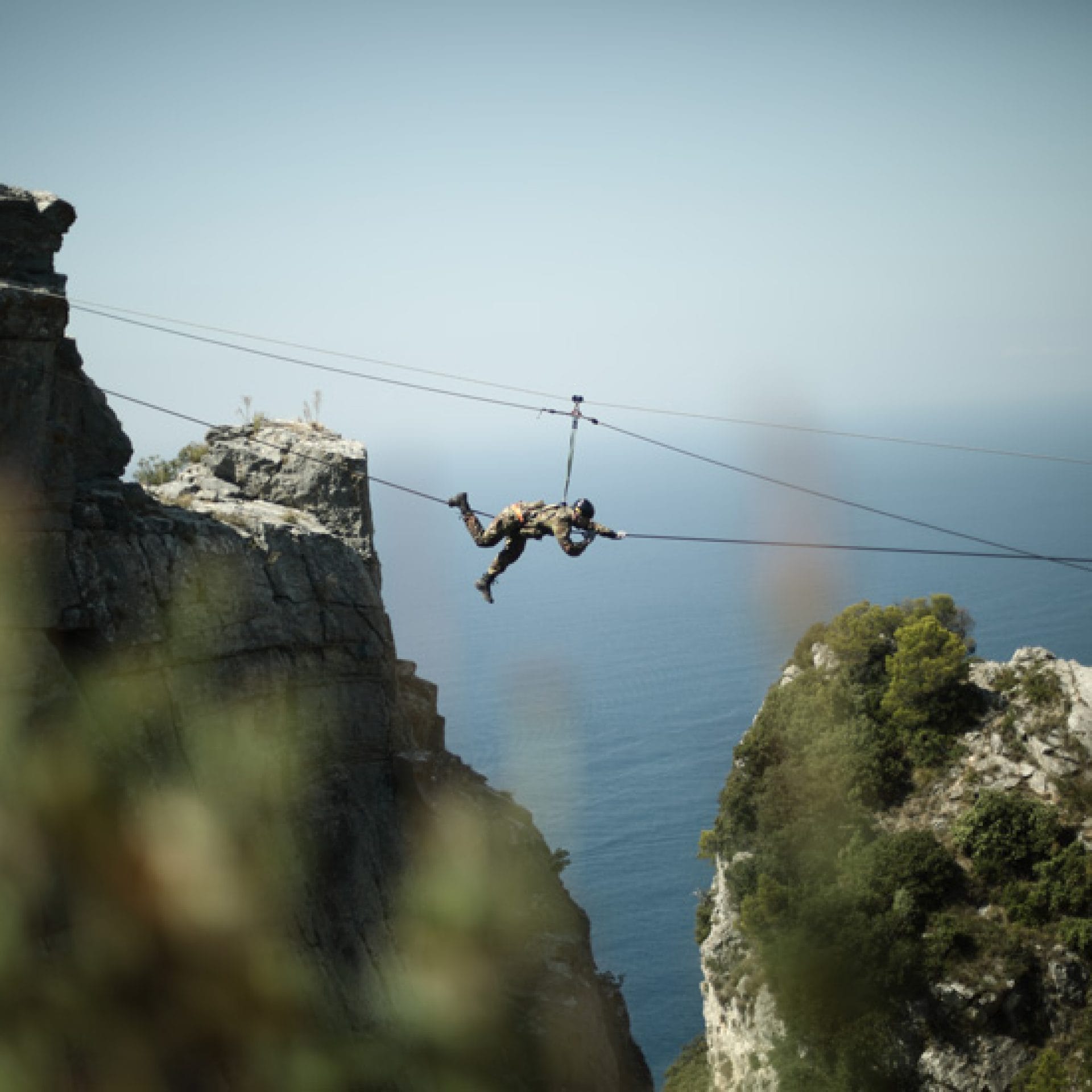
Panerai launches highly engaging events “Experiences”, which combine product and service in a single selling proposition. For the first experience 33 clients join the COMSUBIN, Italian Navy special forces. The second Experience is in French Polynesia, where 15 Panerai heroes have the chance to live a unique personalized experience with the brand ambassador Guillaume Néry.
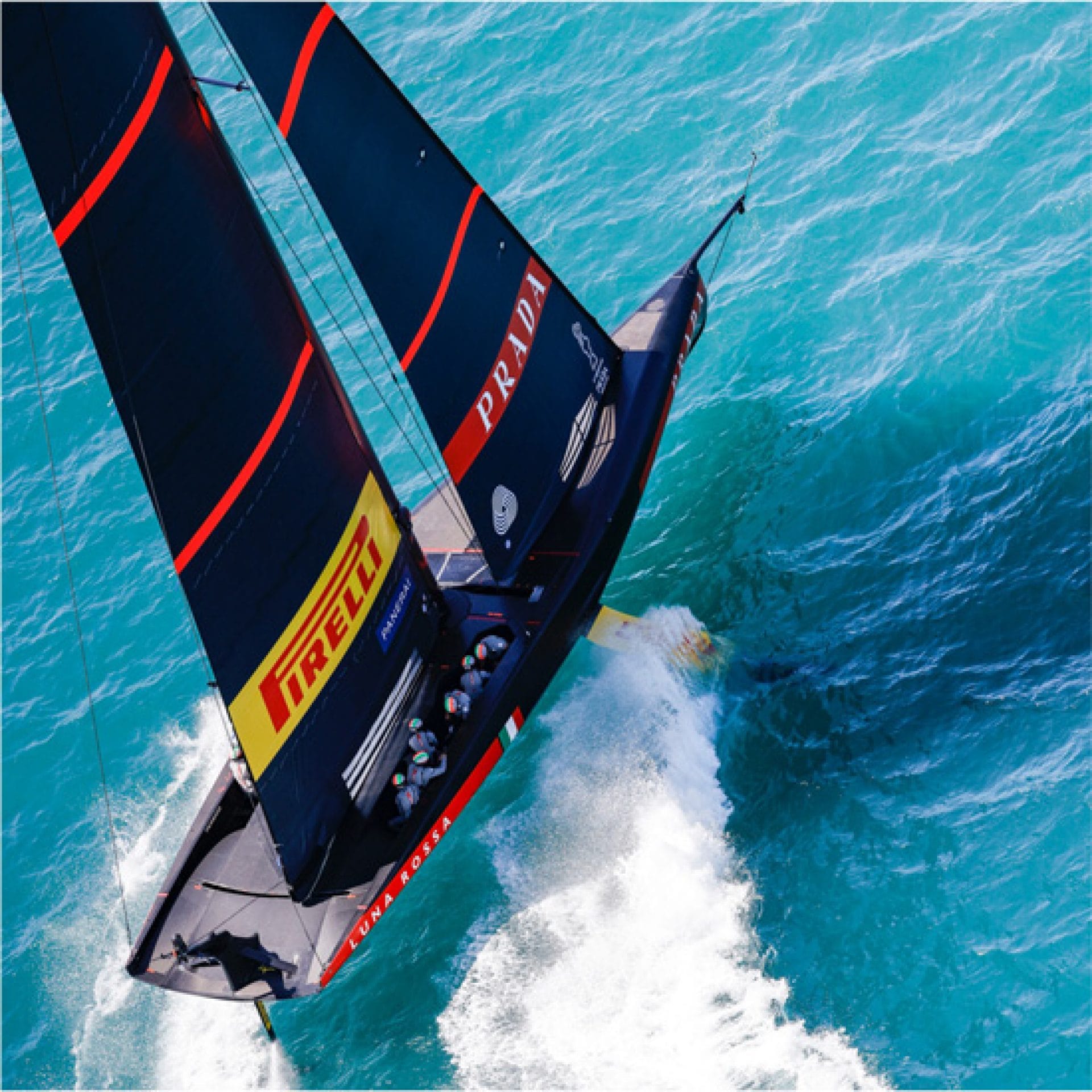
One of the main announcements at Watches&Wonders is the agreement signed by Panerai and Luna Rossa. The partnership foresees that Panerai will be the Official Sponsor of Luna Rossa and will create a series of watches with exceptional avant-garde contents.
Still in 2019, the Submersible leaves the Luminor and becomes a stand-alone collection, a product family in its own right.
2020
THE YEAR OF THE LUMINOR AND 36TH AMERICA’S CUP 2020
Exactly 70 years after having filed the international patent for using the name Luminor, Panerai creates a brilliant, innovative model with even greater luminosity: the Luminor Marina–44mm (PAM01117). It is guaranteed for 70 years.
Also, in 2020 Panerai continues its evolutionary journey and redefines the expressive dimensions of the epic Luminor Marina. The new style for the Luminor Marina is intended to be simpler, functional and modern.
For the 36th America’s Cup 2020, Panerai is partnered with Luna Rossa Prada Pirelli Team. With the Luna Rossa collection, Panerai presents four iconic watches designed for the Team, the Challenger of Record for the 36th America's Cup 2020. It is with great pride that Panerai creates these timepieces, which represent a new Italian story associated with the sea, excellence and innovation.
2022
SUBMERSIBLE QUARANTAQUATTRO
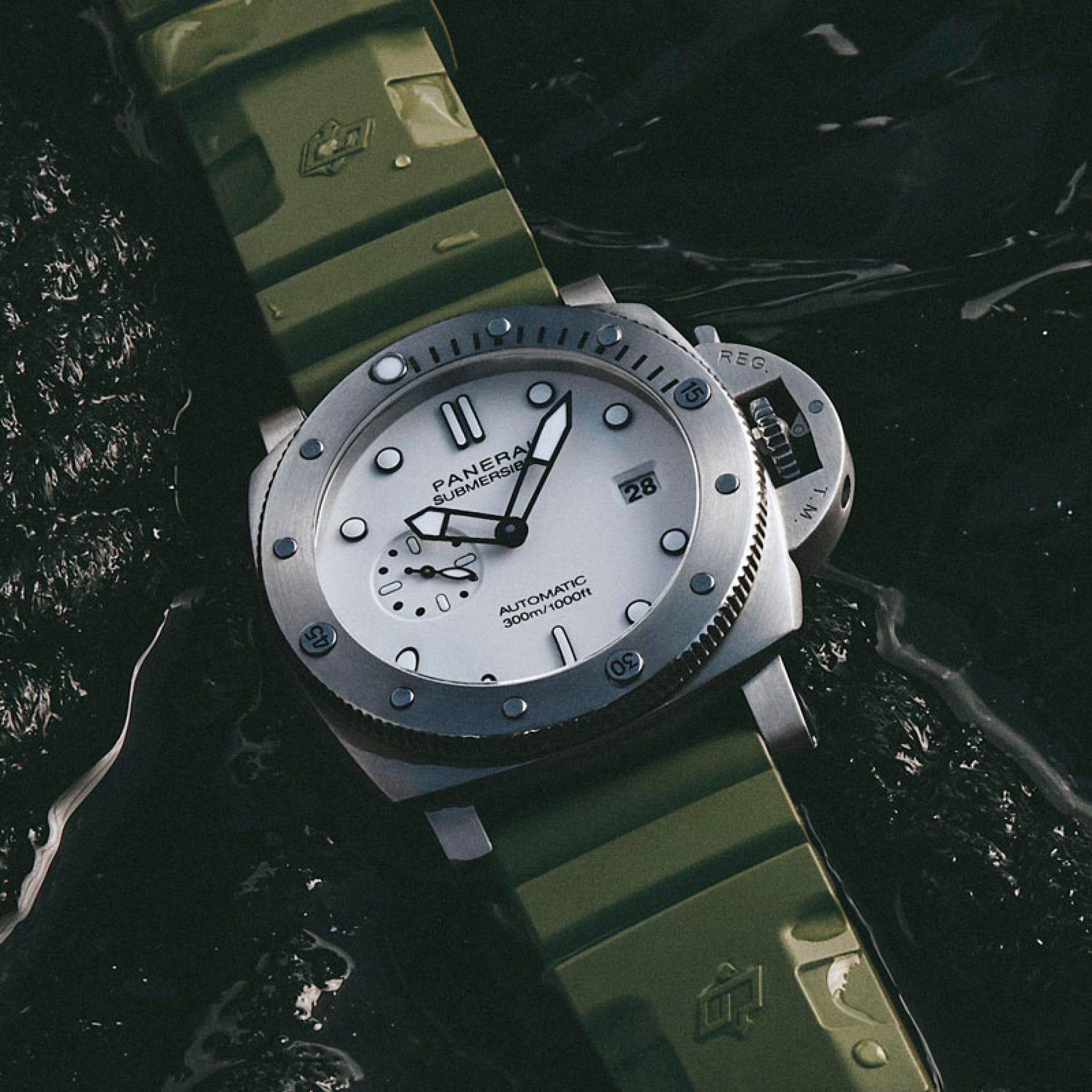
In 2022 Panerai presents the new Submersible QuarantaQuattro, a cornerstone of the collection of Submersible diving watches, reintroducing the size 44mm to be added at the existing 47mm and 42mm. All the essential features that are hallmarks of the Submersible family exist in the QuarantaQuattro; it is water-resistant up to 300 meters, featuring the crown-protecting device and the unidirectional rotating bezel, all historically associated with the world of the sea and the ocean, the brand’s natural playground.
2023
SINCE 1860, UNA STORIA LEGGENDARIA
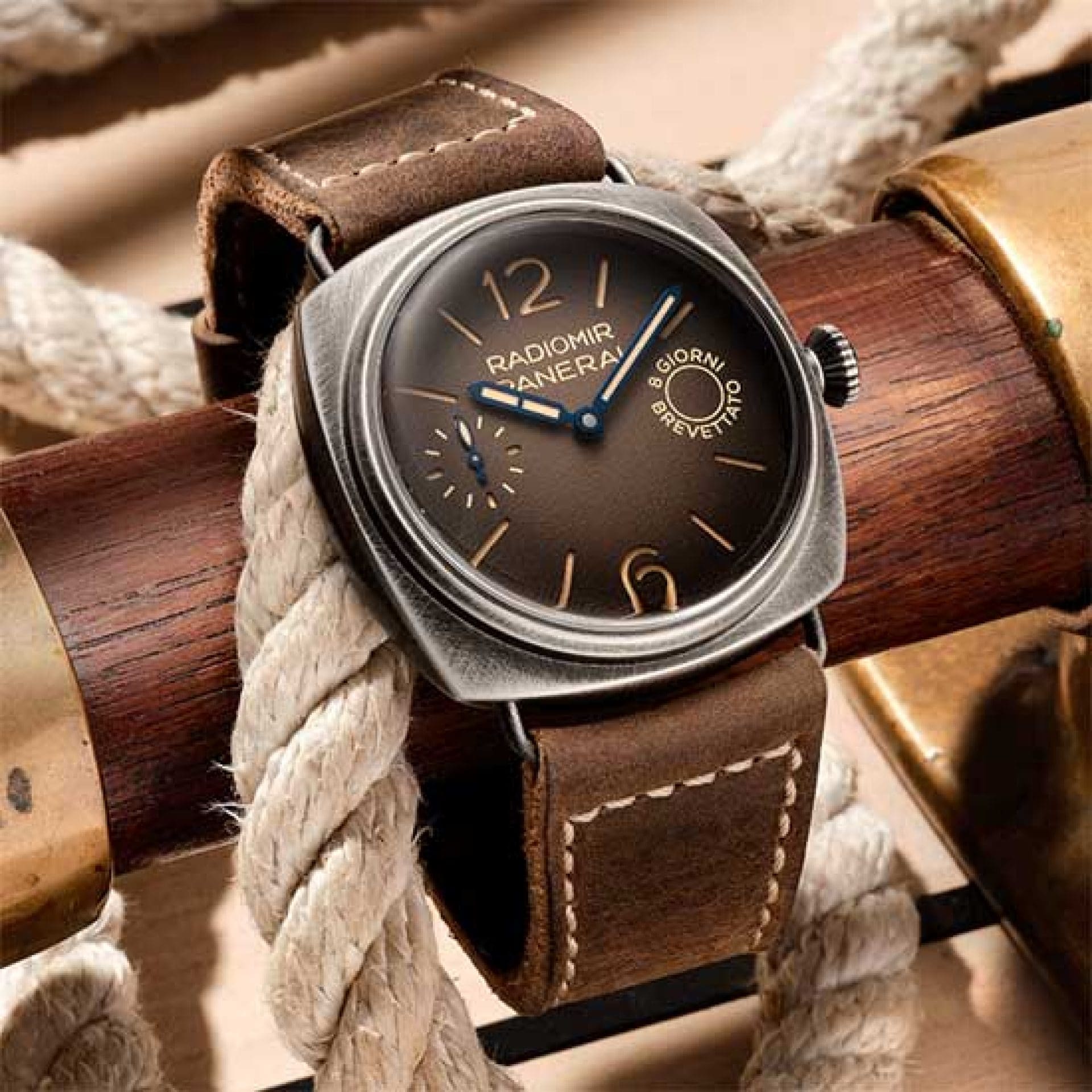
Back to the roots for a year that is an homage to the authentic history of the brand and the Radiomir watches, the collection with the most historic association, strong vintage aesthetics in a contemporary reinterpretation. 2023 is the year to restage the most historic collection as a key pillar of the brand: Radiomir Otto Giorni, as tribute to Panerai’s heritage and history, Radiomir Quaranta, a synthesis of Italian flair and elegance, and Radiomir Complicazioni, the blend of Italian creativity and Swiss Watchmaking.
THE LUMINOR ICON: TECHNICAL EVOLUTION AND PERFORMANCE
2025-2026
2024
2024 LUNA ROSSA AND SUBMERSIBLE ELUX LAB-ID
In the lead-up to the 37th America’s Cup, Panerai unveils a collection of timepieces epitomizing the unwavering research of peak performance, innovation, and the brand’s deep connection with the sea. In the same year, drawing inspiration from America's Cup technologies and materials, and directly from the Luna Rossa team's insights and needs, Panerai introduces an innovative materials: Ti-Ceramitech™. It is a patented material combining titanium’s lightness with ceramic’s resistance. It results in a case 44% lighter and twice as hard as steel, and 10 times more fracture-resistant than traditional ceramic.
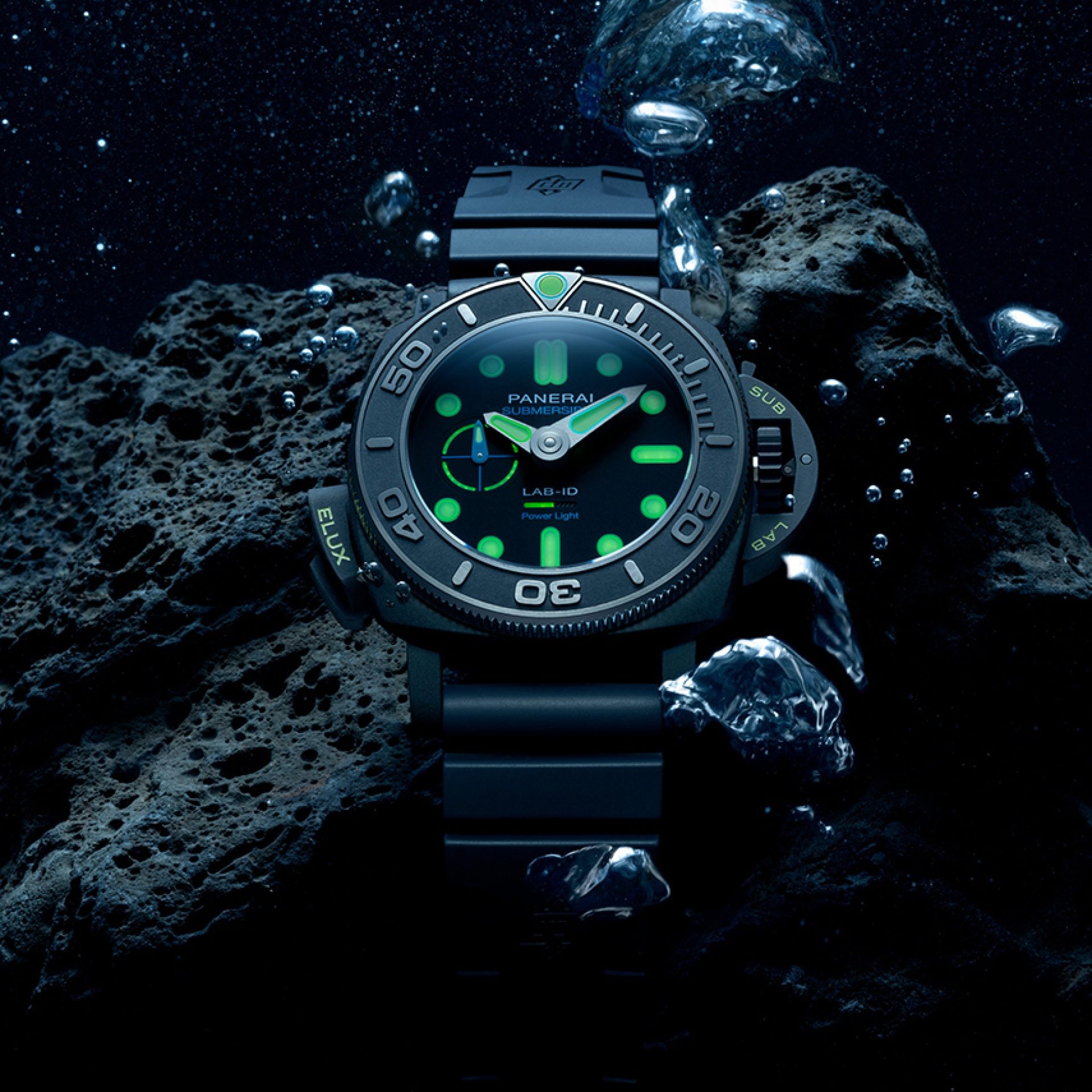
In its relentless pursuit of innovation, Panerai also introduces the new Submersible Elux LAB-ID, a groundbreaking concept watch. The culmination of over 8 years of development, with four patent applications, it features Ti-Ceramitech™ material. At its heart is the pioneering Power Light Function: a fully mechanical movement delivering 30 minutes of on-demand light. This innovation celebrates Panerai's distinctive luminescence expertise and pays tribute to the 1966 patent. The Submersible Elux LAB-ID brings an unprecedented technology to the watchmaking industry.
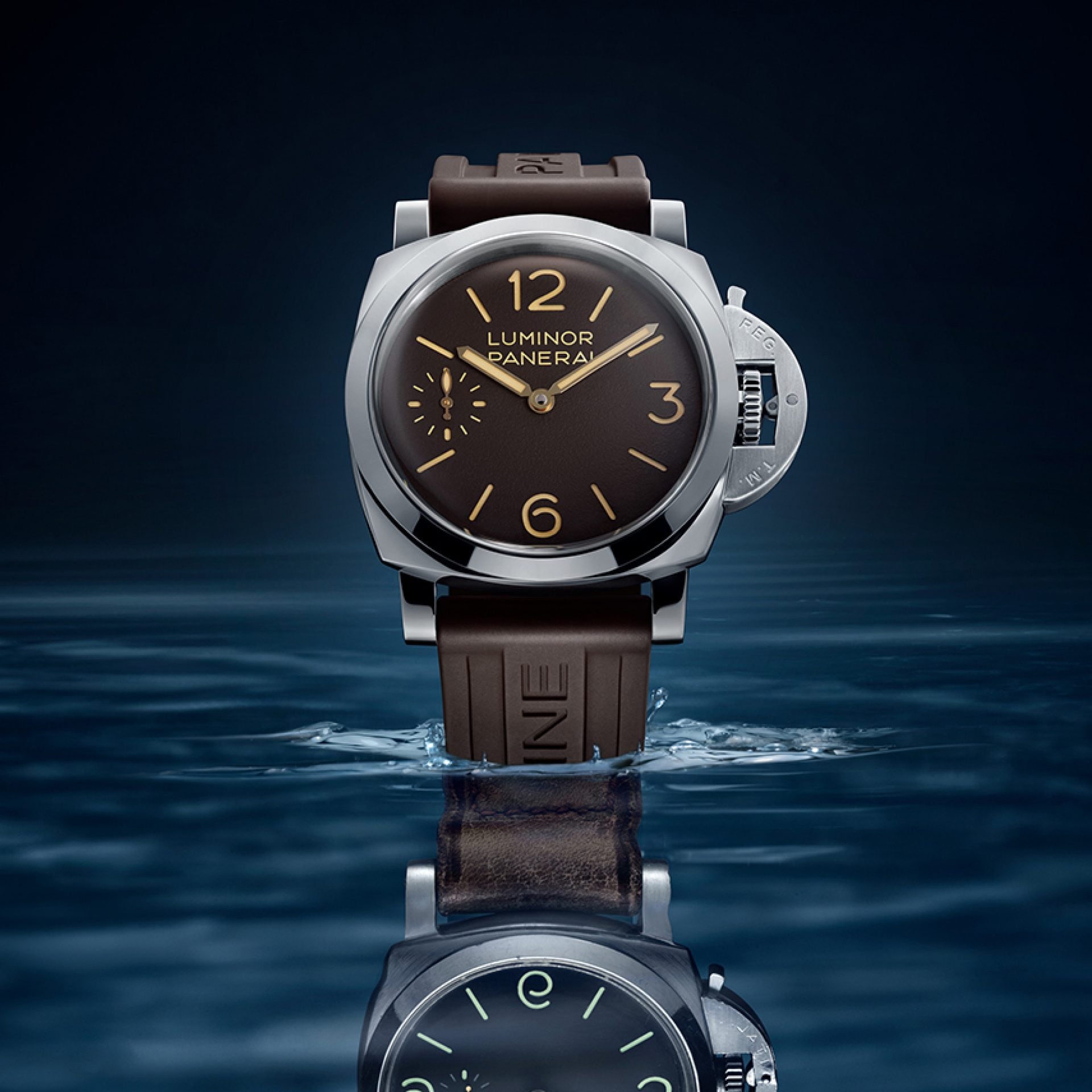
2025/2026
THE LUMINOR ICON: TECHNICAL EVOLUTION AND PERFORMANCE
In 2025, Panerai presents a new Luminor Marina collection, an evolution of its icon built around upgraded technical features such as: 500 metres water resistance, open case back, a cross-balance bridge for improved shock resistance, small second hacking for precise time adjustment, and the convenient PAM click release systemTM.
Built around the historic ref. 6152/1 case, this year’s Luminor selection revisits the collection through the lens of functional heritage. Emblematic proportions, legibility-first dials, vintage cues and contemporary execution come together in a family of tool watches shaped by Panerai’s military past and developed for present-day performance.
Innovation reaches a new pinnacle introducing for the first time 31 Days power reserve, an ambitious technical achievement from Panerai’s Laboratorio di Idee, retaining Panerai’s long lasting power reserve main feature. The Luminor remains Panerai's core identity, blending heritage and contemporary performance through technical and design developments. Built around the historic ref. 6152/1 case, this year’s Luminor selection revisits the collection through the lens of functional heritage. Emblematic proportions, legibility-first dials, vintage cues and contemporary execution come together in a family of tool watches shaped by Panerai’s military past and developed for present-day performance.