The Depths of Time
Scroll through all the stops to discover the fascinating stories and historical anecdotes hidden behind each piece.
Prepare to dive into an immersive experience that brings the heritage of Panerai to life.
Panerai Family
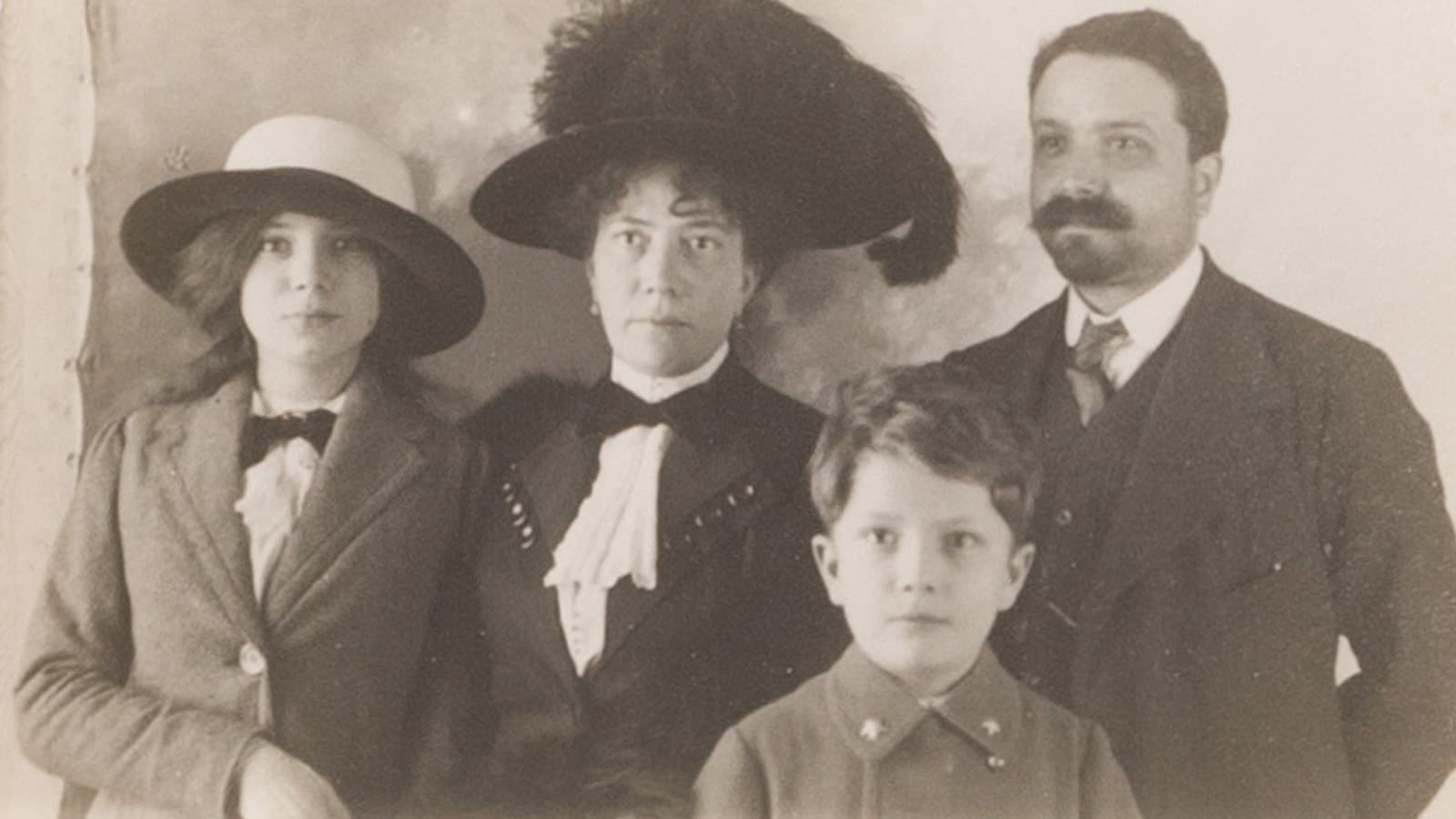
This family portrait introduces the key figures in our story: Guido with his wife Guglielmina, and their children Giuseppe and Maria.
Orologeria Svizzera’s watchmakers
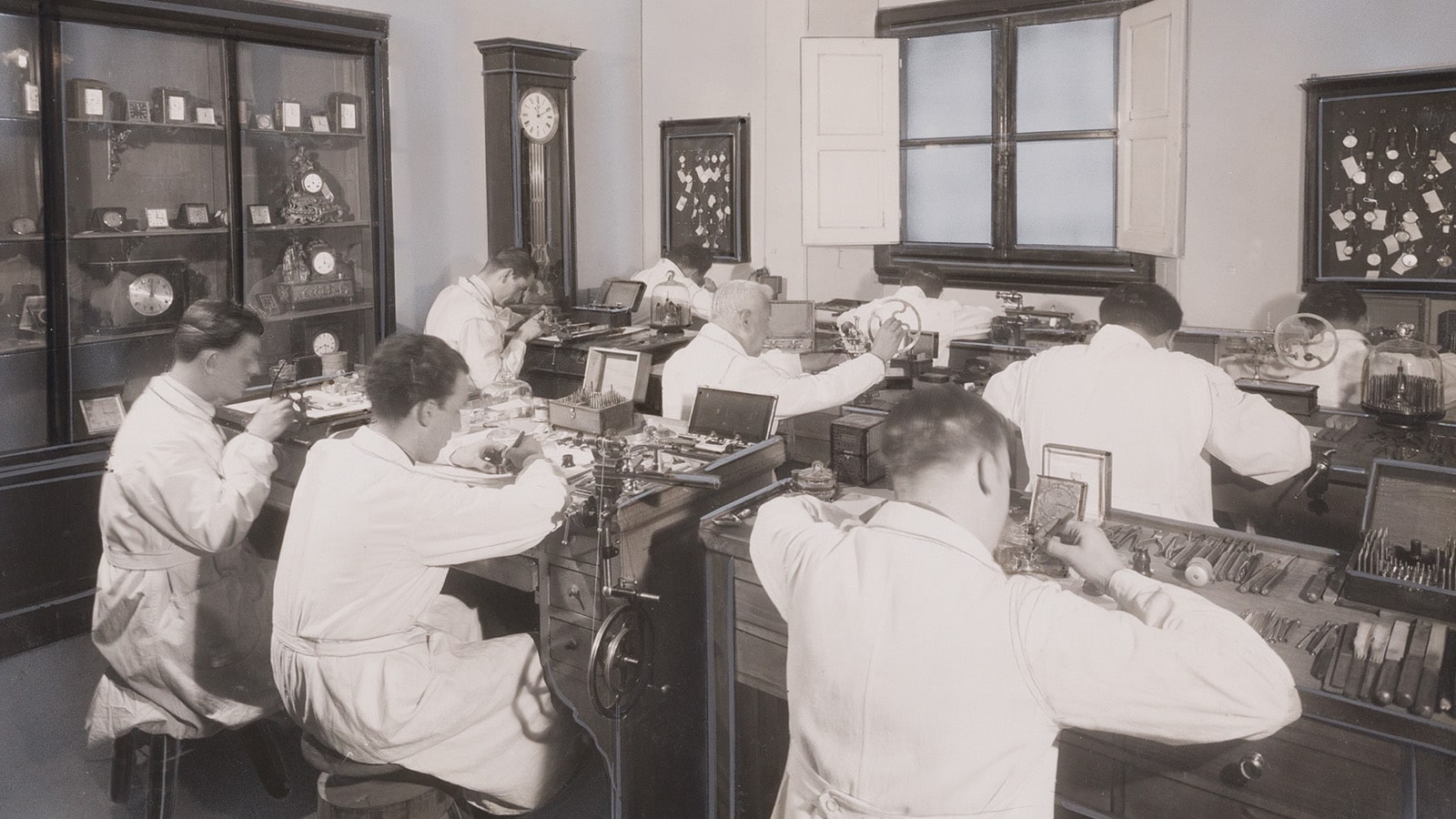
Orologeria Svizzera employed trusted watchmakers who assembled and repaired all watches on the first floor before they were sold.
Frogmen in action
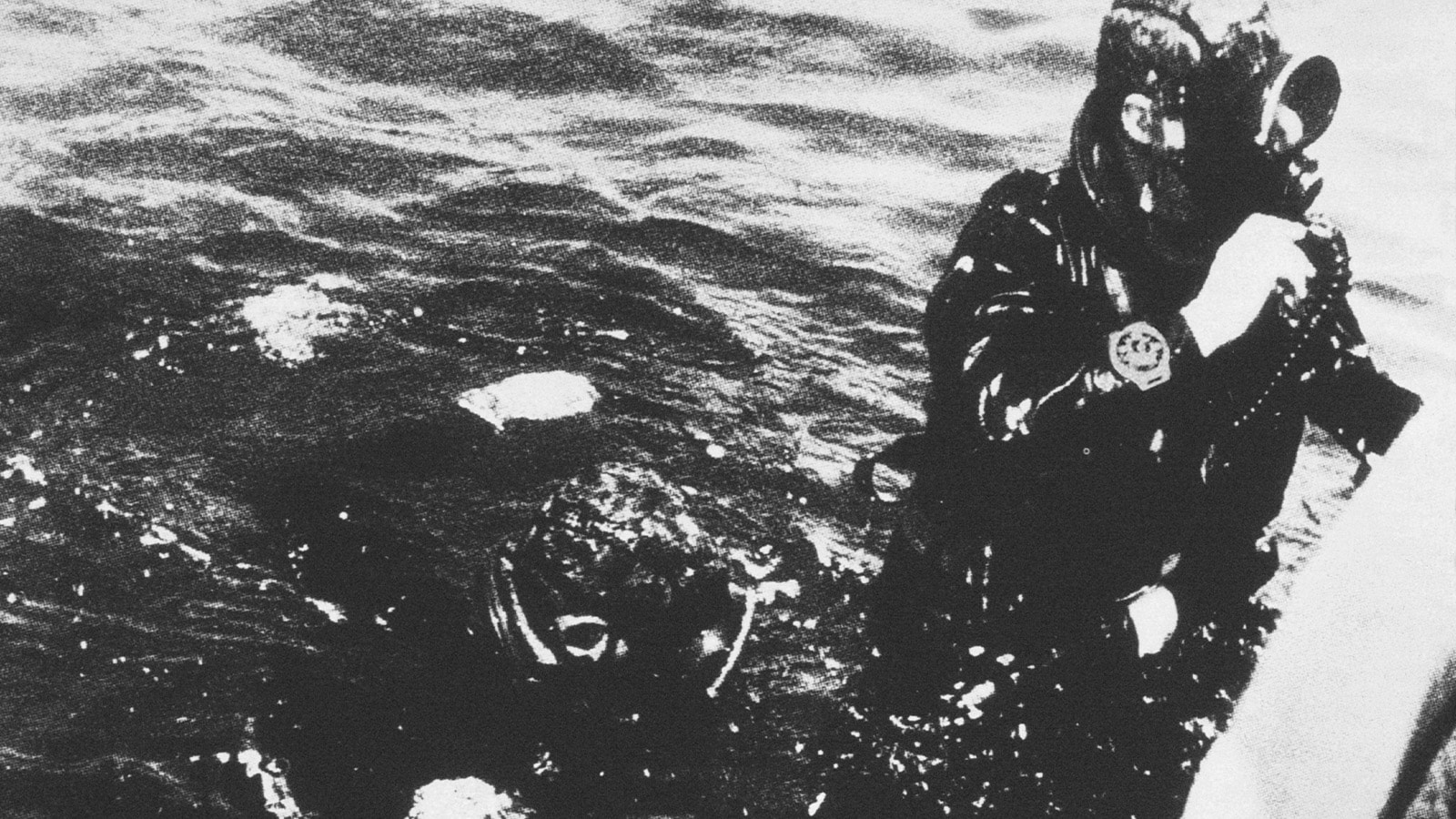
Thanks to the technical skills developed through the family’s watchmaking operations, Panerai secured the contract to produce watches for the Italian Navy’s frogmen.
Military precision, Enduring brightness
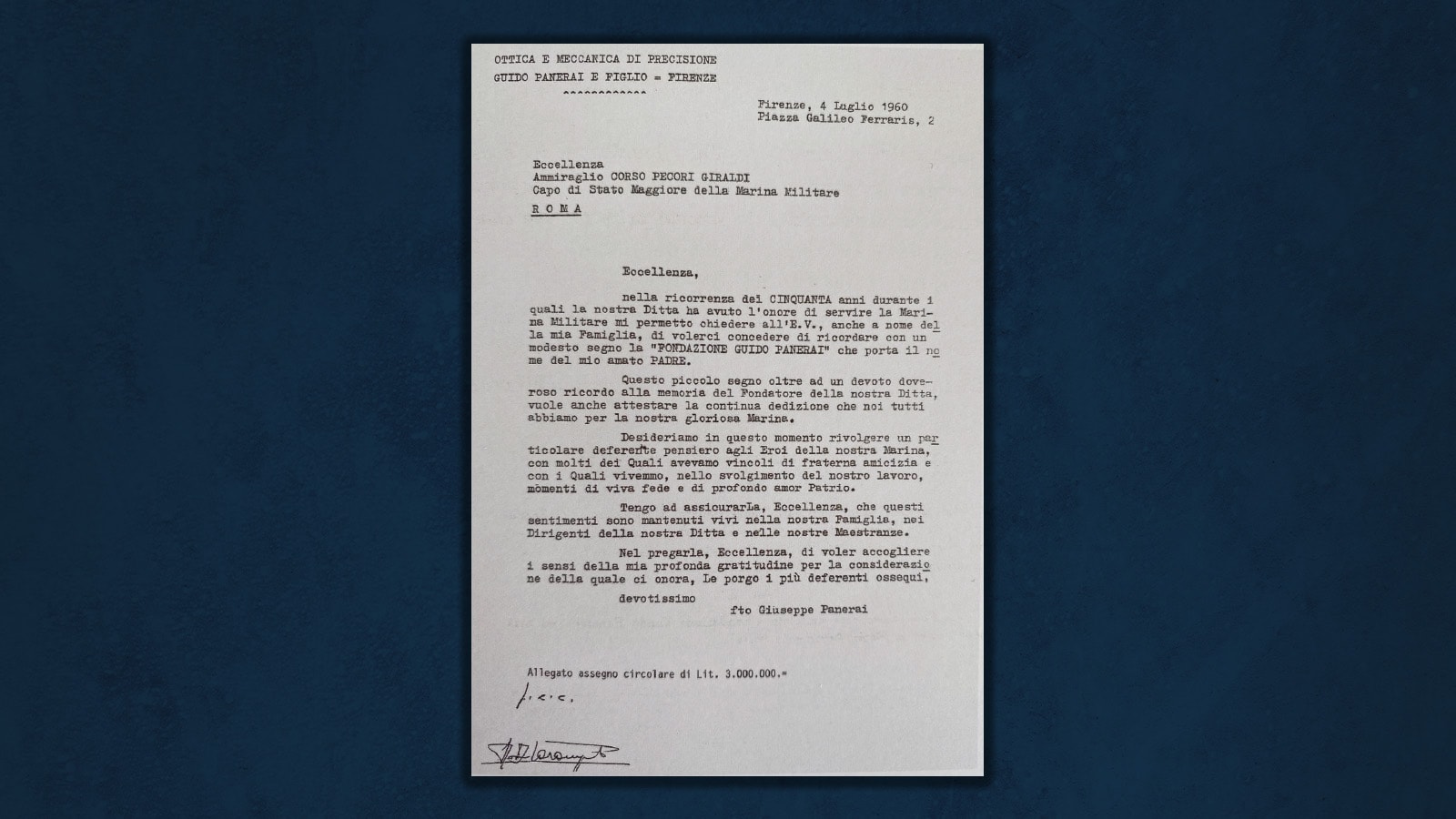
Letter from Giuseppe Panerai to the Italian Navy
Dated 1960, this letter verifies the 50 years of collaboration with the Italian Navy. Panerai supplied tools since the 1910s, continuously evolving to meet different needs.
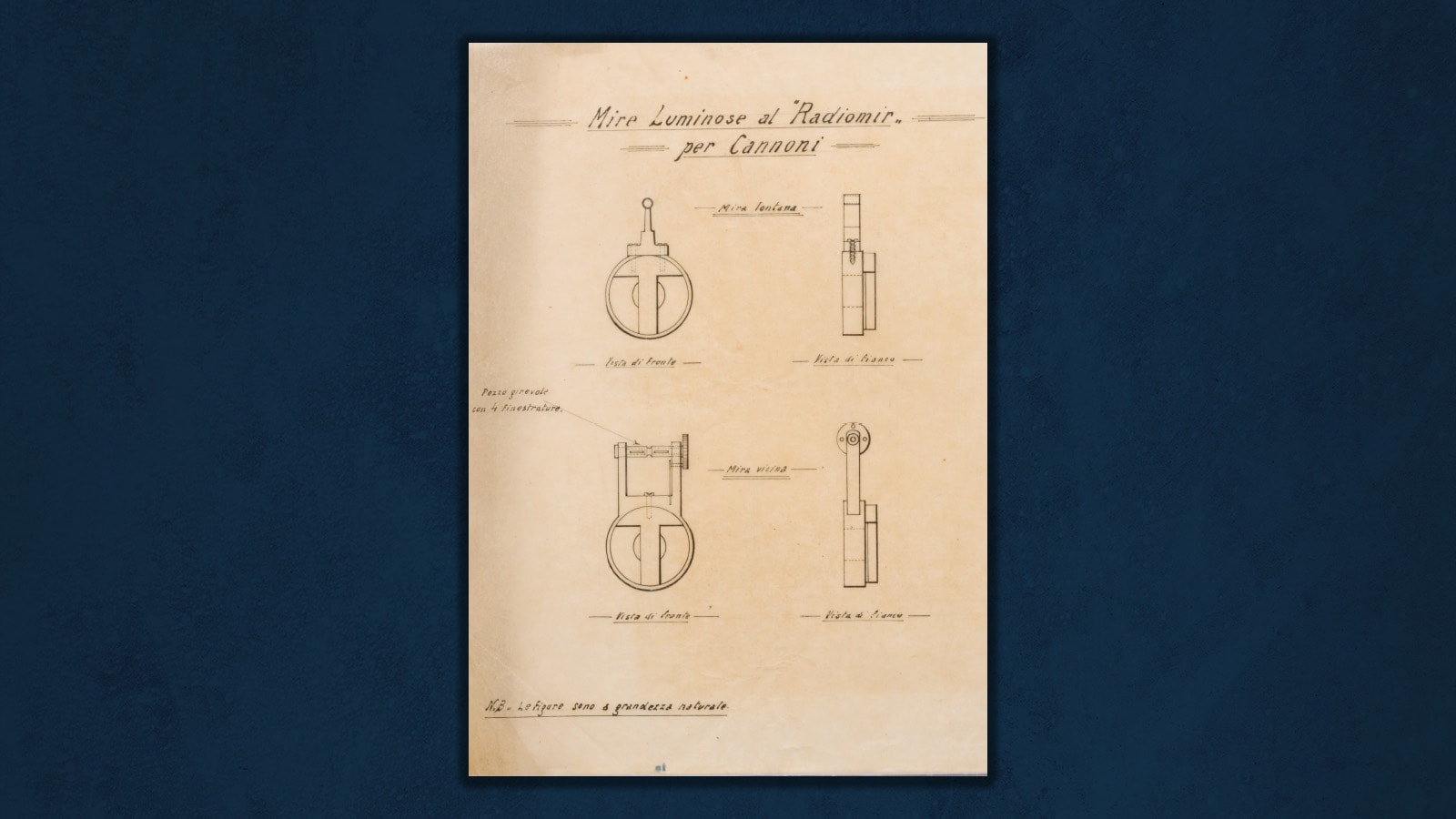
Ronconi/Panerai Sights and project
Early 20th-century aiming tools, enhanced with Panerai’s Radiomir paste for night visibility. Adopted not just by the Italian, but also French, British, and American forces.
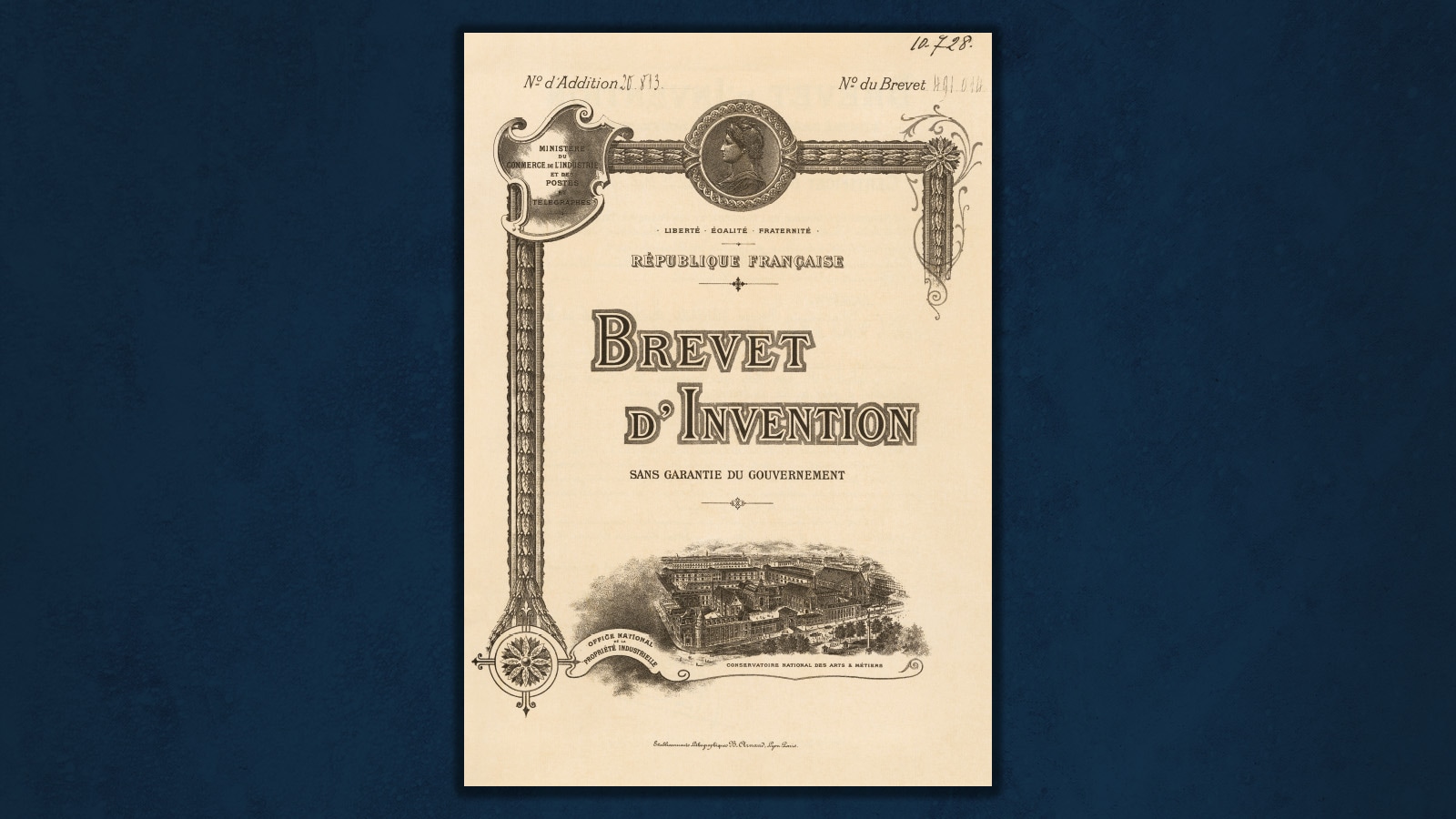
Radiomir luminous sights patent
The French patent marks the first use of “Radiomir,” the luminous paste invented by Panerai. Made with radium, it enabled visibility in total darkness for high precision tools.
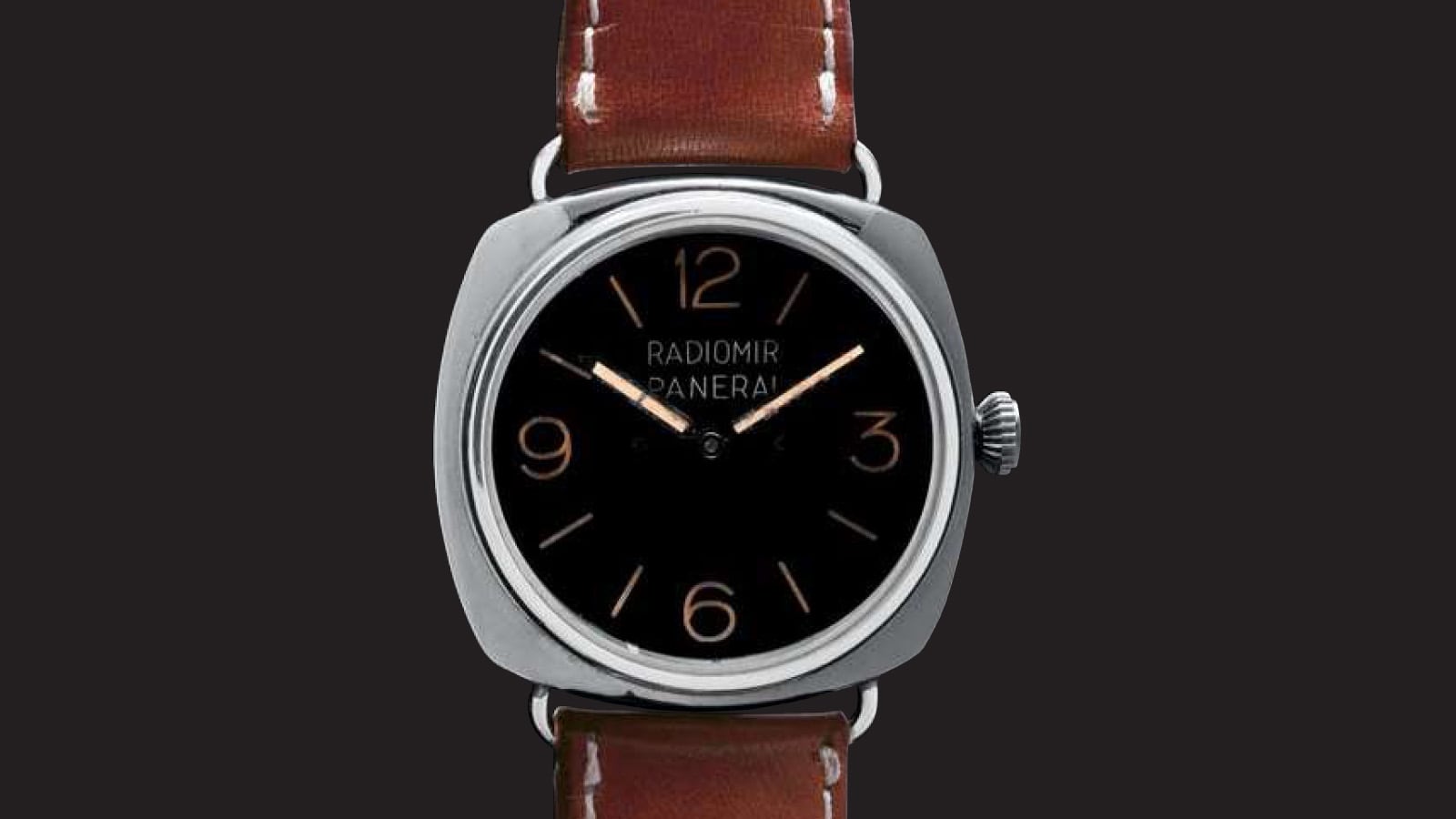
Ref. 3646
The Bakalite dial, exposed to heat and light, caused the discs to expand, jamming the hands. So then, Panerai moved toward more reliable solutions through technical evolution.
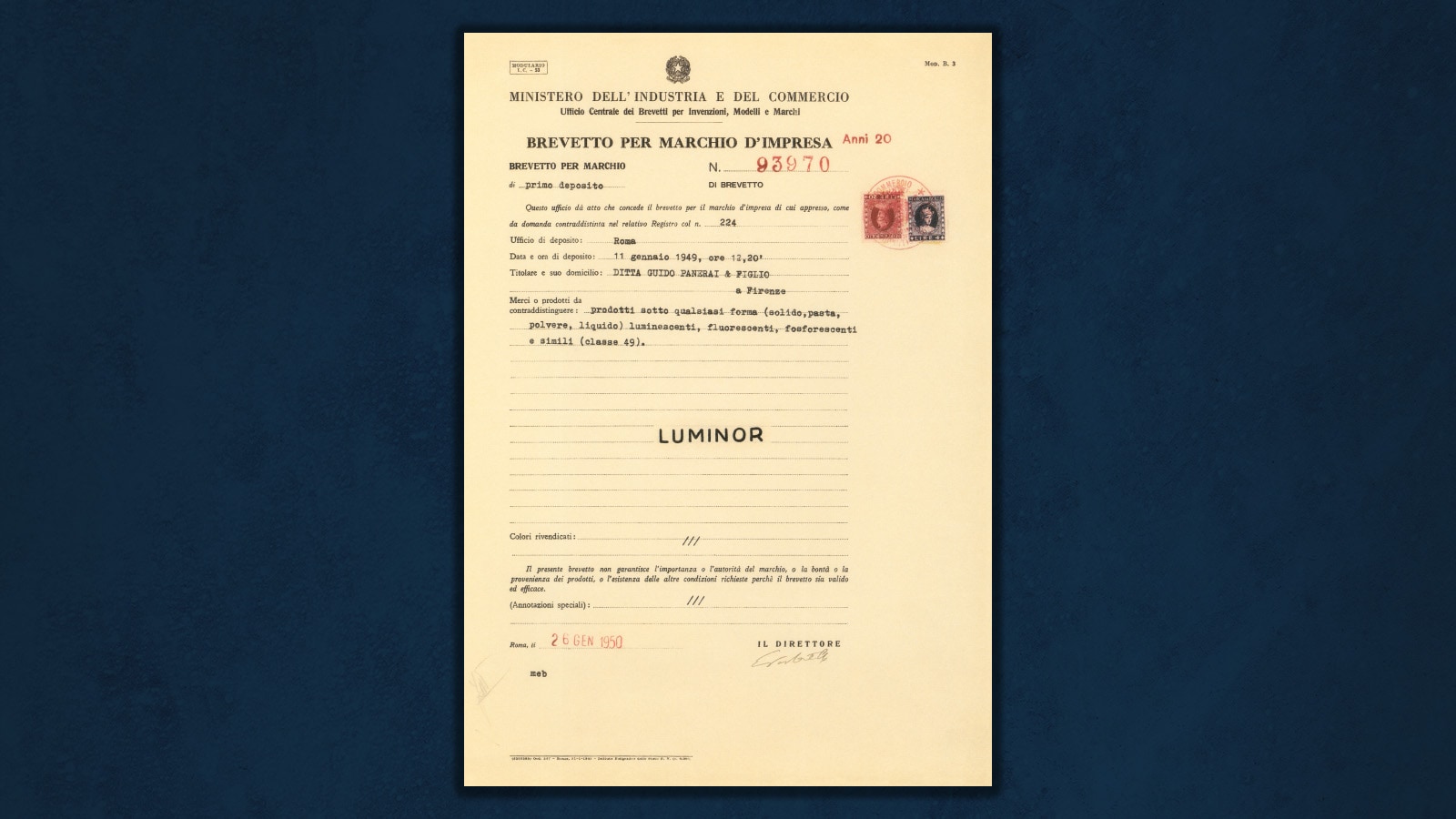
Italian registration for the Luminor trademark
Luminor, a safer tritium-based compound, was developed on the Navy’s request in 1940s. From the 1960s, it replaced radium; by 1971, all radioactivity was eliminated.
Designed for the Depths
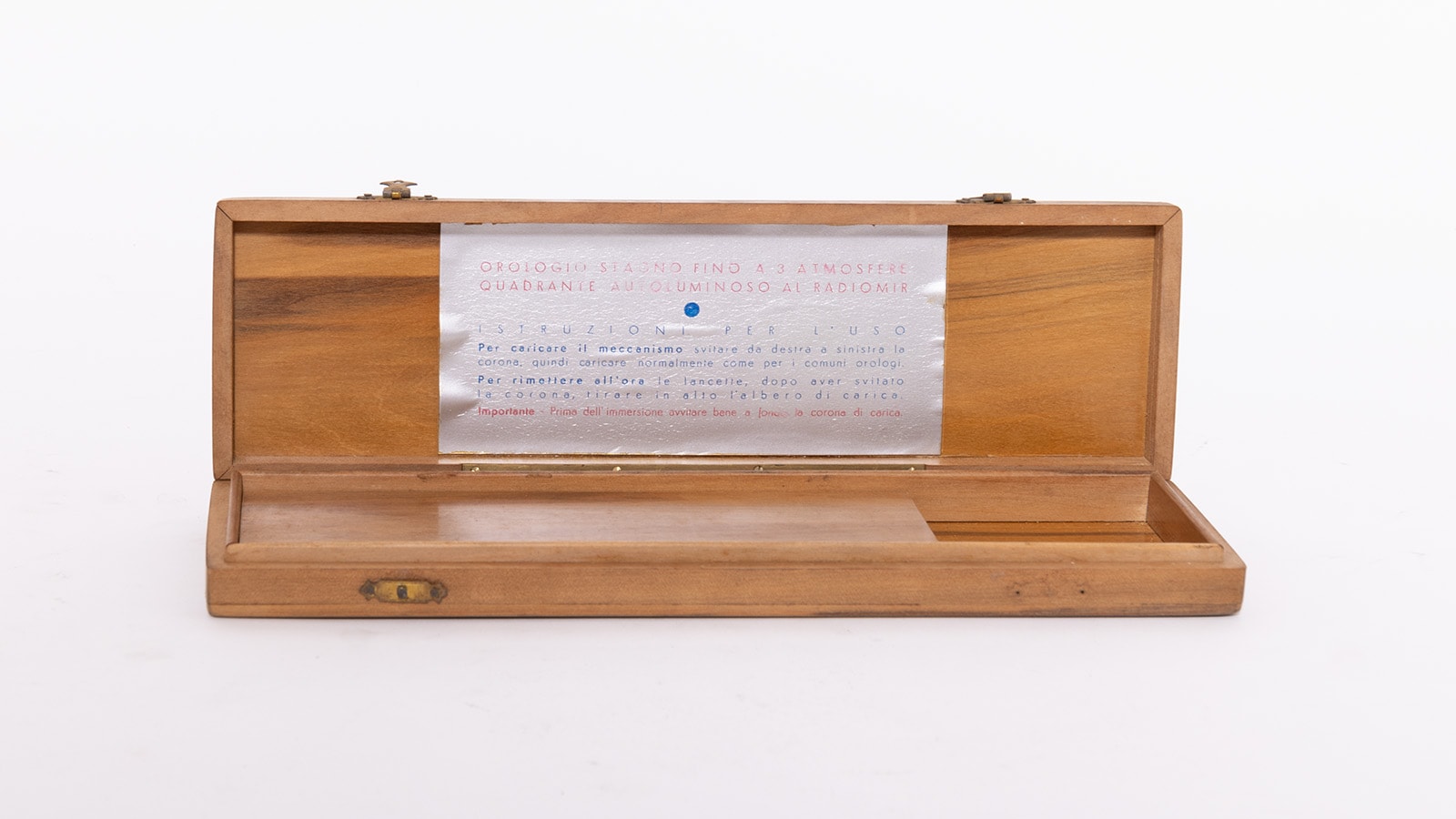
Diver watch box
Authentic wooden box for Panerai diver's watches with Radiomir paste, sent to the Navy, including instructions.
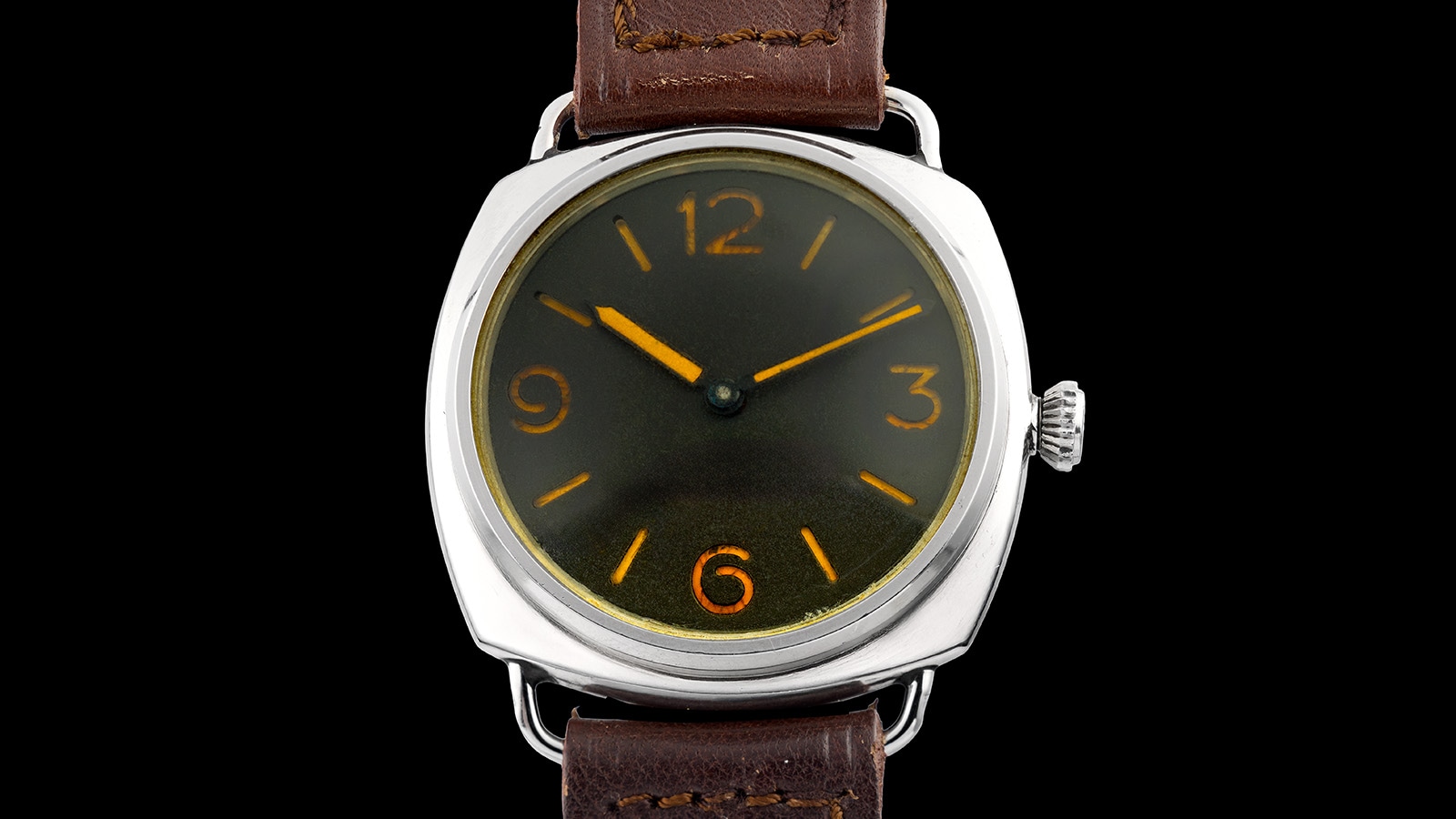
Ref. 3646 Anonymous Dial
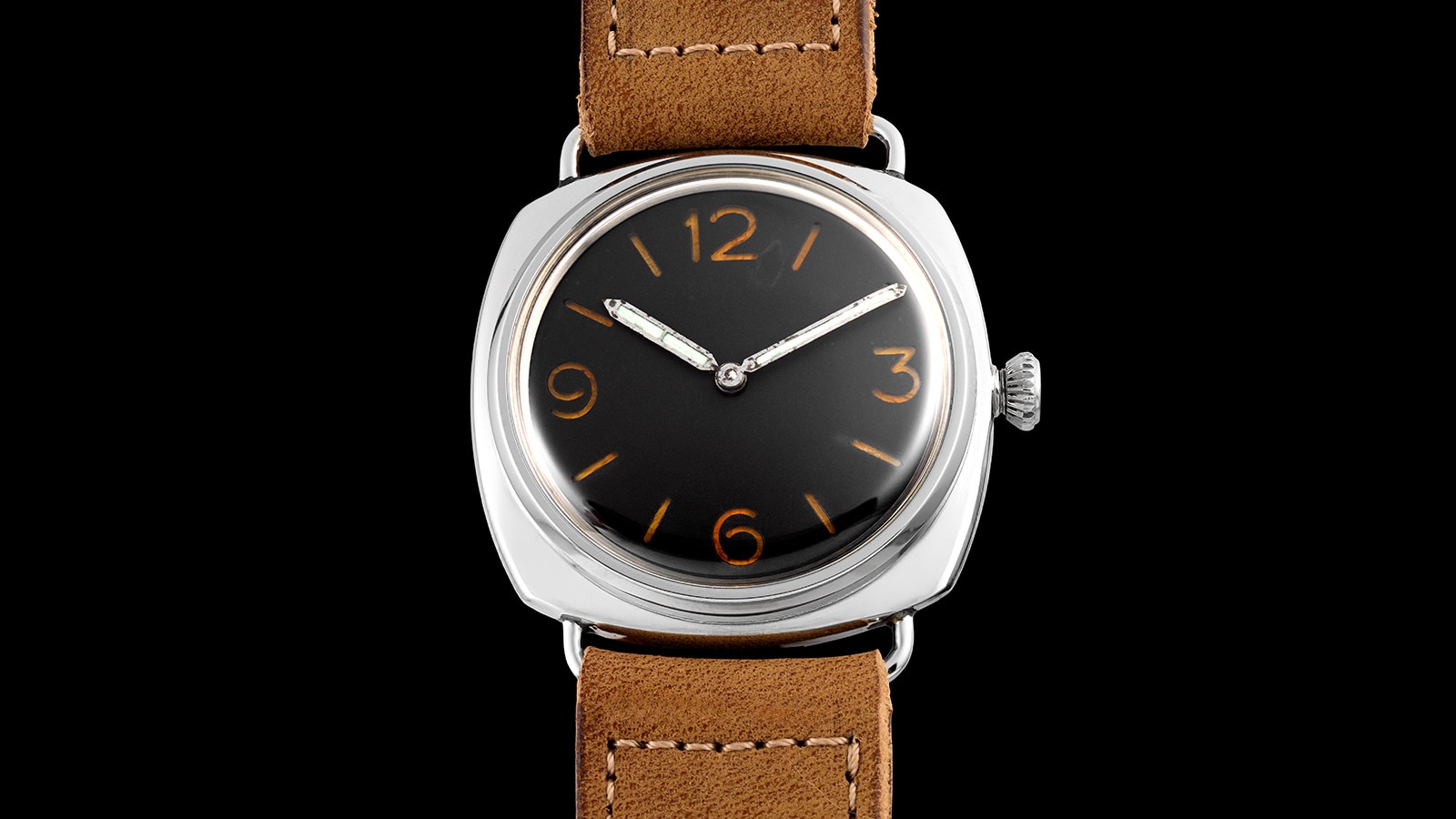
Ref.3646 diver’s watch with an anonymous sandwich dial, illuminated using Radiomir, a self-luminous paste that ensured constant visibility in total darkness.
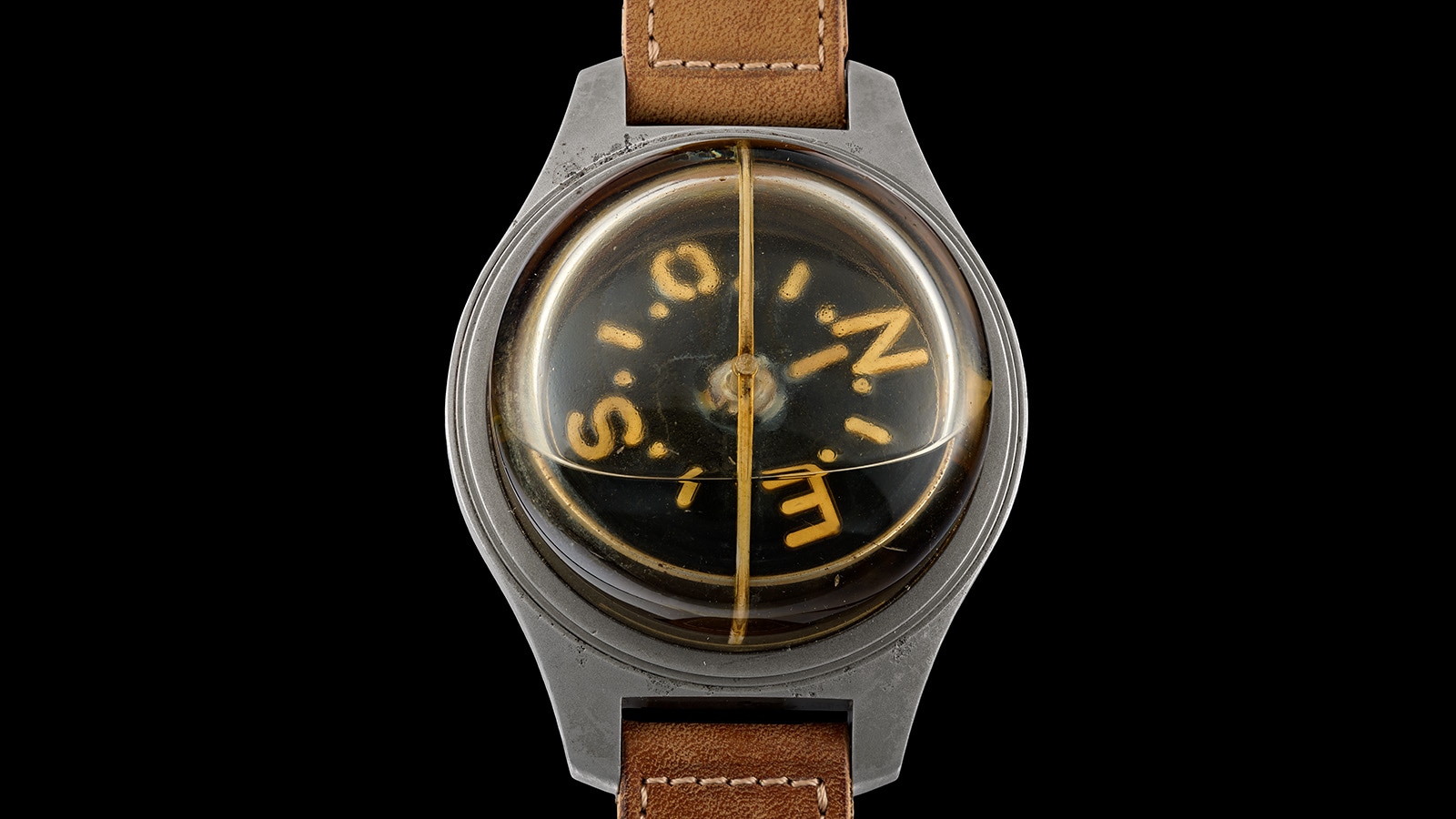
Wrist Compass
An underwater navigation tool with luminous markings. It requires the diver to hold their arm horizontally to check their orientation.
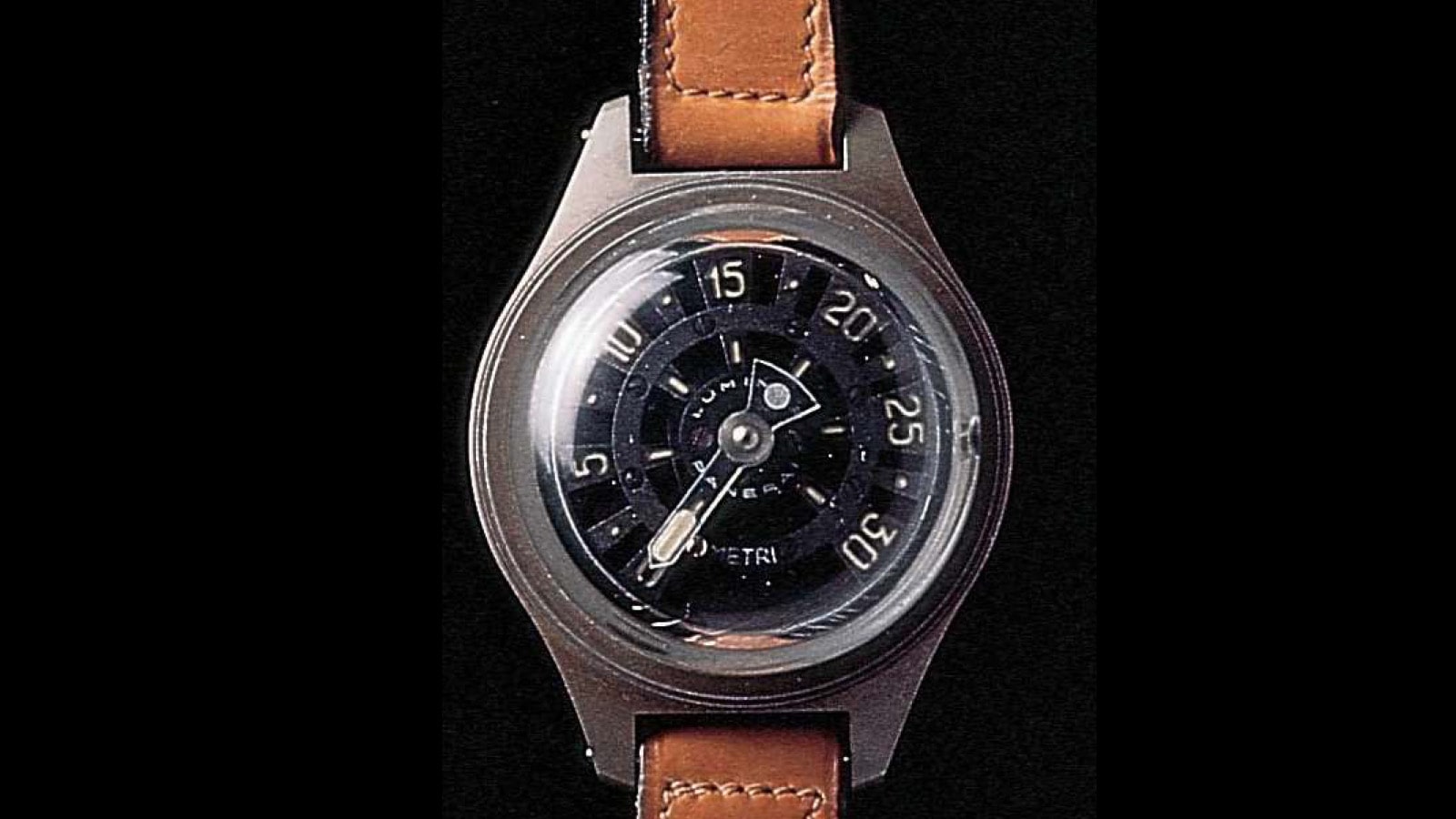
Depth Gauge
Part of the diver’s kit since the 1960s, this gauge measured underwater depth. Panerai produced several models with depth ranges spanning from 7 to 50 meters.
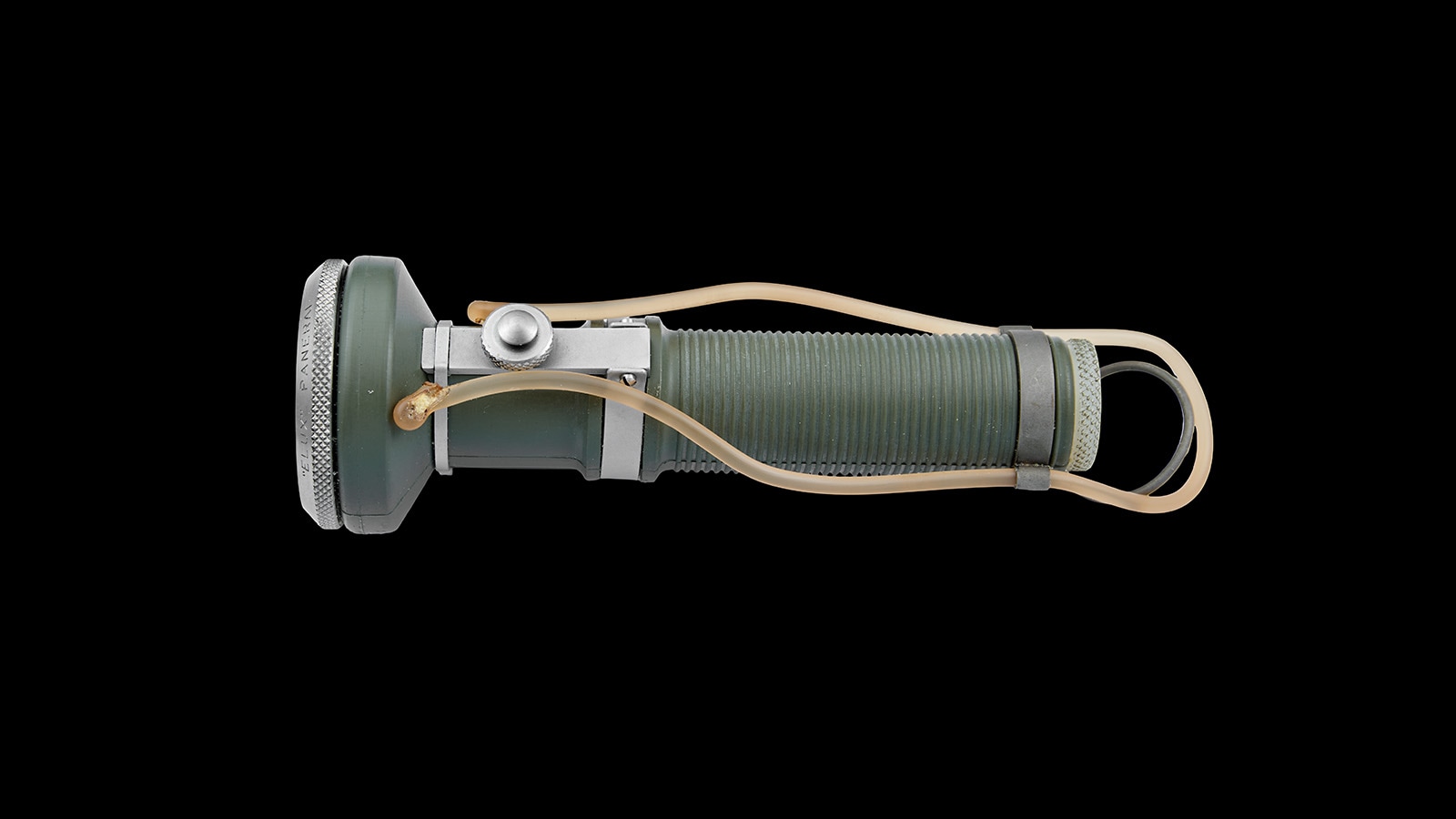
Elux Torch
An underwater flashlight using a cold light Elux Panerai panel to emit signals undetectable by infrared. Powered by a dry battery, it illuminated nearby areas without heat.
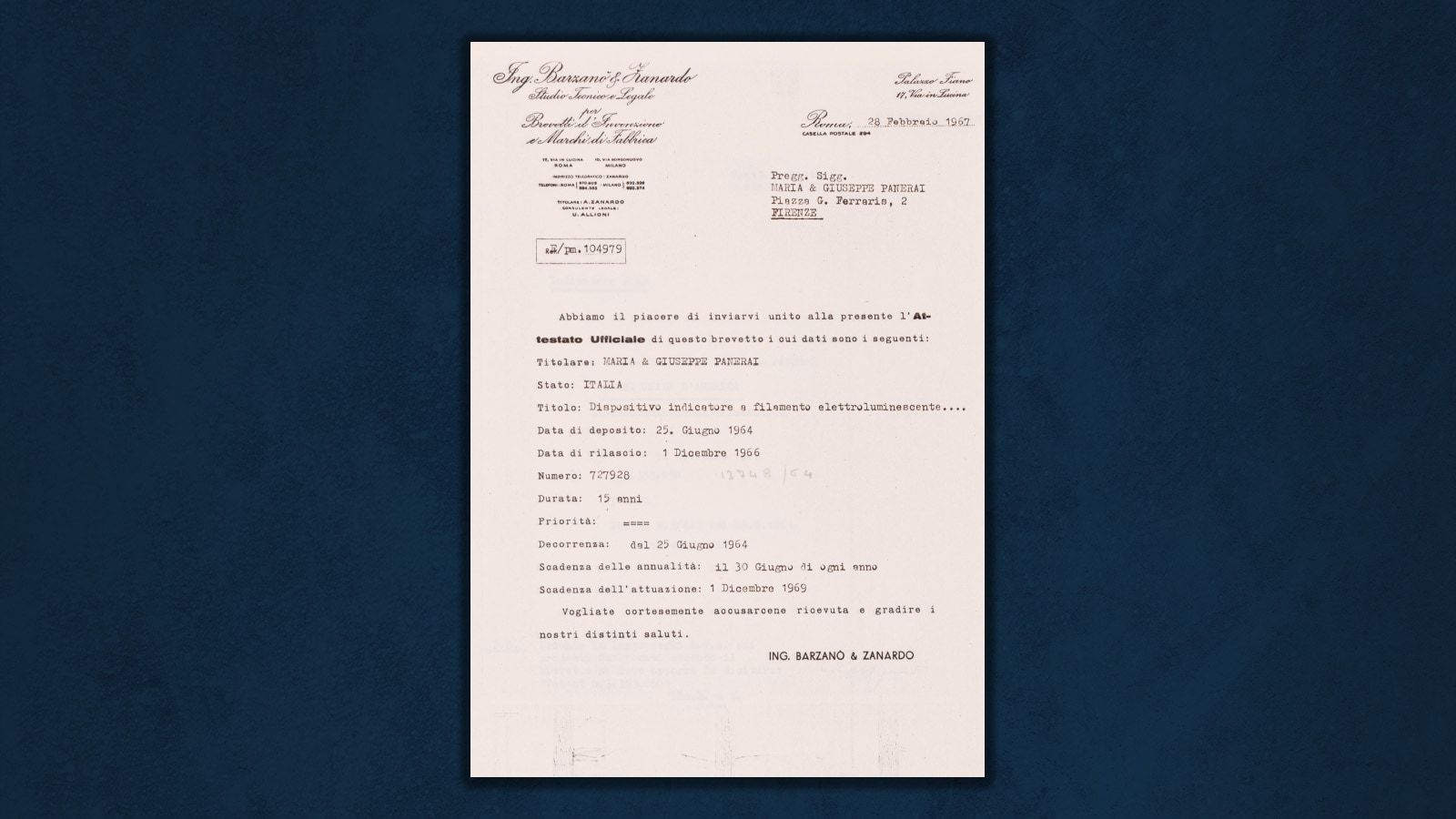
Italian Patent for Elux indicator device
Among Giuseppe Panerai’s most successful inventions is the Elux technology: used from the 1960s in flashlights, indicators, electric signal devices, and precision instruments.
Reliability for ultimate water resistance
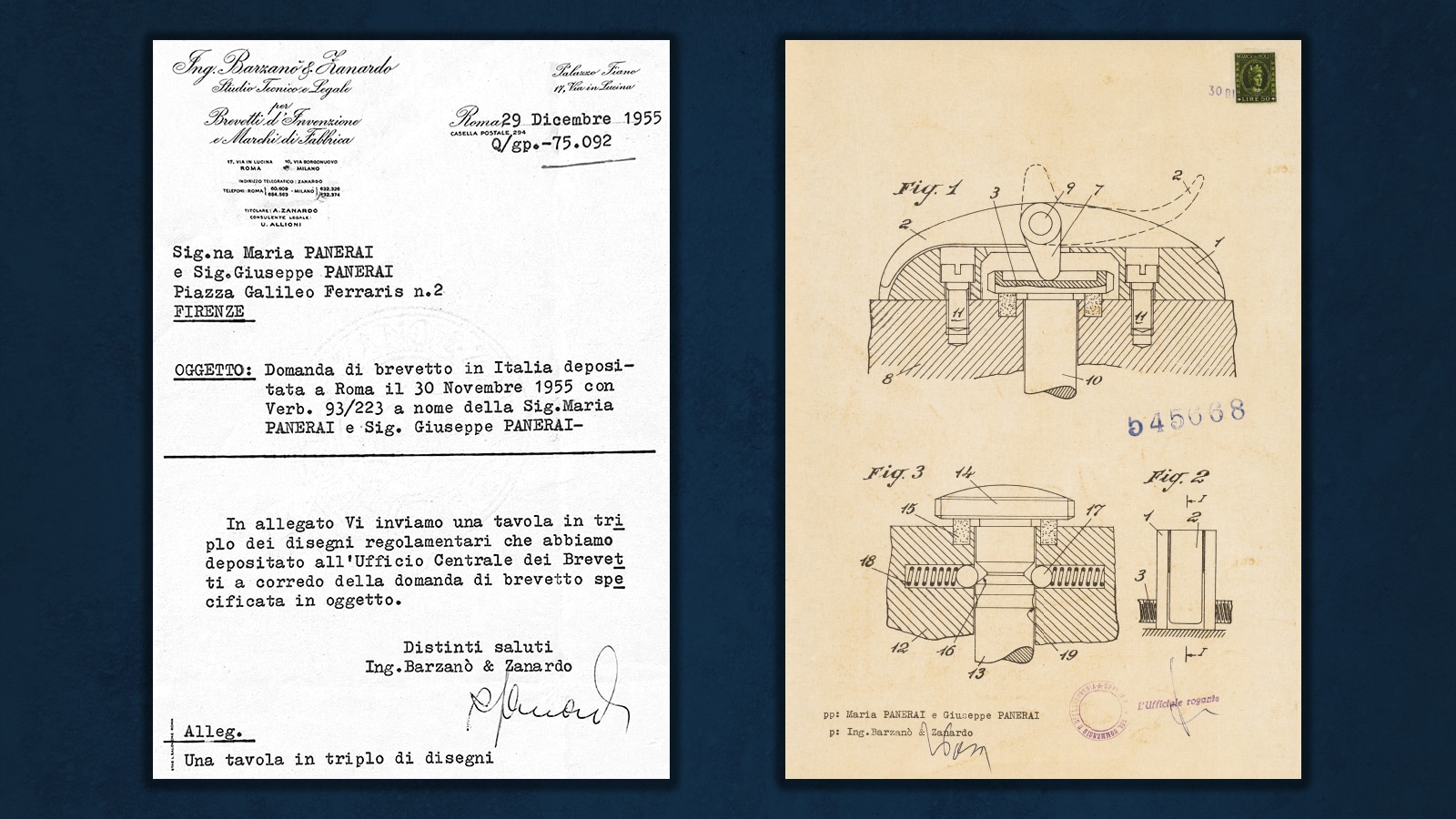
Italian patent for the Crown Protecting Bridge
Installed and patented for GPF 2/56, this bridge locks the crown to enhance water resistance for underwater missions: a hallmark of Panerai’s design.
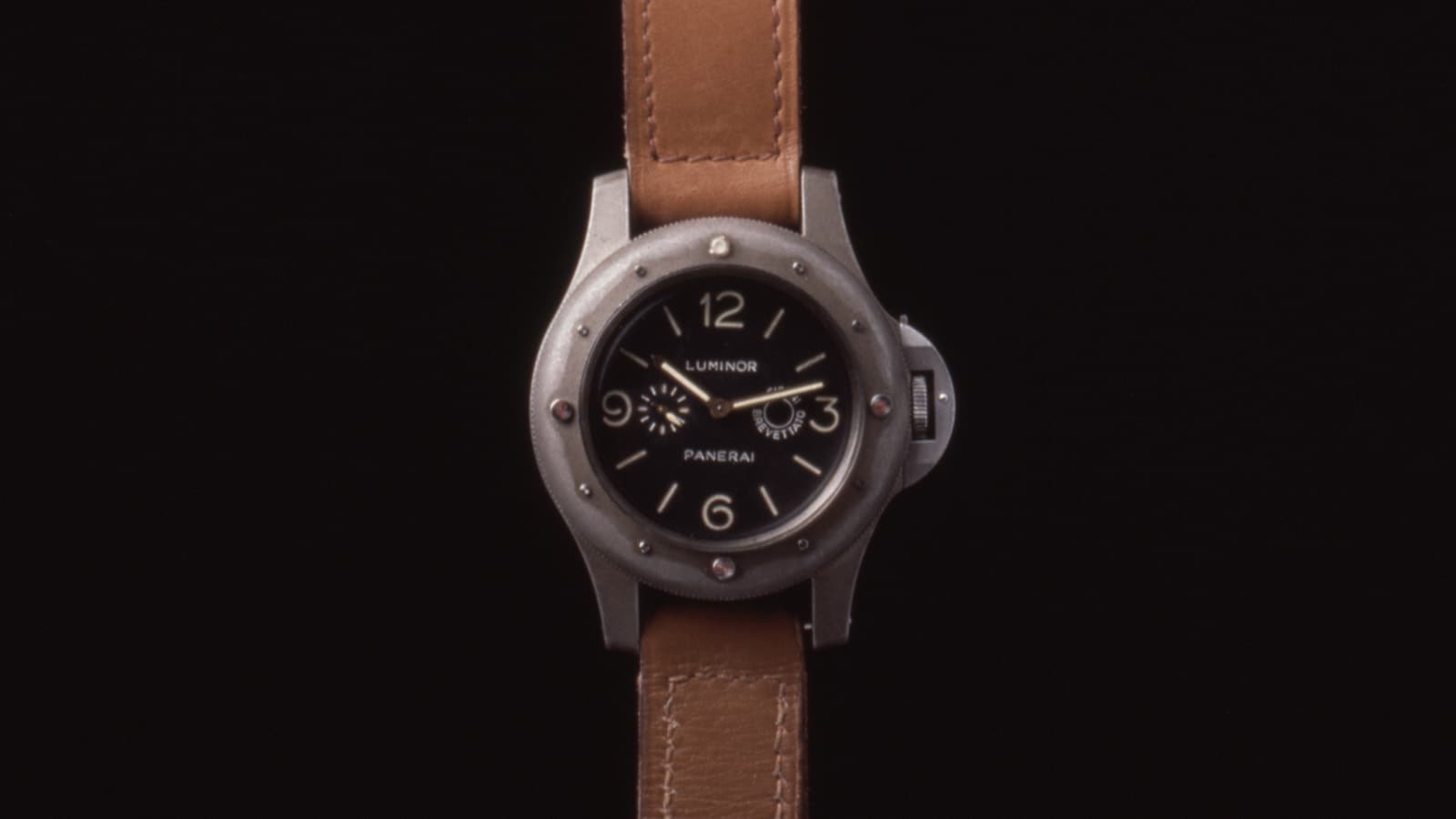
GPF 2/56
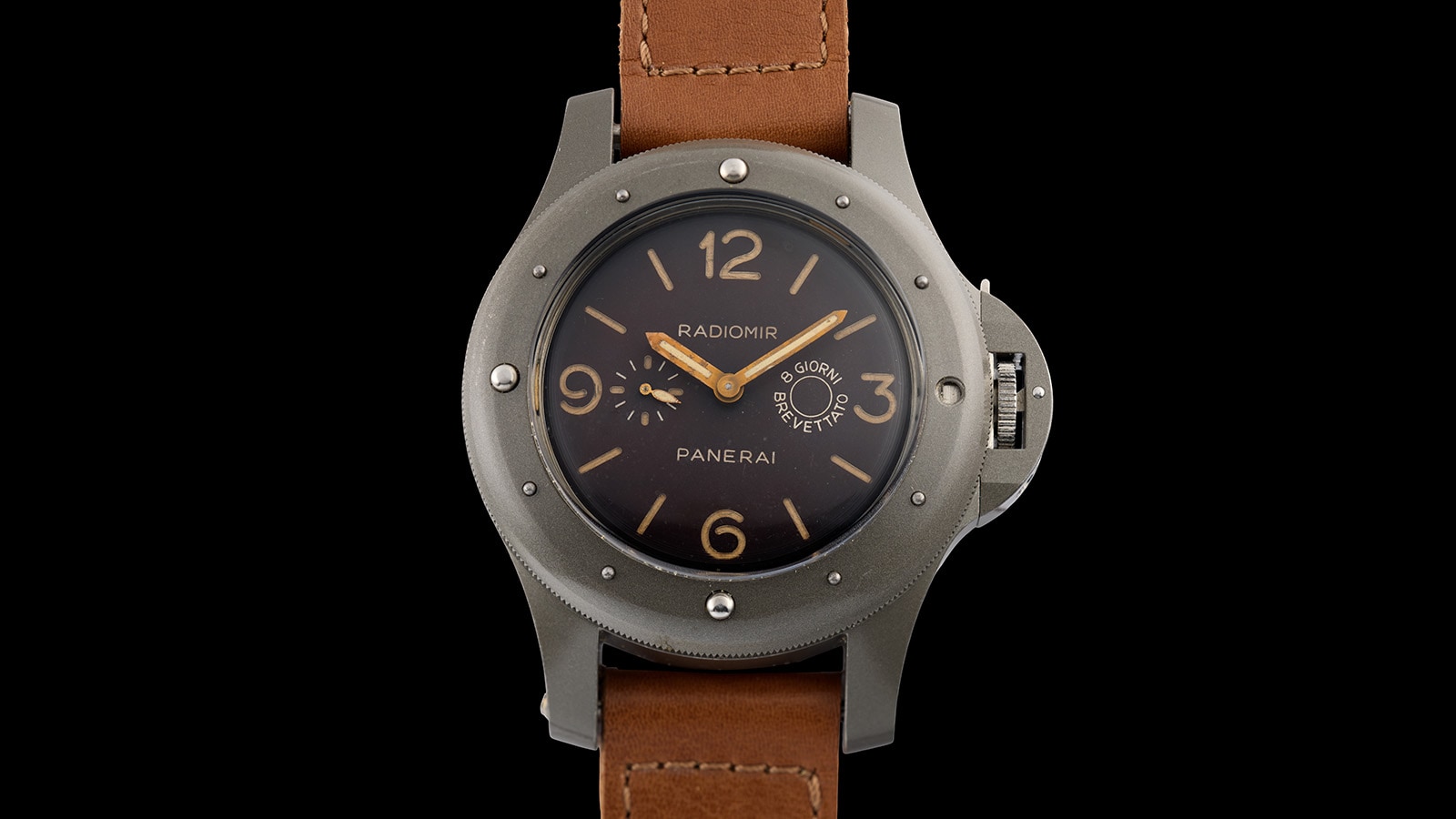
Panerai’s first fully designed watch featured the 8 Days Angelus SF 240 movement, bidirectional rotating bezel and crown protecting bridge, which debuted for the first time.
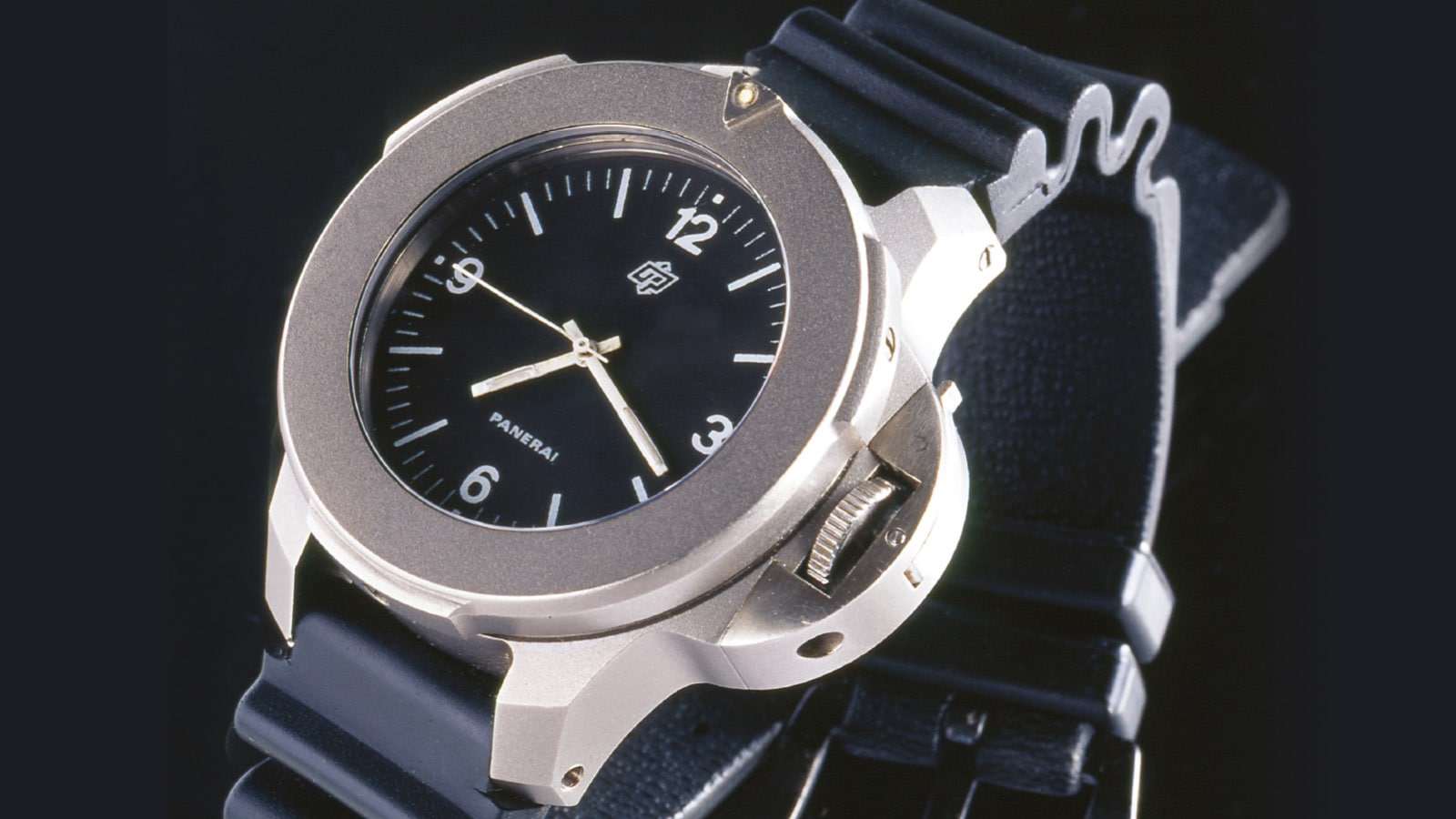
Millemetri prototype
Tested to 1070m, this prototype was Panerai’s first automatic watch and among the first in grade 5 titanium. Considered outdated by the Navy, it never entered production.
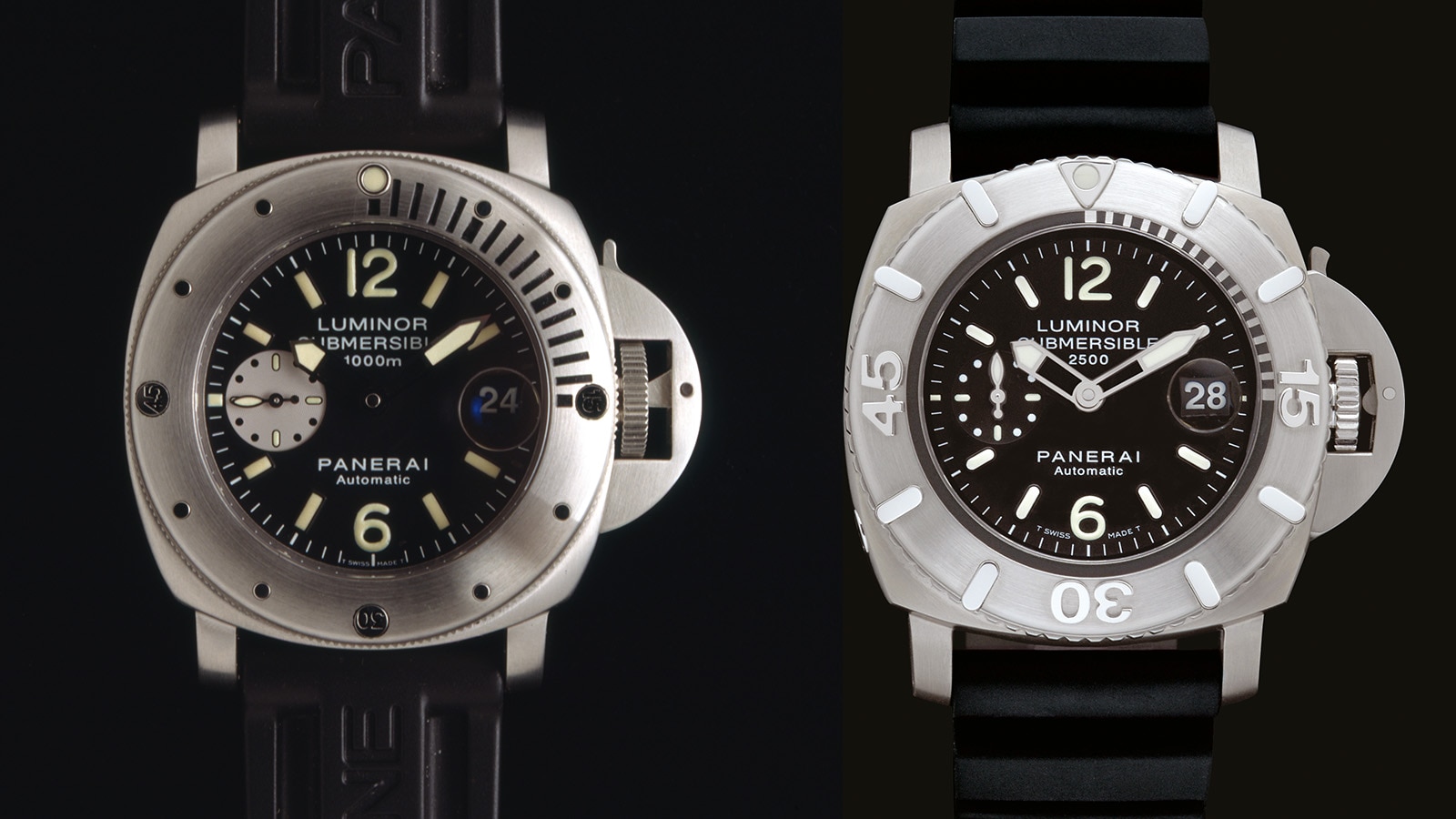
Luminor Submersible - 1000m & 2500m
These models debuted escape valves to rebalance helium gas that forms inside the case—developed by the Laboratorio di Idee to withstand extreme high pressures.
Water resistance & pressing test machine
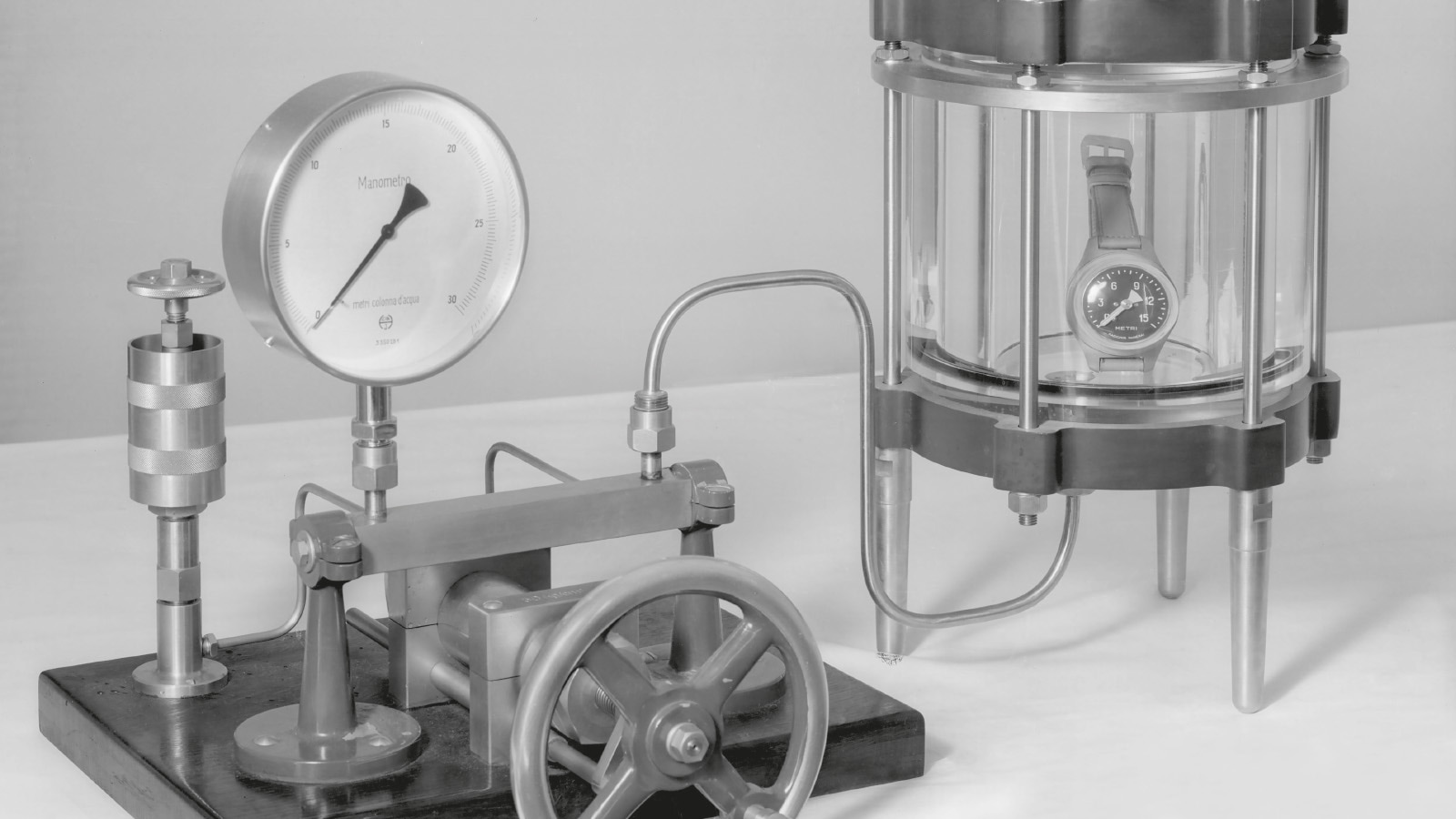
This historical Panerai’s machine tested water resistance and pressure integrity for wrist instruments such as watches, depth gauges and compasses.
An Evolving Legacy
The brand has always focused on a single, distinctive case design - refined over time to meet the demanding needs of military use.
This singular continuity reflects Panerai’s commitment to purpose-driven innovation and timeless identity.
Ref. 3646 Anonymous Dial
A classic example of a sandwich dial paired with a 47mm cushion-shaped case, featuring a conical screw-down crown, and wire lugs with a hand-stitched leather strap.
Ref. 6152/1 Marina Militare
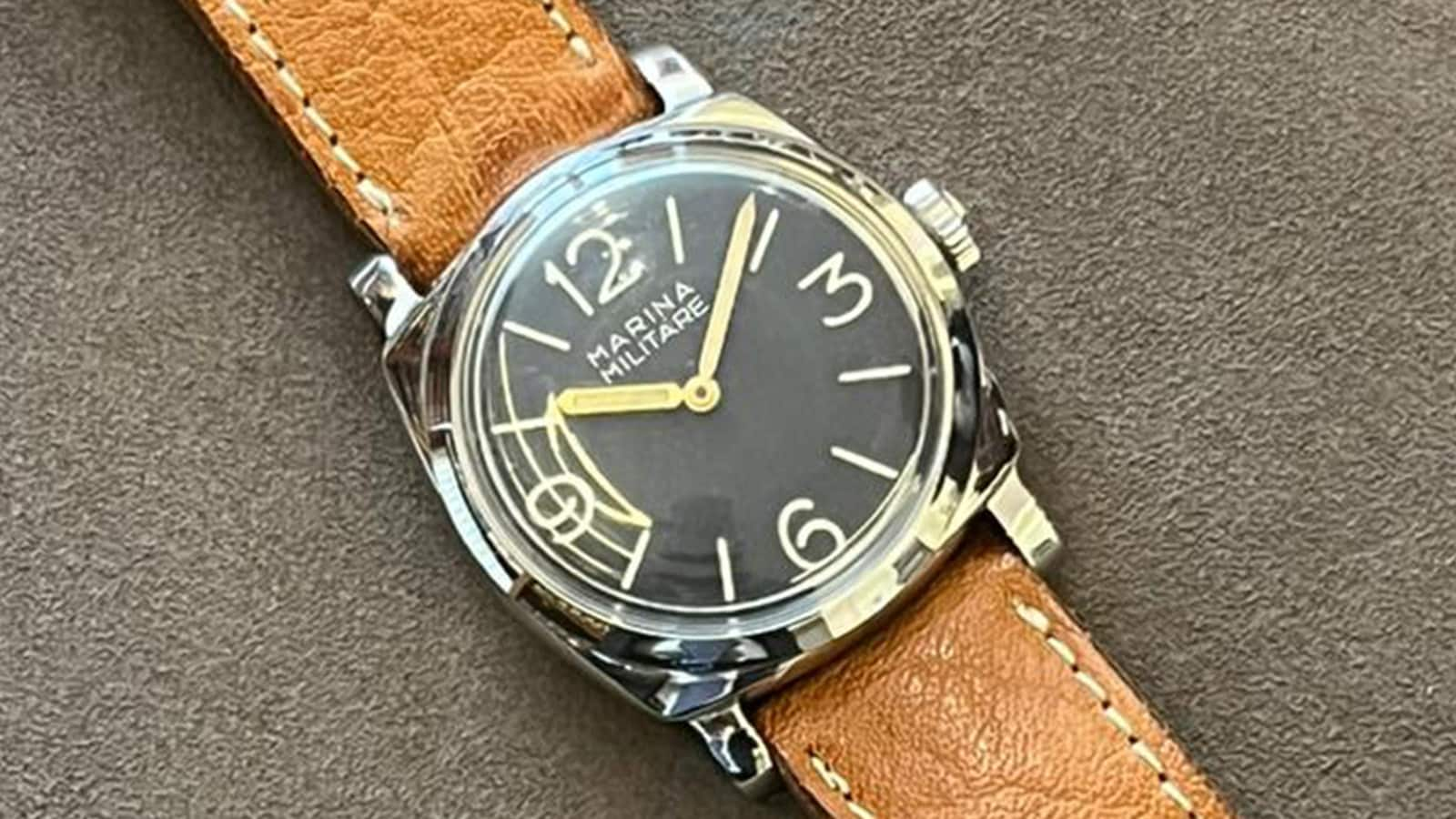
This model, without the crown protecting bridge, features a Cortébert 618 calibre and a through-screw system, a key innovation enhancing strap resistance and replacement.
GPF 2/56
Watch created for the Egyptian Navy, featuring a 60mm case and the crown protecting bridge designed specifically for this model.
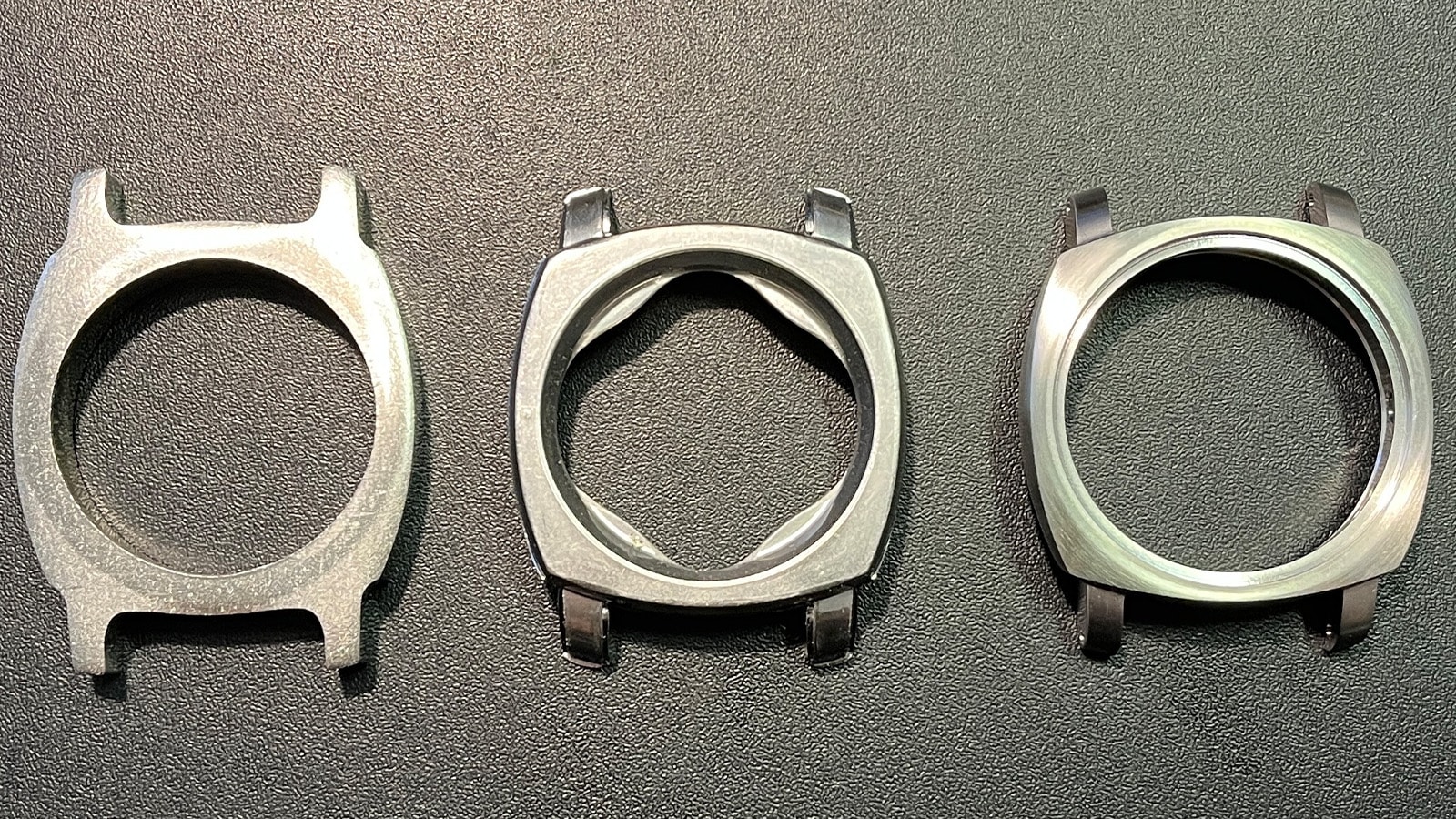
Panerai Luminor's case production process
A breakdown of the various construction stages of the Luminor 44mm case in AISI 316L steel—then the highest quality standard in watchmaking.
Functional Design
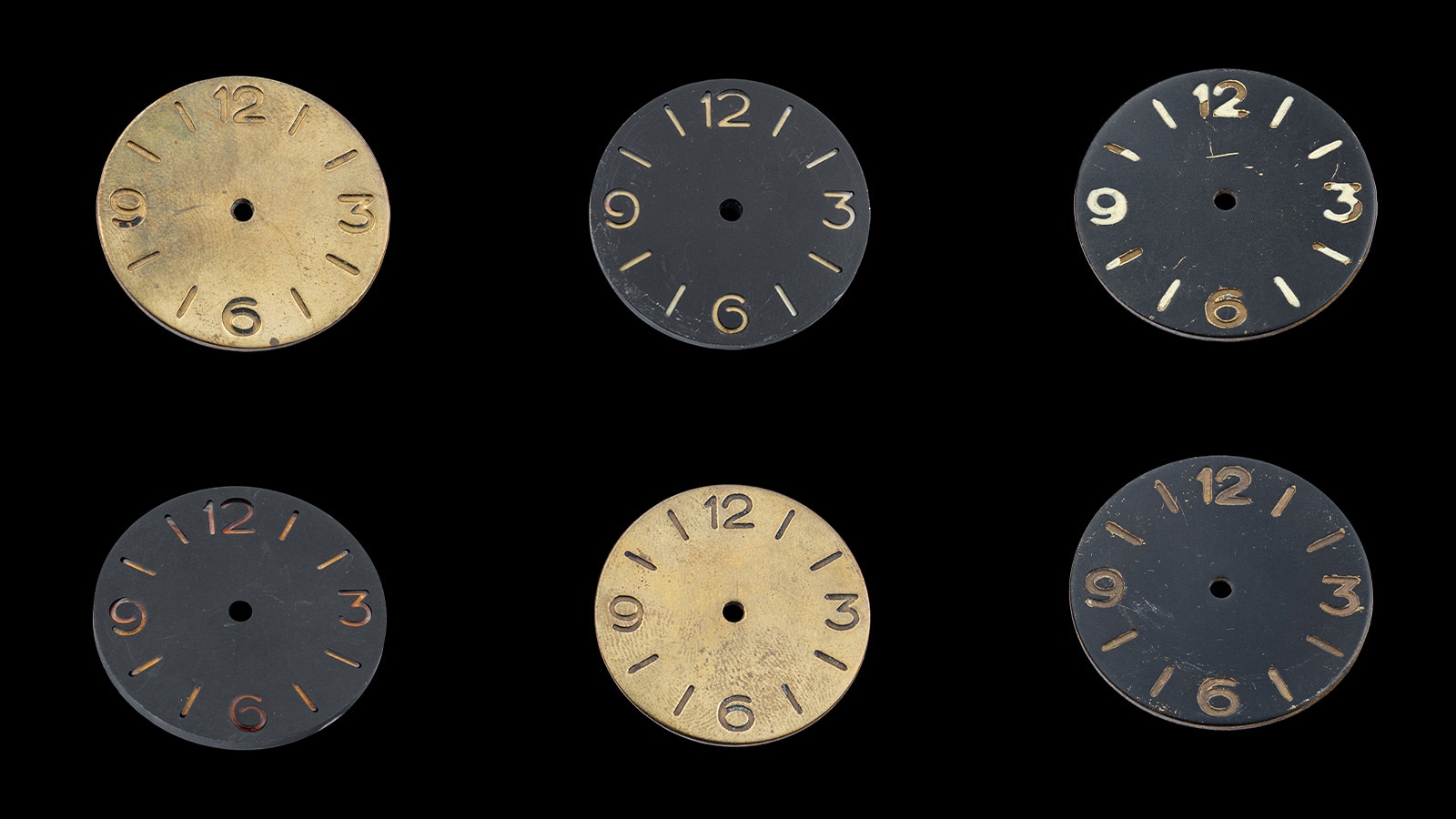
Historical Dials
Signature sandwich structure featuring two superimposed plates: an upper one with cut-out numerals and hour markers, and a lower base dial with luminous material, ensuring optimal legibility even in low-light conditions.
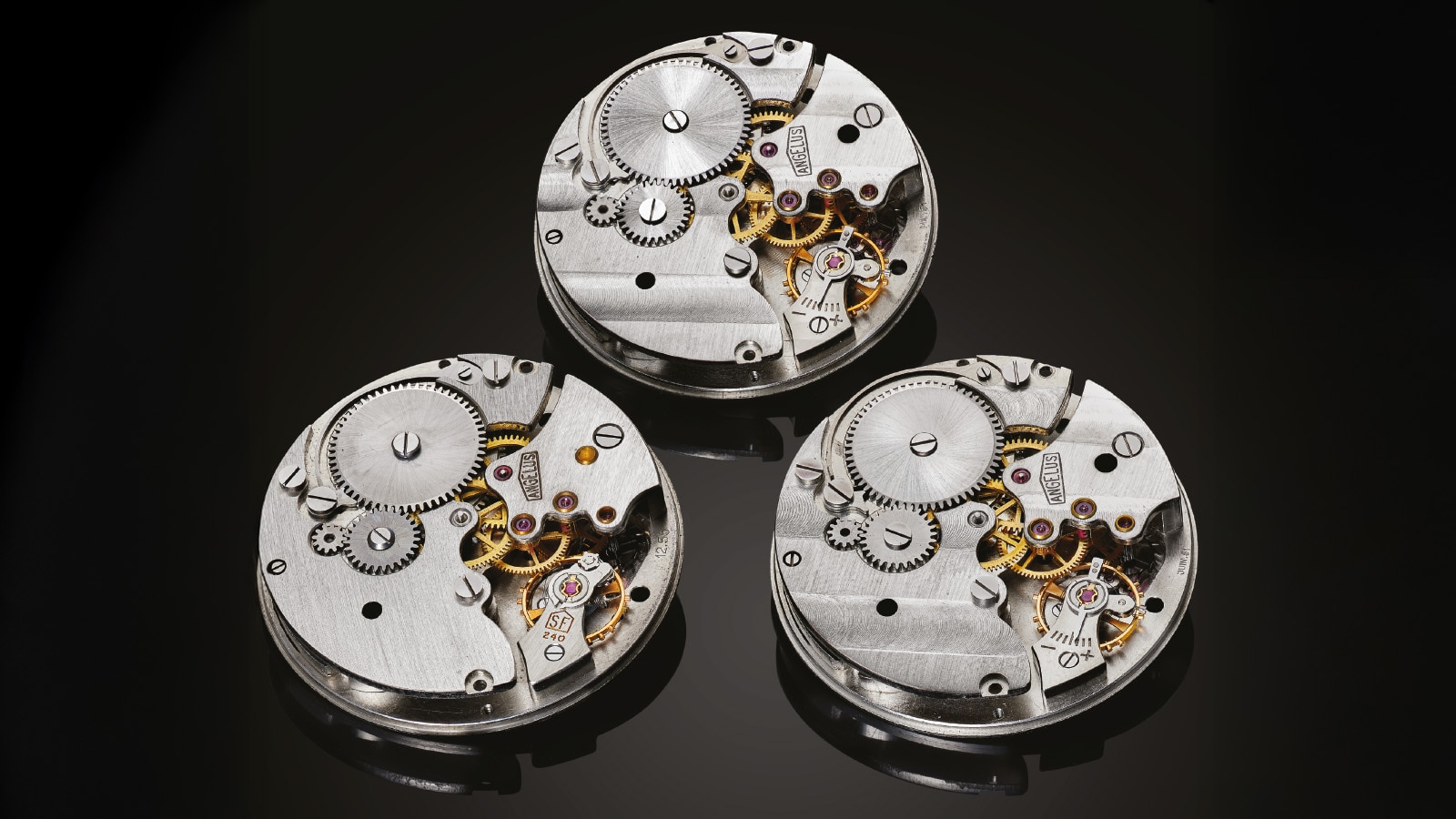
Photo of the Angelus movements
First used in the 1956 GPF 2/56, the Angelus SF 240 movement enabled weekly winding, minimizing maintenance and tool wear.
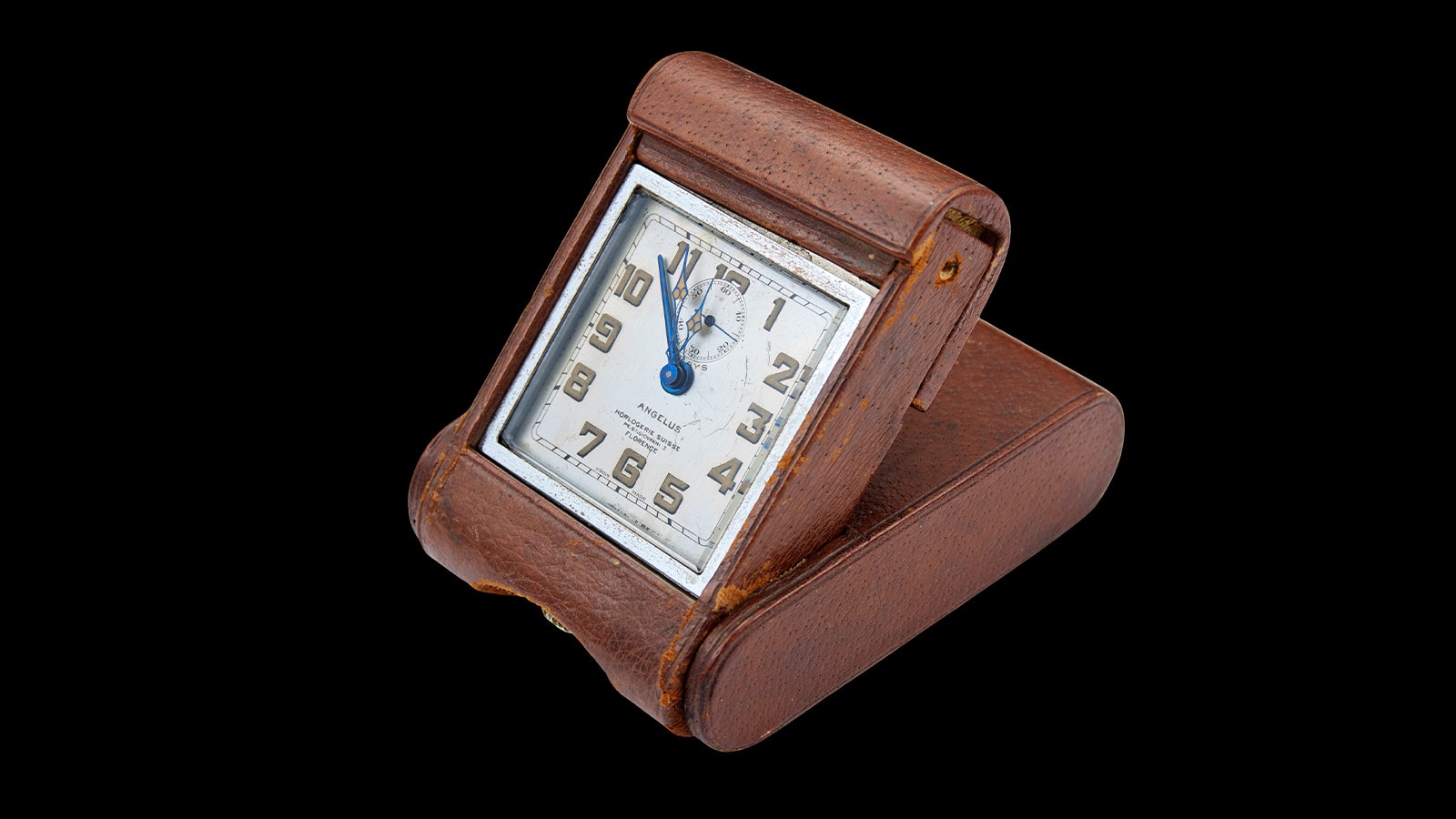
Angelus Travel Alarm Clock
This Angelus travel alarm clock, 8 Days power reserve, was specially commissioned for Orologeria Svizzera in the 1940s. The collaboration highlights the strong relationship between Angelus and the Panerai family, reflecting the close ties between manufacturers and specialized watch distributors of the period.
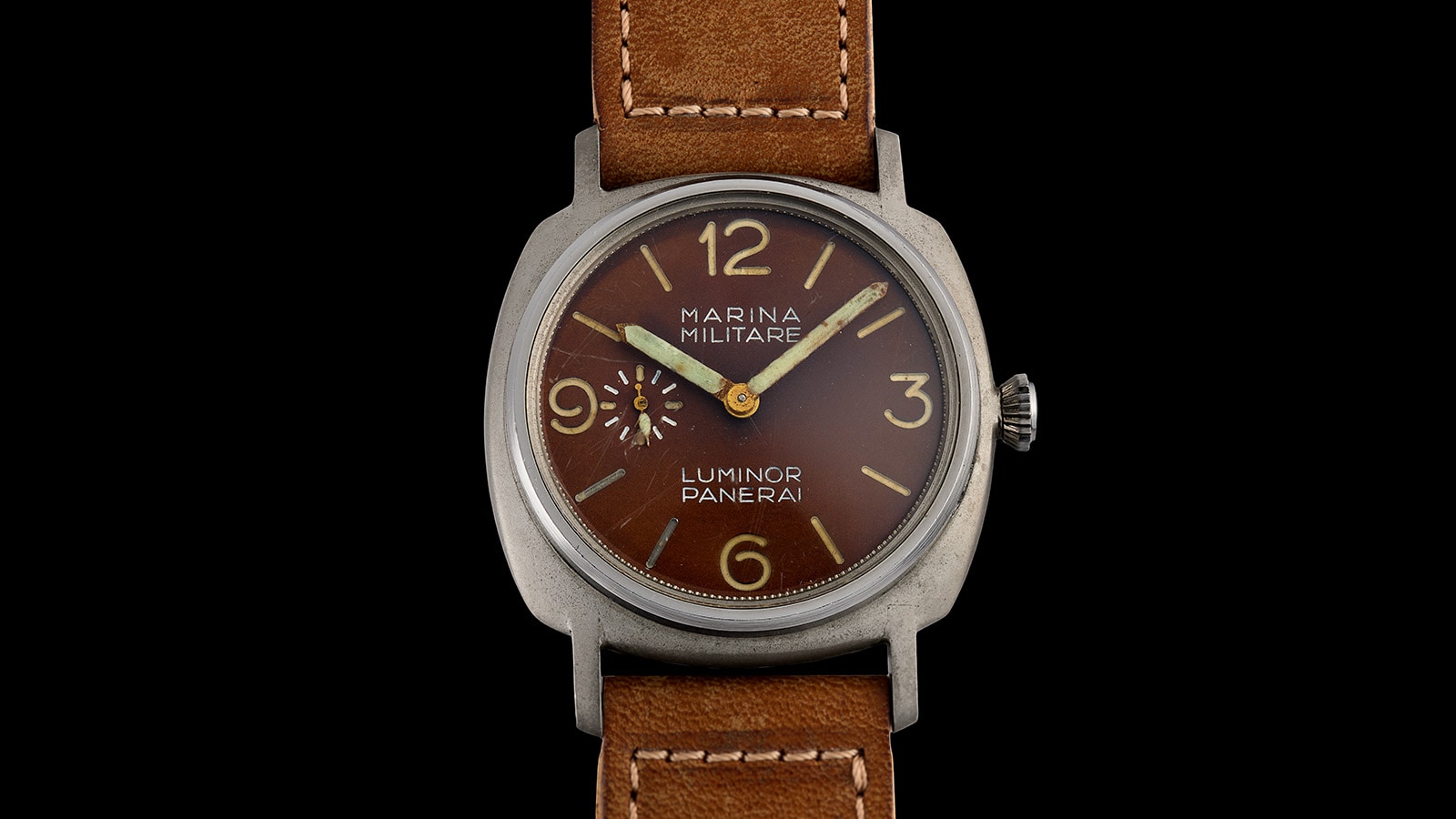
Ref. 3646 Marina Militare Modified
A rare ref. 3646 cushion-shaped case with fixed lugs, early Luminor dial, Angelus SF 240 movement, 8 Days power reserve, small seconds at 9 o’clock, and four-line print layout.
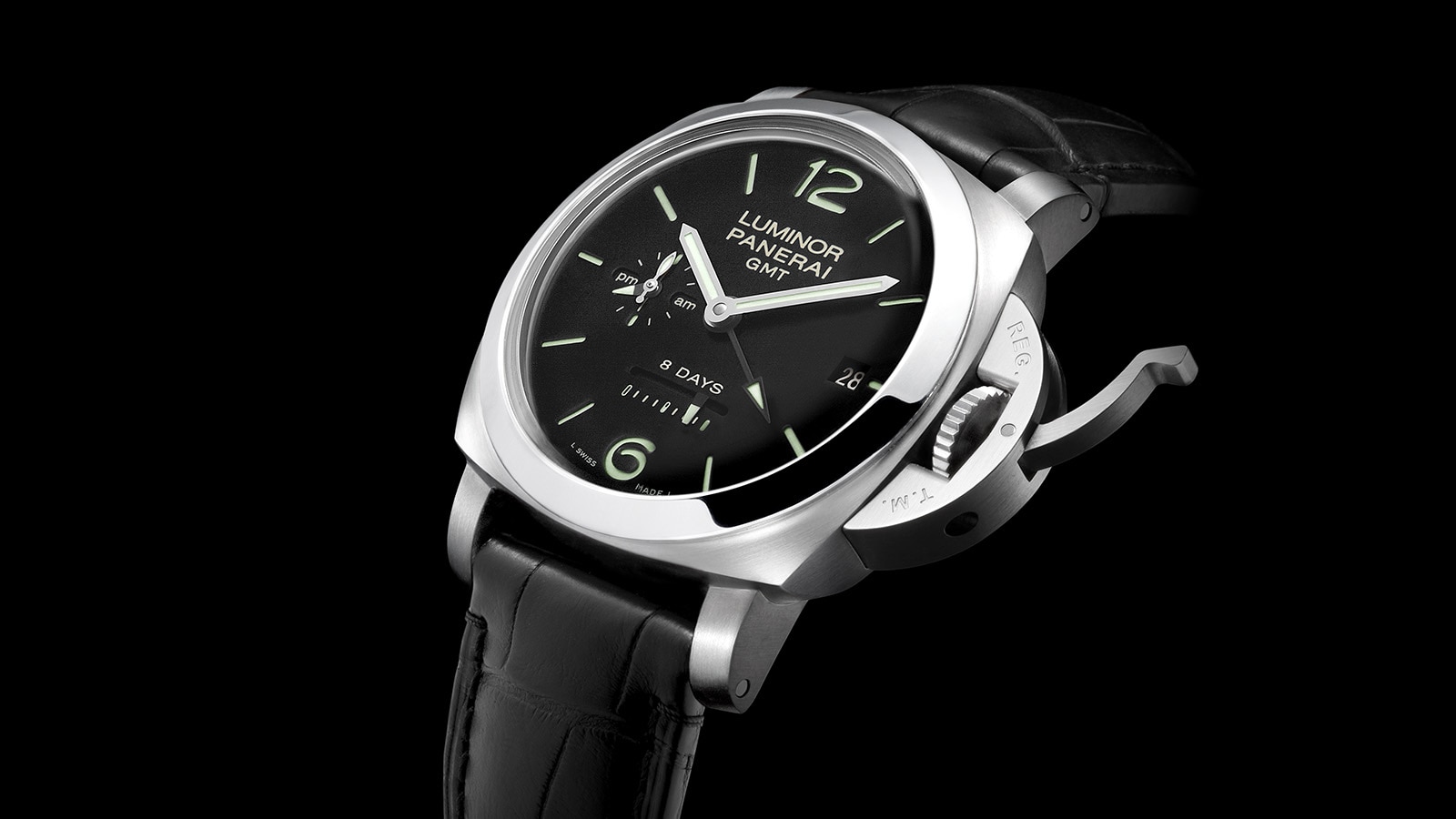
Luminor 8 Days
Powered by the first in-house long power reserve movement, this timepiece reflects Panerai’s focus on functionality, legibility, and technical innovation rooted in its naval heritage.
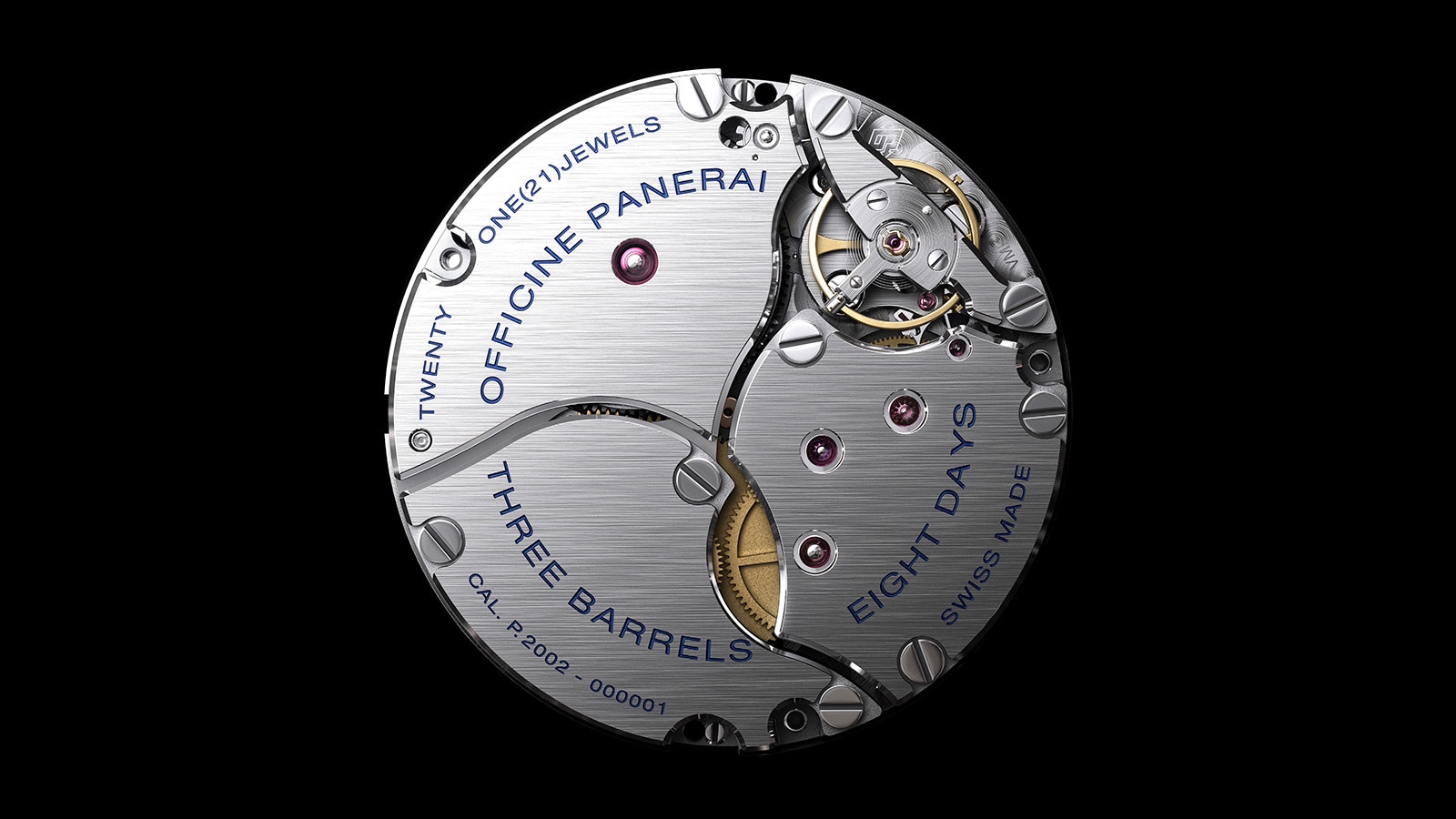
P.2002 calibre
First in-house movement, handwound, 8 Days power reserve. It takes its name from the year in which Officine Panerai inaugurated its first manufacture in Neuchâtel.
Revisiting an Icon
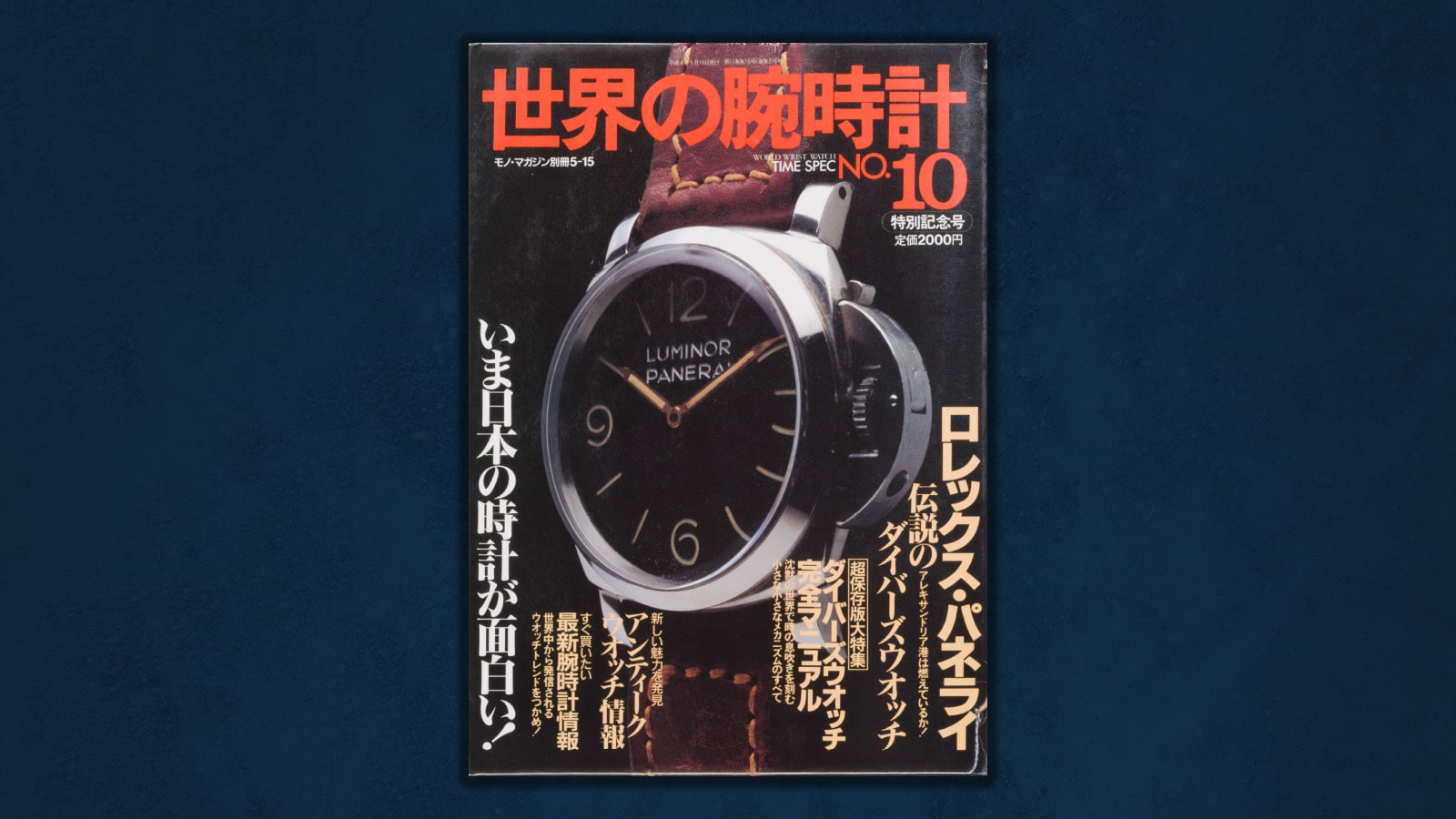
World Wrist Watch Time Spec Magazine, No. 10
The 1992 issue featuring an important article on Panerai’s historic military timepieces. This renewed attention ultimately confirmed the decision for Panerai to resume watchmaking, no longer exclusively for military supply, but for civilian clients as well, marking a pivotal transition in its modern history.
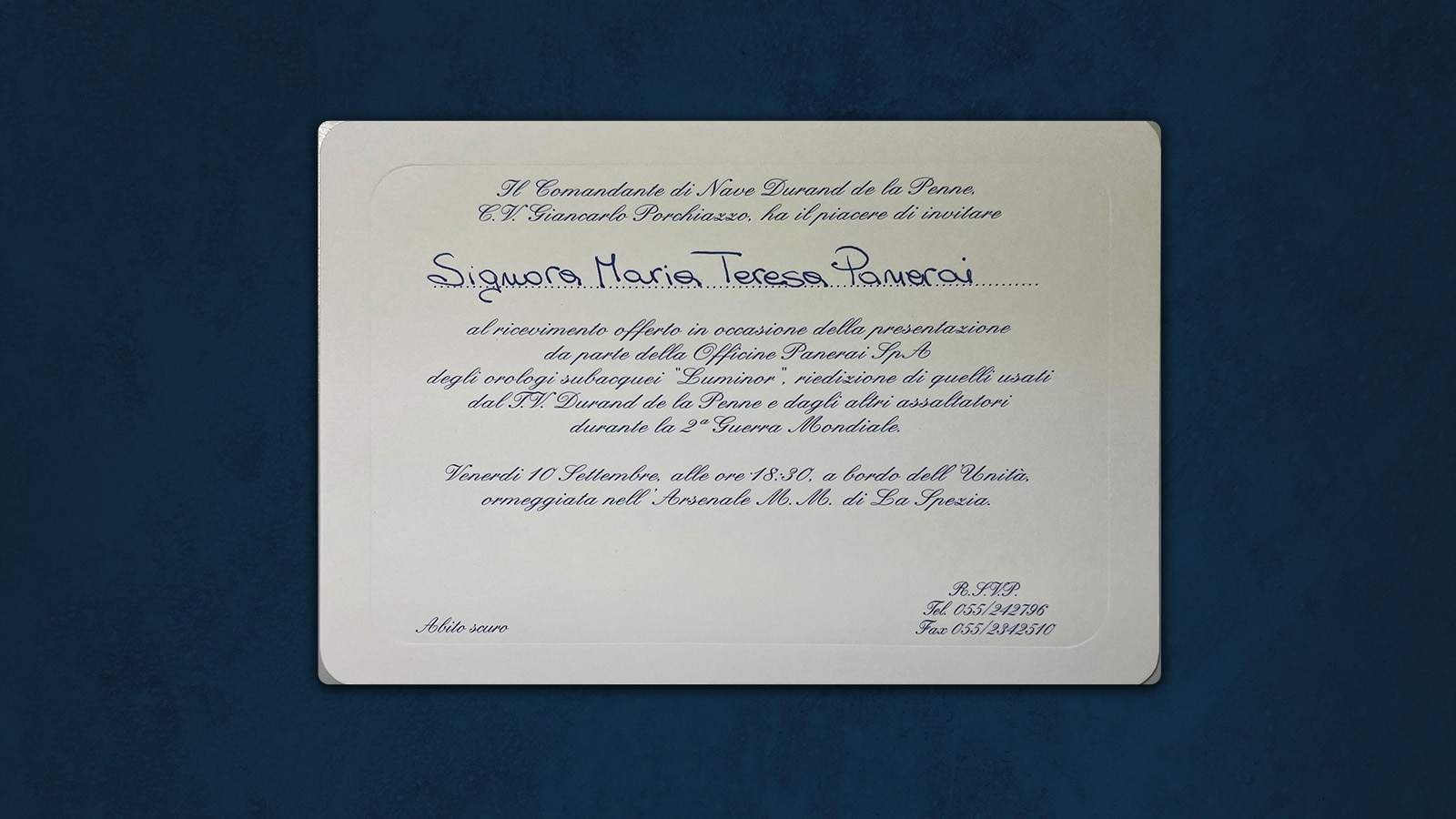
Invitation card for the 10th September event
Sent to Mrs. Maria Teresa Panerai, widow of Giuseppe Panerai, this invitation to the 1993 launch reflects the continued bond between Officine Panerai and the Panerai family.
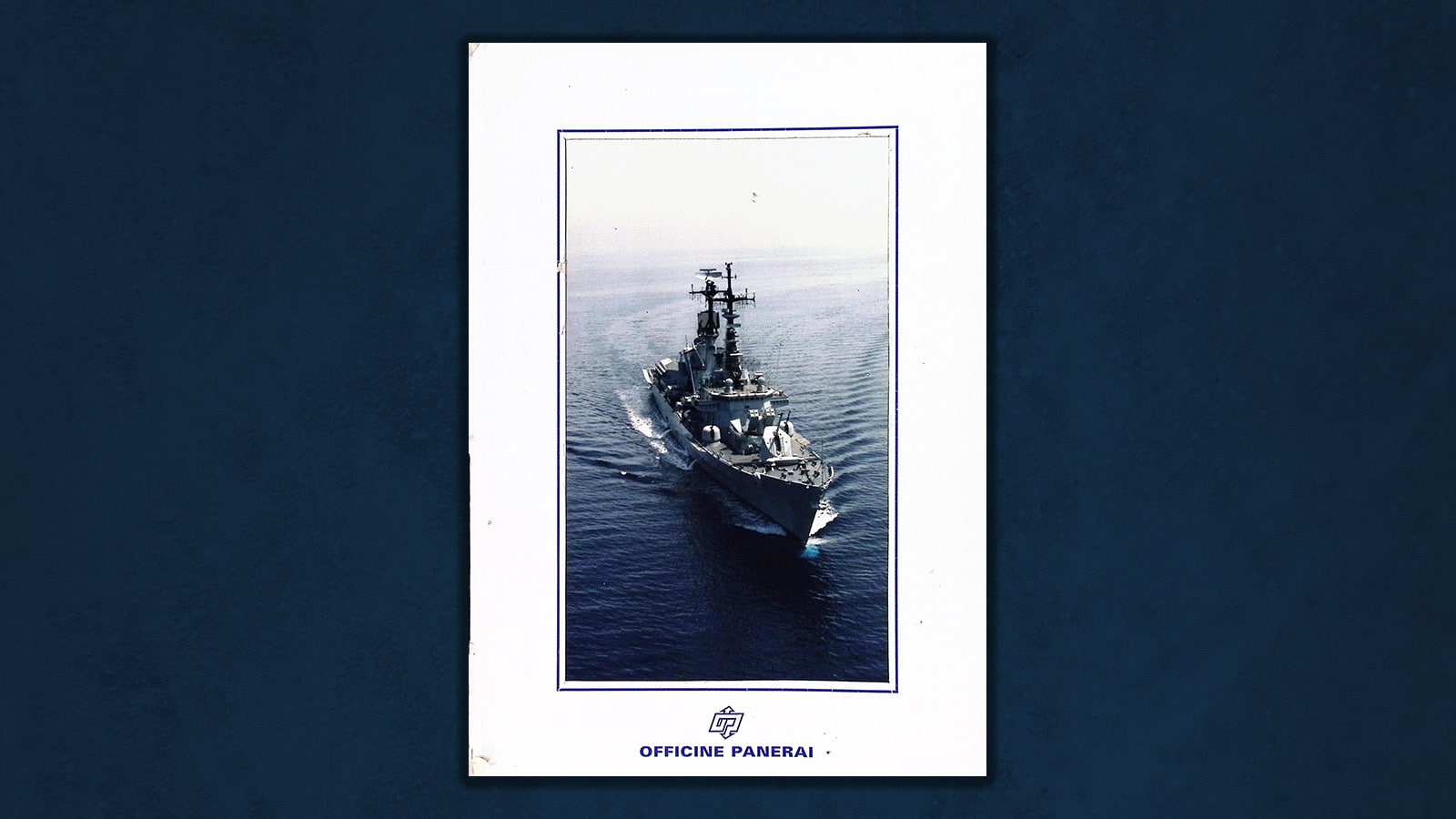
Folder of the 10th September event
Folder containing the image of Italian navy cruiser Durand de la Penne in the cover, distributed to guests attending the event.
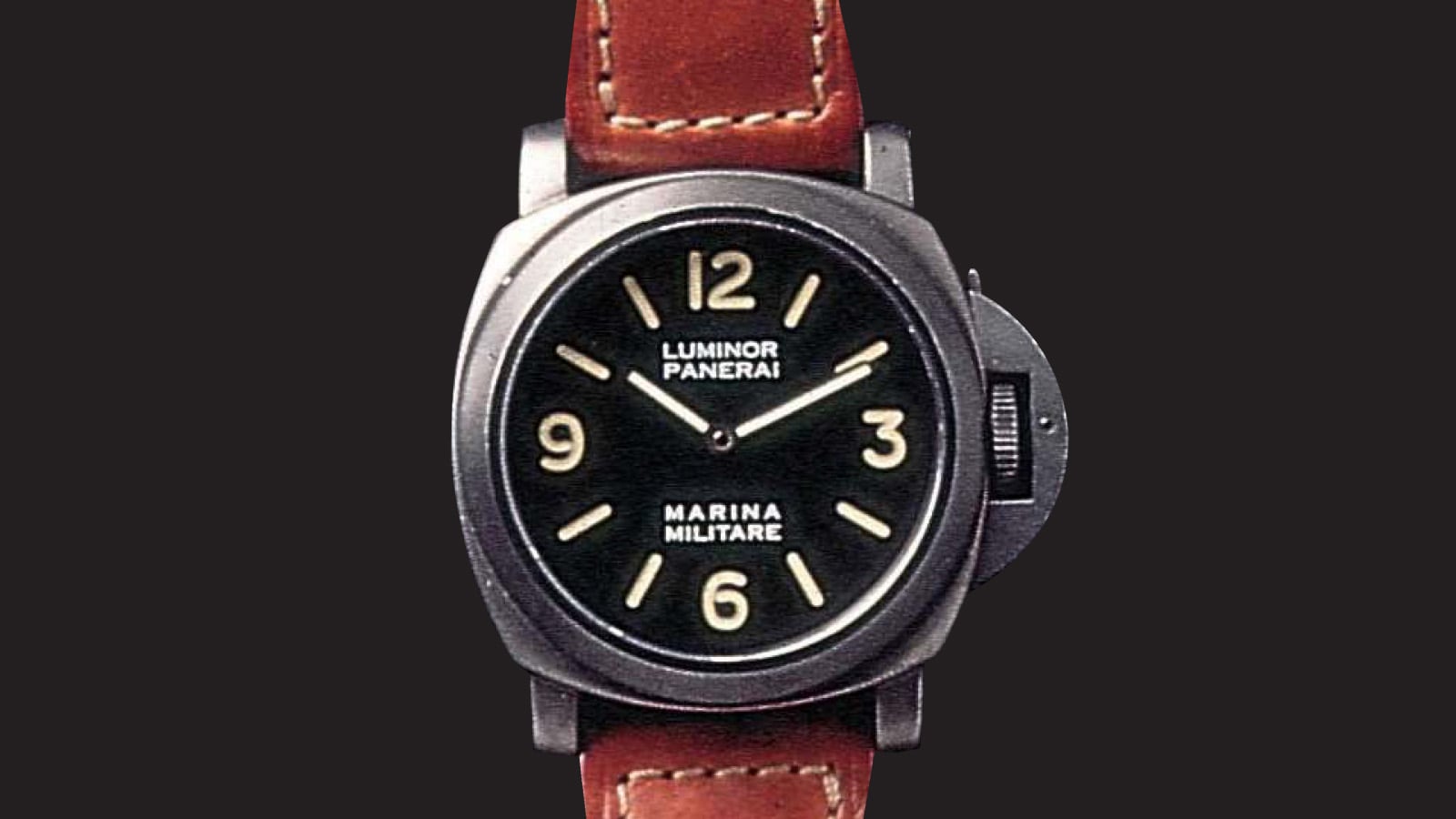
Ref. 5218-202/A Luminor Marina Militare
Second series, produced in 1994, of the reference 5218-202/A developed for the Italian Navy, without classified military restrictions.
Enduring Time
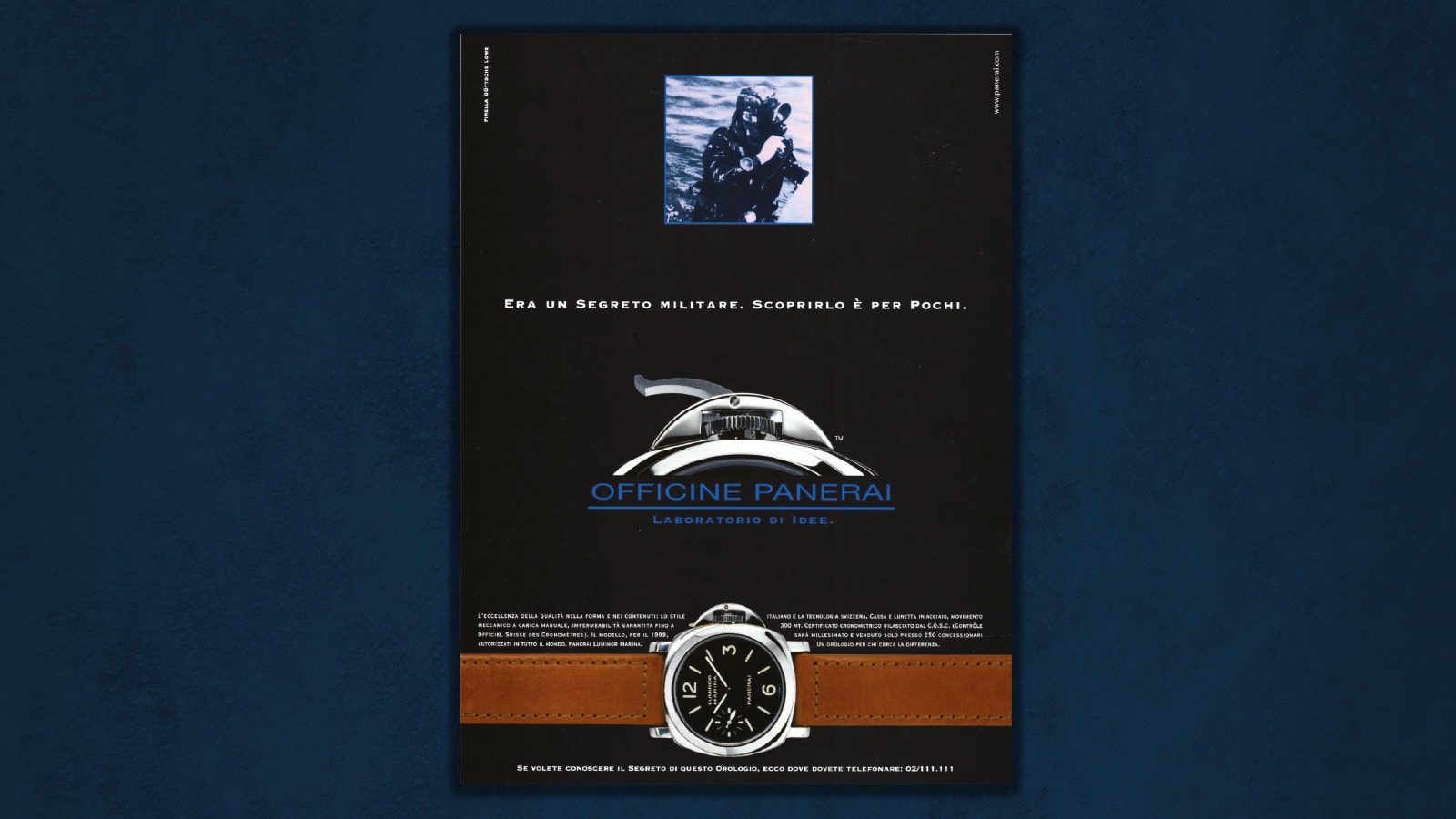
Adv Officine Panerai
One of the earliest Officine Panerai advertisements featured the famous slogan: “It was a military secret. Discovering it is for the few.”
Luminor Marina & Luminor Base
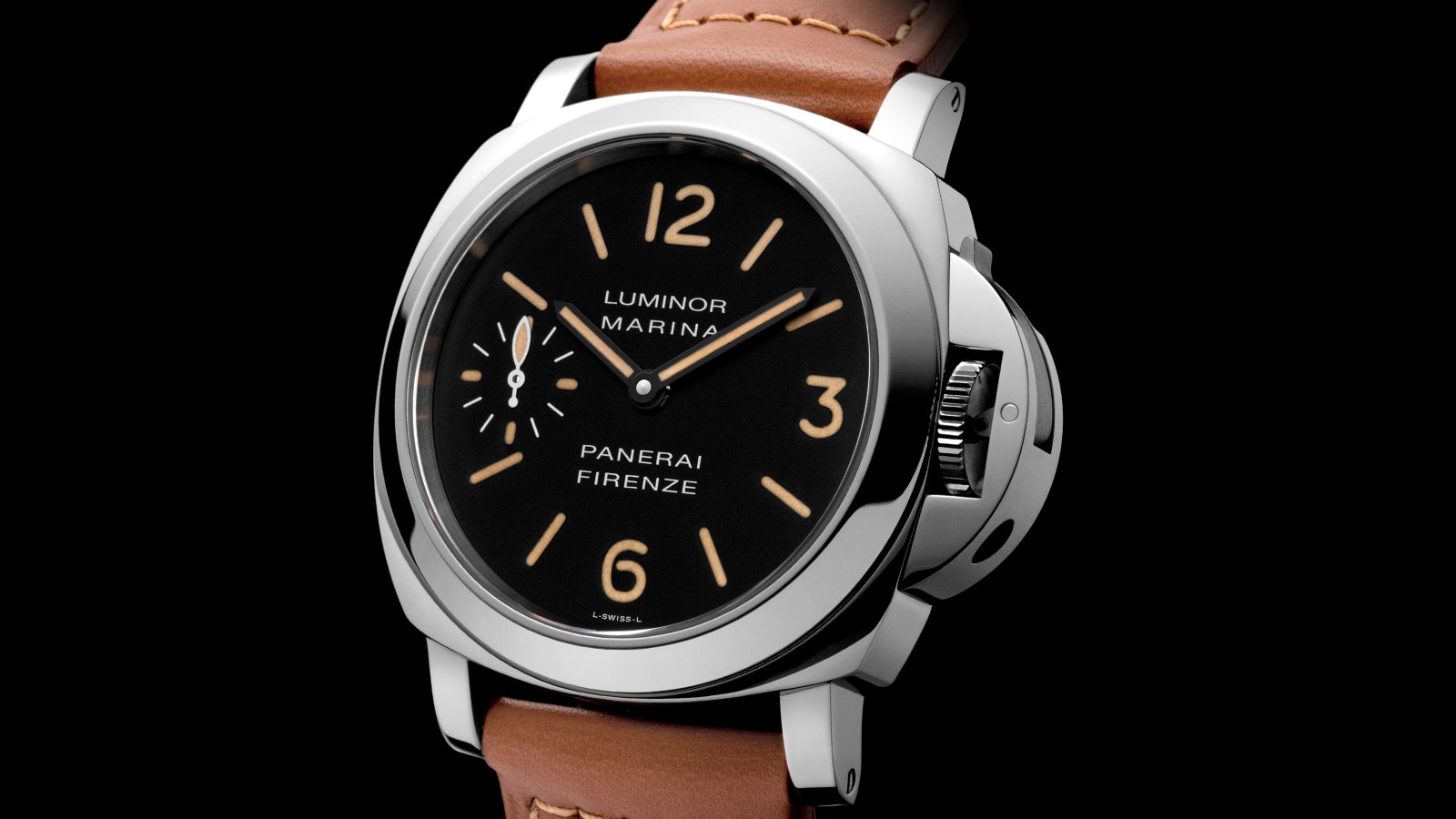
The first references of Panerai’s contemporary production remain faithful to the brand’s heritage: a revival of the historical watches, featuring the 44mm case used between 1993 and 1997.
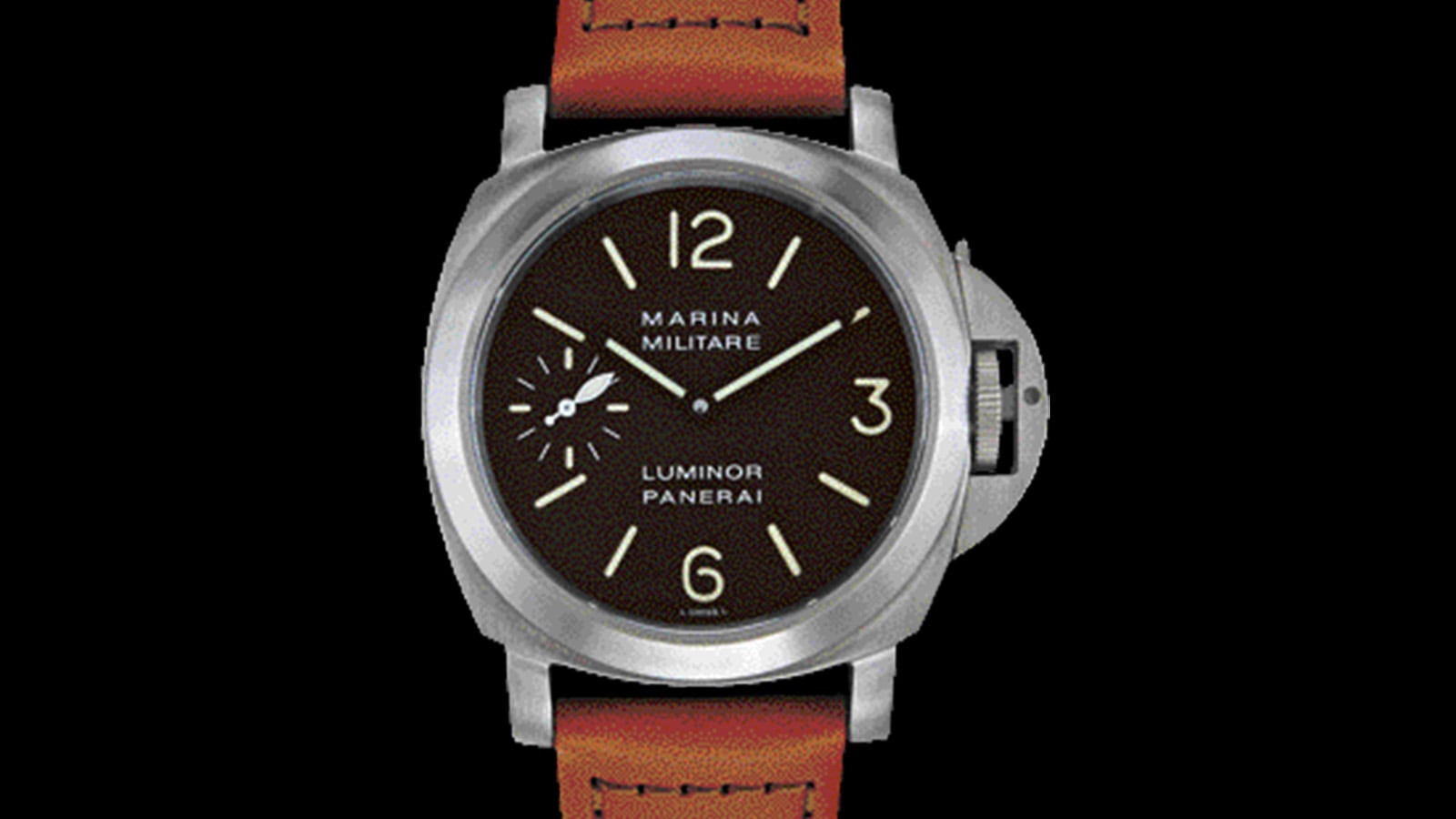
Luminor Marina Militare
PAM0036 was one of the first Panerai watches made in titanium after the Millemetri prototype. Among the brand’s earliest Special Editions, this toolwatch marks the beginning of a strategy that later became a defining element of the Maison.